


Senate moves on state police as lawmakers hold emergency sitting

 Quick Read
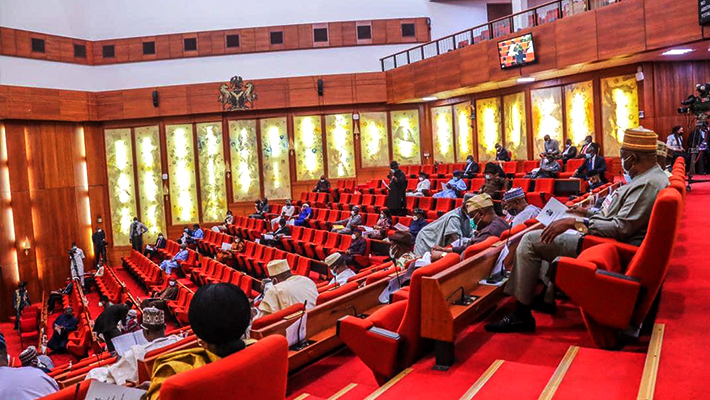
The Senate will on Tuesday reconvene for an emergency plenary session as lawmakers move to advance the State Police Bill, one of the most consequential security reform proposals before the National Assembly.
The Senate will on Tuesday reconvene for an emergency plenary session as lawmakers move to advance the State Police Bill, one of the most consequential security reform proposals before the National Assembly.
The special sitting, scheduled for 11:00 a.m. at the National Assembly Complex in Abuja, comes amid growing concern over worsening attacks by terrorists, bandits, kidnappers and other criminal groups across the country.
Senate Spokesman, Senator Yemi Adaramodu, confirmed that the proposed state police legislation would be treated as a priority when lawmakers return from recess.
“The Senate will be considering matters of public interest, especially national security. The State Police legislation will undoubtedly be a priority issue,” Adaramodu said.
He said the Senate was expected to receive reports from the relevant committee handling the bill after it was referred for further legislative work.
“The Senate is desirous of partnering with other arms of government in curbing the undesirable activities of bandits, terrorists and other peace-threatening marauders,” he added.
The emergency session follows fears that the constitutional amendment process could suffer further delay after the Senate failed to conclude work on the bill before proceeding on a three-week recess.
The bill seeks to move policing from the Exclusive Legislative List to the Concurrent Legislative List, thereby allowing state governments to establish and control their own police formations alongside the federal police.
Because the proposal requires amendments to the 1999 Constitution, it must secure the support of at least two-thirds of senators before it can progress.
If passed by the Senate and the House of Representatives, both chambers will set up a conference committee to harmonise their versions of the bill before transmitting it to the 36 State Houses of Assembly for approval.
The recall of senators was communicated in a June 15 memo issued by the Clerk of the Senate, Emmanuel Odo, at the instance of Senate President Godswill Akpabio.
The notice stated that the emergency sitting was convened to enable the Senate consider matters of urgent national importance, particularly issues relating to national security.
“The purpose of this emergency sitting is to enable the Senate to consider matters of urgent national importance, particularly issues relating to national security and other critical concerns that require immediate legislative attention,” the notice read.
The Senate had on June 11 passed the State Police Bill for second reading and referred it to the Senate Ad-hoc Committee on the Review of the 1999 Constitution for further legislative action.
Leading debate on the bill, Senate Leader Opeyemi Bamidele said the creation of state police had become necessary because of Nigeria’s increasingly complex security threats.
He argued that state-controlled police formations would improve intelligence gathering because local officers would better understand the languages, cultures and security dynamics of their communities.
Bamidele listed terrorism, banditry, mass abductions, farmer-herder clashes, armed robbery, cultism, communal violence, pipeline vandalism and cyber-enabled crimes among the threats that had strengthened the demand for decentralised policing.
He also addressed concerns that governors could abuse state police for political purposes, saying the bill contained safeguards to prevent misuse.
Among the proposed safeguards are State Police Service Commissions, federal oversight through the Federal Police Service Commission, legislative confirmation of senior appointments, uniform national policing standards and constitutional intervention mechanisms where law and order breaks down.
Several senators, including lawmakers from the North, have backed the proposal, arguing that the present centralised policing system can no longer adequately respond to localised security challenges.
Senate Chief Whip, Tahir Monguno, said the legislation would also provide a legal framework for regulating vigilante groups already operating in many parts of the country.
The emergency sitting comes days after President Bola Tinubu, in his Democracy Day broadcast, vowed that terrorists, bandits and their sponsors would face the full weight of the law.
The debate over state police has remained one of the most sensitive constitutional reform issues in Nigeria, with supporters describing it as overdue and critics warning against possible political abuse by state governors.
Comments