


Wale Asubiojo: The artist who sculpts memory to preserve history

 Quick Read
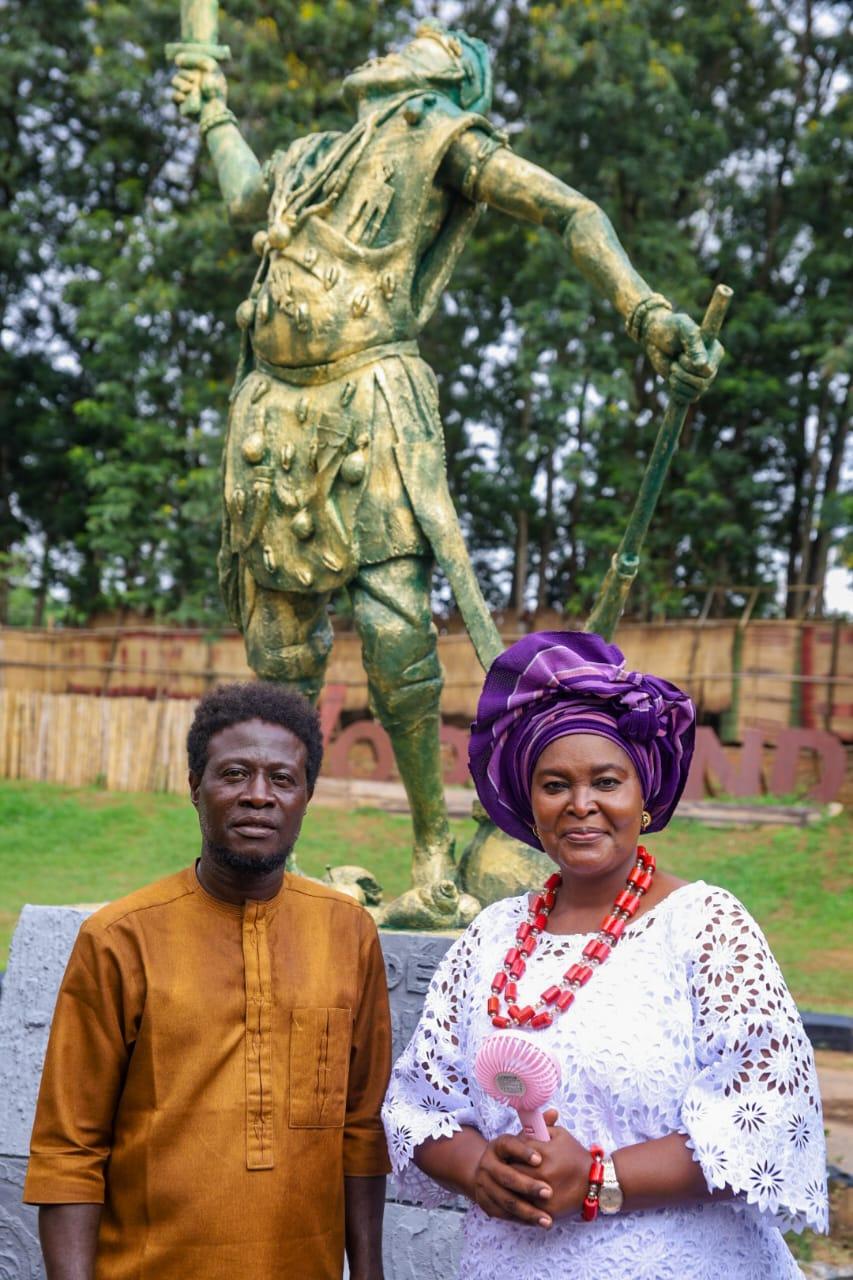
Standing before the imposing figure of Iba Oluyole at the National Museum of Unity, one understands exactly what he means. In sculpting Oluyole, Asubiojo has done more than create a monument; he has revived the story of a man whose influence still echoes through Ibadan.
By Nehru Odeh
There is something arresting about Wale Asubiojo, the sculptor and cultural historian. The quiet intensity with which he speaks of history, and the conviction that radiates whenever he discusses culture, heritage, and memory, always set him apart in a crowd.”
And in a country where historical amnesia often seems the norm, Asubiojo has devoted his life to ensuring that the stories of the past are neither forgotten nor erased. And he is not done yet.
This is the story of a man who has taken it upon himself to preserve history and memory through sculpture. This is the story of a man whose complexity lies in his simplicity, whose greatness as a sculptor lies in his humility. And whose tortured mien bespeaks a man with an undying love for his culture and a steely mission to sculpt memory and preserve history.
Soft-spoken, thoughtful and deeply rooted in Yoruba cultural consciousness, the Ibadan-born sculptor is not merely an artist; he is a custodian of memory, a visual historian, a cultural activist and a man on a mission to preserve the stories that helped shape Nigeria’s identity.
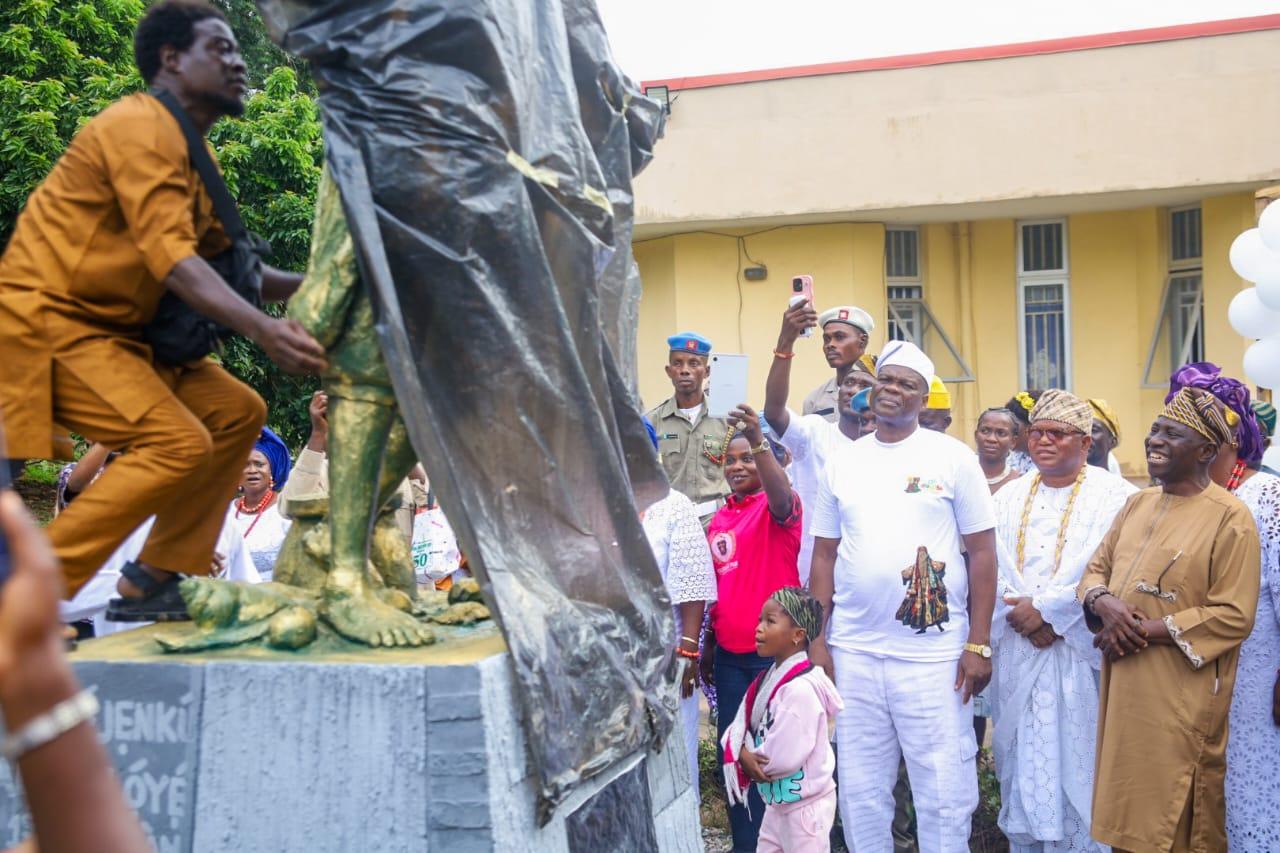
That mission found one of its most powerful expressions recently with the unveiling of his monumental sculpture of Iba Oluyole at the National Museum of Unity, Ibadan.
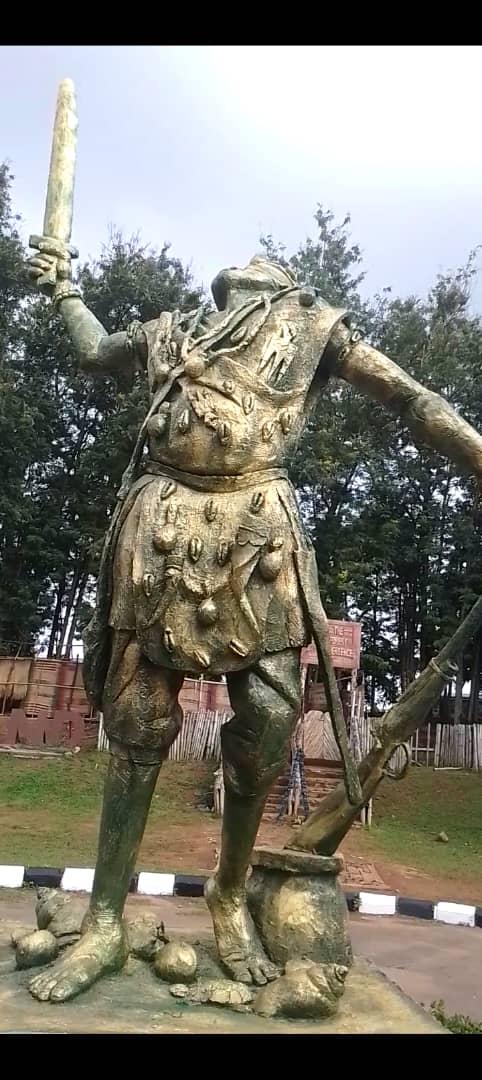
The life-size sculpture, created in bond stone, stands as a tribute to one of the most influential military and political figures in Yoruba history and the man widely regarded as one of those who shaped modern Ibadan. The monument is not just filled with history; it is etched in memory.
“This is to represent the fact that Ibadan was shaped by a warlord, and we are putting a representation of what Ibadan represents,” Ms Oriyomi Pamele Otuka said during the unveiling.
But beyond the monument lies the story of an artist who has spent decades giving form to the past and transforming history into memory. For Asubiojo, sculpture is not merely decorative. It is a medium through which forgotten stories are reclaimed and celebrated.
“I believe art should do more than beautify the environment,” he stated. “Its aesthetics and historical facts should merge to preserve memory and document the past for generations yet unborn.”
That philosophy has shaped his entire career. While many contemporary artists gravitate towards abstraction or commercial appeal, Asubiojo has remained committed to subjects rooted in history. His works are designed not only to inspire admiration but also to spark curiosity and reflection.
“I decided to use my art to create and document history,” he once said in an interview. “And since then, I have never lost focus.”
His commitment stems partly from a troubling reality he has observed over the years. Much of Nigeria’s public art, he argues, exists as abstract monumental sculpture that people struggle to connect with historically. The consequence, he believes, is a growing disconnection from the past.
“For too long, our public spaces have told someone else’s story. When you walk through Nigerian cities, you see more of Europe than of us. My work is a refusal to let that continue. Every sculpture of heroes, every installation rooted in oral tradition, says, ‘We were here. We built. We led. We have a past worth monumentalizing’. I want Nigerians to see themselves in their streets and feel dignity in that recognition
To address this, Asubiojo has dedicated himself to creating works grounded in research and historical authenticity. He argues that artists must also function as cultural historians because much of Africa’s past survives in oral traditions, shrines, chants, festivals, and family lineages rather than written records. Without visual documentation, many of these stories risk disappearing altogether.
That conviction is evident in his painstaking approach to research. For Asubiojo, research is not a preliminary stage of artistic production but the foundation upon which every work rests. Before embarking on a project, he immerses himself in oral traditions, palace histories, praise poetry, costumes, cultural practices and historical narratives.
“A lot of our history was never written down in books. It lived in praise poetry, in drumming, in shrines, in the names of places. If artists wait for historians to finish, a lot will be lost. So we have to step in. When I carve a historical figure, I’m translating oral memory into form. Someone who can’t read Yoruba history can stand before that sculpture and feel the weight of who that person was. The work becomes a public archive you can touch.
“That’s why I spend months just reading, interviewing, and visiting sites before I cut the first block. Without research, you end up creating a generic African figure,” he says. “With research, you create testimony.”
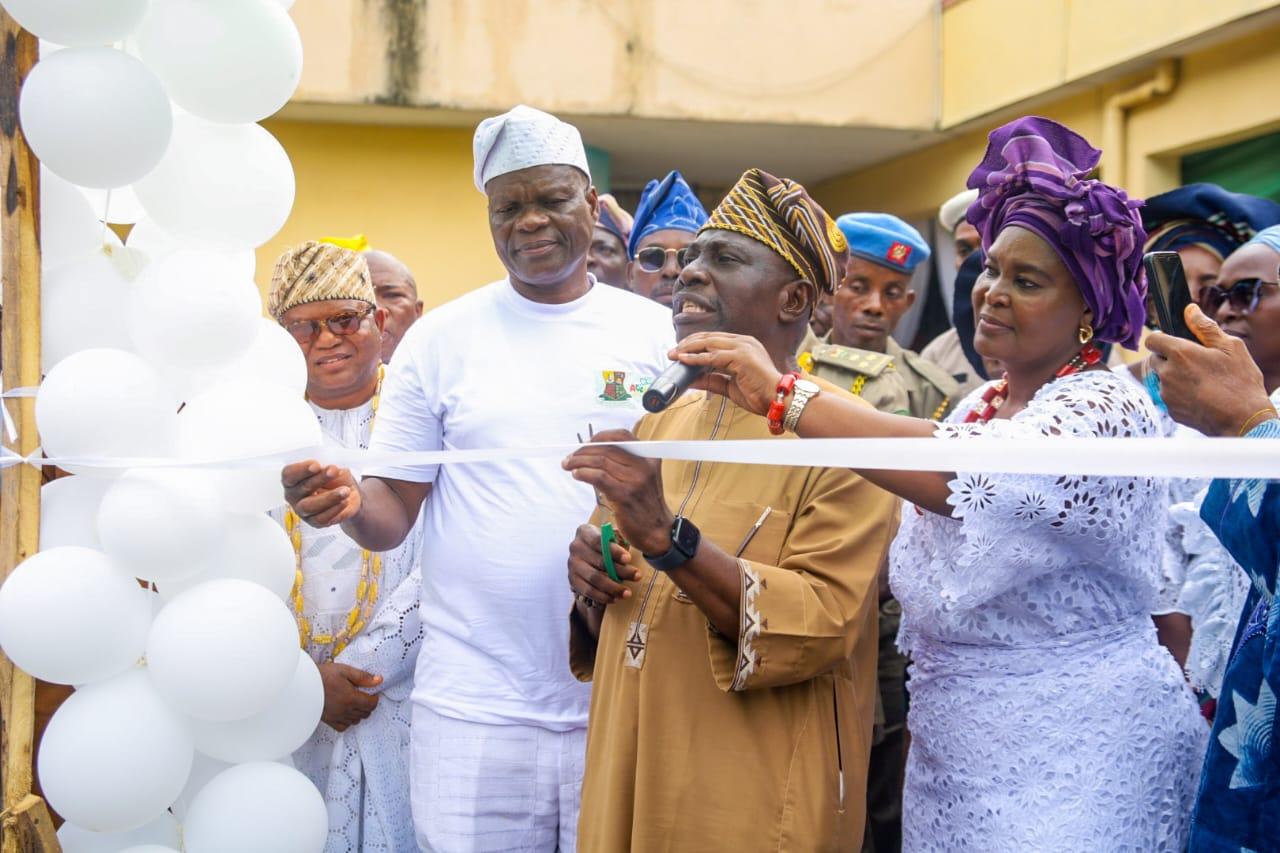
It was this dedication to historical accuracy that led him to undertake the Iba Oluyole project. The sculpture was unveiled during activities marking the 2026 International Museum Day celebration at the National Museum of Unity, Ibadan, drawing museum professionals, government officials, traditional stakeholders, art enthusiasts and members of the public.
Standing proudly within the museum grounds, the sculpture honours a man whose influence on Ibadan’s evolution remains profound. Asubiojo became interested in Iba Oluyole because of the military leader’s role in shaping modern Ibadan politically, socially and economically.
His research revealed a man who rose from a blacksmith to become one of the most influential military figures in Yoruba history, distinguished himself during the Owu Wars and later became Bashorun of Ibadan.
Beyond warfare, Asubiojo was intrigued by Oluyole’s reforms and governance philosophy, particularly his opposition to the Oyo practice of killing the Aremo, the crown prince, a stance that reflected Ibadan’s pragmatic political culture.
The deeper he delved into the subject, the more he came to see Oluyole not merely as a warrior but as a statesman and nation-builder. “Oluyole represented the spirit of modern Ibadan,” he said.
The project itself became a labour of love. During a visit to the National Museum of Unity, Asubiojo noticed the absence of a major sculptural monument that reflected the institution’s identity. Rather than waiting for a commission, he volunteered to donate one.
The resources available for the project were limited, yet he refused to abandon it. Whenever he earned money from other jobs, he set aside part of his earnings to support the monument. According to him, the project was never about personal gain but about making a contribution to society and preserving culture through art.
That spirit of sacrifice has defined much of Asubiojo’s life and shaped what he later became. Long before he became an acclaimed sculptor, he was a young boy grappling with hardship and uncertainty following the death of his father.
As a child, he displayed remarkable creativity and an uncanny ability to make things from whatever materials he could find. His father saw in him the makings of a lawyer because of his sharp reasoning and debating skills. But fate intervened. “I lost my father, and his plans for me ended there,” he recalled.
His education was disrupted, forcing him to move from place to place and rely on the goodwill of others. Yet, he never abandoned his belief that he had a future worth pursuing. Determined to continue his education, he took on various jobs, including working in hotels.
His fortunes changed when he found employment at Studio 74 Gallery within Gateway Hotel, Abeokuta, his maternal home town. There, his talent attracted the attention of Architect Akinrinade of Sotan and Sotan Williams Company, who encouraged him to study art formally.
The encouragement proved transformative. In 1993, he was introduced to renowned sculptor Saburi Adisa Adebesin, under whom he trained for nearly five years. Adebesin’s influence extended beyond technique, helping to shape his understanding of the social responsibility of the artist.
After completing his apprenticeship, Asubiojo moved to Lagos, where survival became a daily struggle. He worked on construction sites and undertook decorative art jobs, designing POP ceilings, pillars, fountains and wall displays.
Every money he earned was carefully saved. Those savings eventually enabled him register for private WAEC examinations. To improve his chances, he hired tutors for Mathematics, English, Literature and Economics while studying Yoruba and Art on his own.
His persistence paid off. He made his papers and gained admission to Lagos State Polytechnic, Ikorodu, where he studied art and specialised in sculpture. He completed his National Diploma in 2009 and his Higher National Diploma in 2012, graduating as the best HND student in Sculpture.
Today, those difficult years have become part of the foundation upon which his success rests. Yet even after achieving professional recognition, Asubiojo remains committed to using art as a vehicle for education and social transformation.
Through initiatives such as the Children’s Arts Movement International, now known as Children in African Scenario (CAS), he has mentored generations of young Nigerians through workshops, conferences, drawing sessions, indigenous language instruction, and cultural programmes.
Yet, his vision extends far beyond individual monuments. He imagines public spaces serving as living classrooms where people encounter their history in everyday life. “Imagine cities where roundabouts celebrate indigenous heroes instead of anonymous structures,” he maintained.
In such spaces, monuments become more than decorative landmarks. They encourage inquiry, provoke conversations and inspire younger generations to learn about the people and events that shaped their communities.
Asubiojo’s sculptures are more than artistic objects. They reconnect communities with their roots and challenge the culture of forgetting that often surrounds the nation’s past. “My philosophy is simple: Art should help people remember what society is trying to forget.”
Standing before the imposing figure of Iba Oluyole at the National Museum of Unity, one understands exactly what he means. In sculpting Oluyole, Asubiojo has done more than create a monument; he has revived the story of a man whose influence still echoes through Ibadan.
In a society where too many stories fade with time, he remains committed to ensuring that they endure. As he puts it: “Our history is not a footnote. It is the main text.”
Comments