



Strings of Identity: Weaving Belonging Through Thread in Jennifer Becky Obaze’s Art Exhibition Debut in London

 Quick Read
Jennifer Becky Obaze's Strings of Identity, presented in London on Mother's Day in March 2026, quietly accomplished both. Marking the artist's first public solo exhibition, the event introduced a body of string art that explored identity not as something fixed, but as something shaped continuously through language, memory, heritage and human connection.
By Benson Idonije
Some exhibitions ask visitors to look. Others ask them to participate.
Jennifer Becky Obaze’s Strings of Identity, presented in London on Mother’s Day in March 2026, quietly accomplished both. Marking the artist’s first public solo exhibition, the event introduced a body of string art that explored identity not as something fixed, but as something shaped continuously through language, memory, heritage and human connection.
Held in an intimate gallery setting, the exhibition opened after a morning of persistent rain that might easily have discouraged attendance. Instead, visitors continued arriving throughout the afternoon, many choosing to remain considerably longer than expected. Interest had already been evident before opening day, with tickets selling out within three days and additional places released to accommodate demand.
Yet attendance was not what ultimately defined the exhibition. What distinguished Strings of Identity was the pace at which people experienced it. Rather than moving quickly from one artwork to the next, visitors slowed down. Conversations developed naturally between strangers. Individuals returned to works they had already seen. Some stood in silence for several minutes before continuing through the gallery. It became clear that the exhibition was encouraging something beyond observation. The artworks themselves reflected that intention.
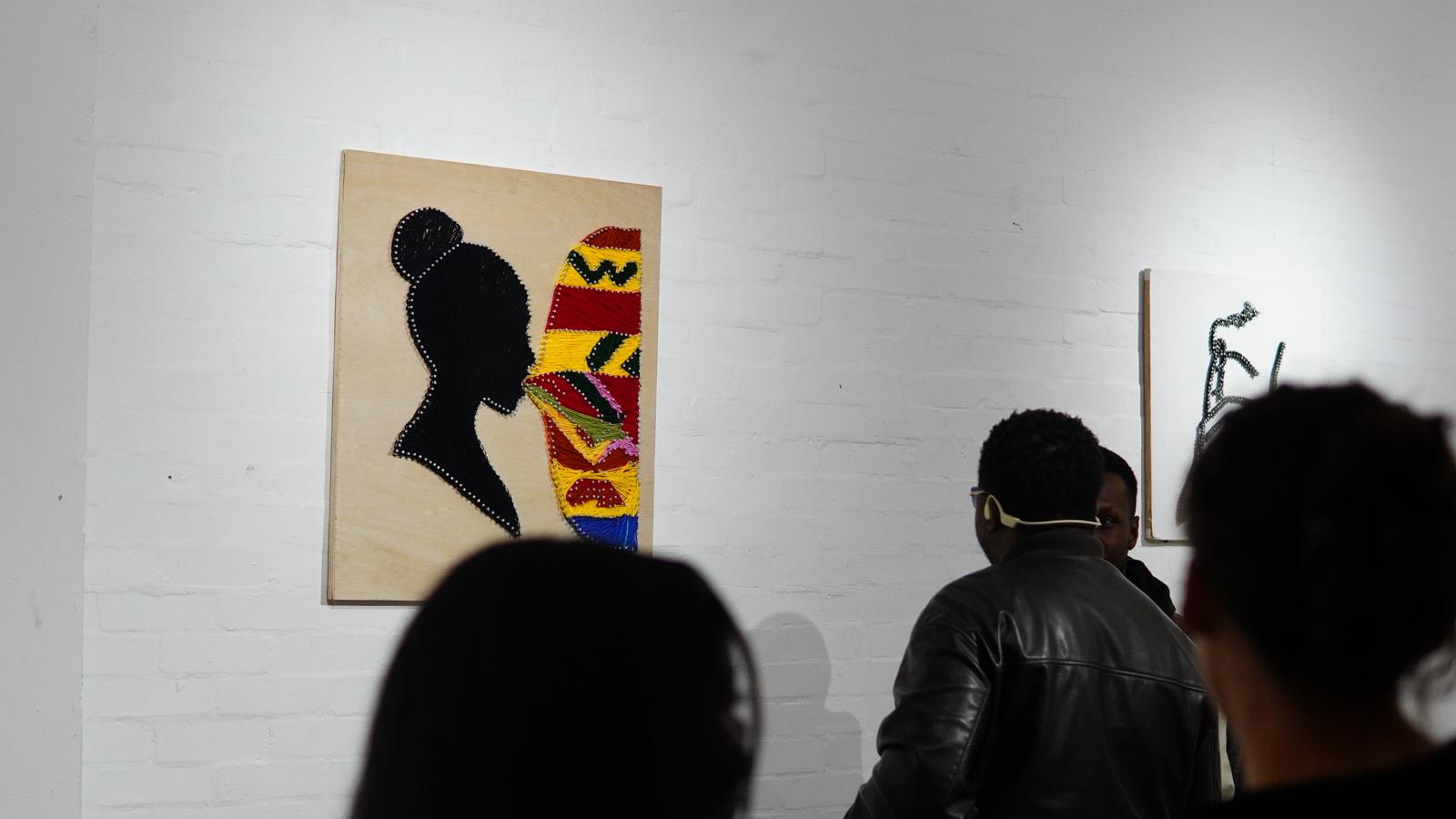
Among the most discussed pieces was Mother’s Tongue, a portrait from which vibrant strands of thread emerged in place of spoken words. The image explored language as more than a means of communication, presenting it instead as a carrier of memory, family and cultural inheritance. Throughout the afternoon, the work prompted conversations about multilingual identities, migration and the emotional ties people maintain to the languages they first learned as children.
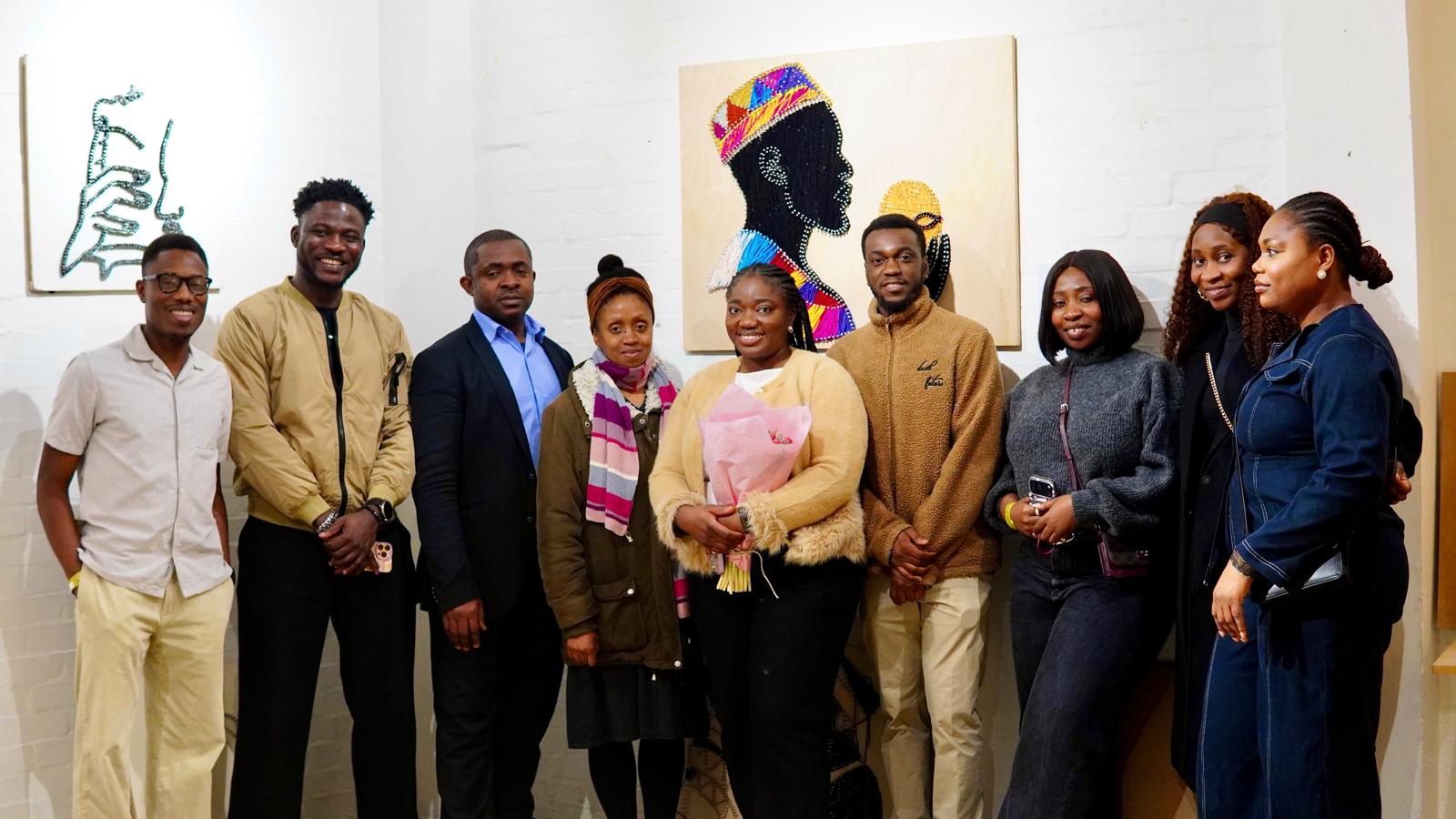
Equally compelling was Beyond the Mask. The portrait depicts a man holding, rather than wearing, a golden mask. The decision shifts the work away from familiar symbolism, suggesting that identity exists beyond the expectations people inherit or perform. While many viewers interpreted the piece through the lens of masculinity, particularly within African communities, its broader resonance lay in its exploration of vulnerability, dignity and emotional openness.
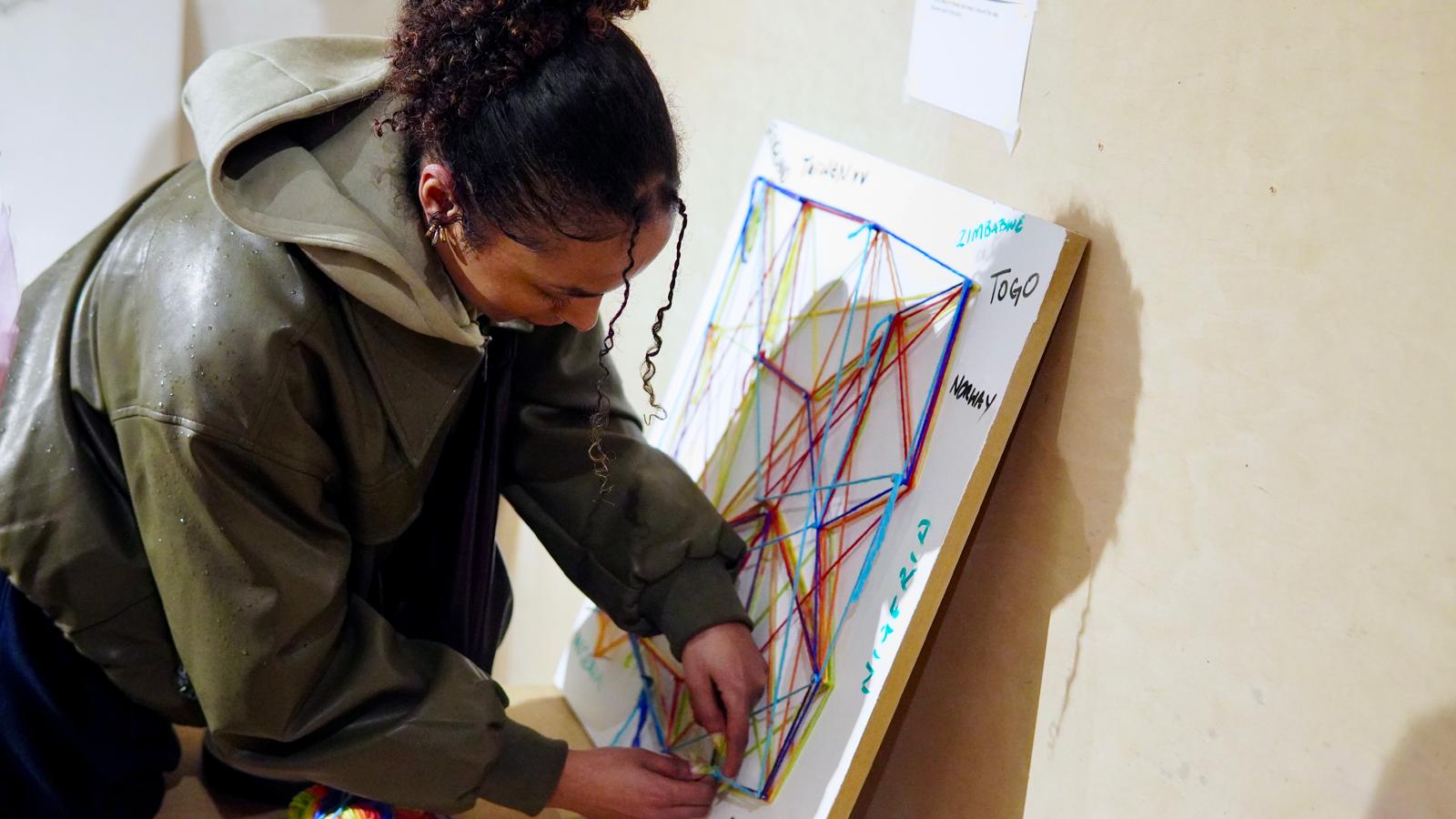
At the centre of the exhibition stood its most ambitious work: an unfinished interactive installation that remained incomplete until visitors became part of it.
Each guest was invited to add a single strand of thread while sharing something about themselves. Some spoke openly about family, migration or childhood memories. Others participated quietly, allowing the gesture itself to communicate what words could not. By the end of the afternoon, dozens of individual contributions had formed a single collaborative artwork that no individual artist could have created alone. The installation transformed the role of the audience.
Visitors were no longer simply looking at representations of identity. They were actively participating in its construction.
One conversation captured that idea particularly well. A visitor from Taiwan, studying English in London, explained that the exhibition title had immediately drawn her attention after she encountered it online. After spending time with the artworks and contributing her own thread to the installation, she remarked quietly, “I feel like I belong.”
It was a brief exchange, yet it encapsulated one of the exhibition’s central achievements. Rather than presenting identity as something defined by nationality, language or culture alone, Strings of Identity suggested that belonging can also emerge through shared participation and mutual recognition.
The exhibition’s success also reflected careful collaboration behind the scenes. Creative directors Adetunle Sunday Micheal and Bisola Adekoye helped shape the visitor experience and the exhibition’s visual presentation, while curator and event assitant Louis Osazuwa Osagiede observed afterwards that visitors consistently resisted the impulse to move quickly through the gallery. Instead, they lingered, returned to artworks and continued conversations well beyond their initial viewing. Those responses felt significant.
In many contemporary exhibitions, audience engagement is measured through attendance or social media visibility. Here, engagement revealed itself differently. It appeared in the willingness of visitors to remain, reflect and contribute to a shared artwork whose final form depended upon their presence.
String art has often occupied an uncertain position between craft and contemporary fine art. Obaze’s practice challenges that distinction by treating thread not simply as a decorative material but as a conceptual language capable of expressing memory, migration and personal history. Throughout the exhibition, the thread functioned simultaneously as line, connection and metaphor, binding individual narratives into larger collective experiences.
That approach places Strings of Identity within a wider conversation taking place across Britain’s contemporary arts landscape, where increasing numbers of artists are exploring questions of identity through participation as much as representation. Rather than asking audiences merely to interpret finished works, exhibitions of this kind invite them to become collaborators in meaning itself.
There were moments when the exhibition deliberately resisted spectacle. Visitors expecting dramatic installations or overt symbolism may have found its quieter pace surprising. Yet that restraint proved one of its greatest strengths. The works encouraged sustained attention rather than immediate conclusions, allowing meaning to emerge gradually through observation and conversation.
As the afternoon drew to a close, the gallery retained the atmosphere of a shared gathering rather than a conventional exhibition opening. Conversations continued between visitors who had arrived as strangers. The collaborative installation stood transformed by dozens of individual contributions. The artworks themselves remained unchanged, yet the experience of viewing them had been shaped collectively by everyone who had entered the space.
For a first public solo exhibition, Strings of Identity displayed a notable confidence of purpose. Rather than relying on novelty or scale, Jennifer Becky Obaze presented a thoughtful body of work that trusted audiences to engage slowly, reflect openly and contribute meaningfully. In doing so, the exhibition proposed that identity is not something we simply inherit or perform, but something we continue to weave together through memory, conversation and human connection.
That proposition lingered long after visitors left the gallery.
Comments