



Lagos saves N118bn property, rescues 1,900 lives

 Quick Read
According to him, Lagos has intensified enforcement of fire safety regulations through stricter inspections and implementation of the Fire Safety Levy, stressing that compliance must go beyond obtaining certificates to ensuring that safety equipment and systems remain fully functional.
By Kazeem Ugbodaga
The Lagos State Government has strengthened its emergency response capacity with the addition of 11 new fire stations, the deployment of 62 modern firefighting vehicles, the reconstruction of the Lagos State Fire and Rescue Service Headquarters, and the recruitment of 150 firefighters currently undergoing training at the upgraded Fire Academy.
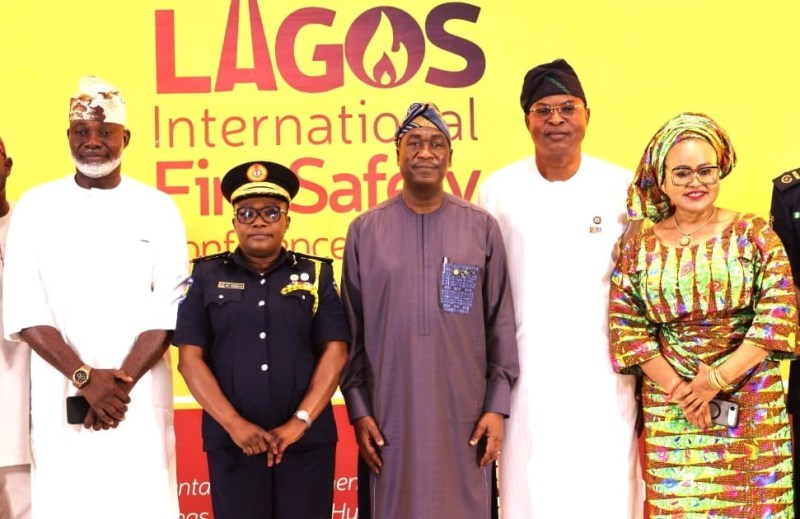
Governor Babajide Olusola Sanwo-Olu disclosed this on Monday at the opening of the Lagos International Fire Safety Conference 3.0, themed “Preventing the Preventable: Strengthening Fire Safety in Buildings and Business Hubs,” held at the Marriott Hotel, Ikeja.
Represented by Deputy Governor Dr. Kadri Obafemi Hamzat, the governor also revealed that the state’s emergency responders saved an estimated ₦118 billion worth of property and rescued more than 1,900 lives in 2025.
Sanwo-Olu said the government would continue to strengthen emergency response through sustained investment in personnel, equipment and technology, while placing greater emphasis on prevention, enforcement, public education and strategic partnerships.
According to him, Lagos has intensified enforcement of fire safety regulations through stricter inspections and implementation of the Fire Safety Levy, stressing that compliance must go beyond obtaining certificates to ensuring that safety equipment and systems remain fully functional.
The governor said the interventions have increased the number of fire stations in the state to 29, with additional stations under construction in Yaba, Ikotun and Oworonshoki.
He also highlighted the introduction of the Fire Marshal Programme, designed to train volunteers in homes, schools, markets, offices, worship centres and factories to identify fire risks early, coordinate evacuations and support emergency responders before incidents escalate.
Chairman of the Lagos State House of Assembly Committee on Special Duties and Intergovernmental Relations, Hon. Olawale Rauf Age-Suleiman, described safety as a shared responsibility and urged participants to develop practical solutions capable of reducing fire disasters across the state.
Commissioner for Special Duties and Intergovernmental Relations, Mr. Olugbenga Oyerinde, said the conference was aimed at shifting attention from emergency response to fire prevention through innovation, lessons from previous incidents and improved risk management.
He disclosed that the Lagos State Fire and Rescue Service saved properties valued at more than ₦11 billion within the last year, attributing the achievement to sustained government investment in emergency response, fire prevention, public awareness and modern rescue operations.
Chief Executive Officer of Sadeco, Mr. Vincent Effiong, called for greater collaboration, technological innovation and community participation to improve fire detection, emergency preparedness and coordinated response.
In a presentation titled “Case Studies and Lessons Learned: Lagos Fire Incident Statistics Trends and Corrective Actions – Sanwo-Olu’s 7-Year Scorecards,” Controller General of the Lagos State Fire and Rescue Service, Margaret Abimbola Adeseye, praised the Sanwo-Olu administration for transforming the agency through sustained investment in infrastructure, equipment, manpower development and operational efficiency since 2019.
Comments