



UNIOSUN hosts fisheries scientists, advocates innovation for sustainable blue economy

 Quick Read
He noted that climate change, illegal, unreported and unregulated fishing, inadequate investment and slow technological adoption continue to threaten the growth of the fisheries sector.
The Osun State University on Monday commenced the 7th Annual Conference of the Association of Nigerian Fisheries Scientists (ANFS) with a call for greater investment in innovation, climate resilience and strategic partnerships to unlock Nigeria’s vast fisheries and blue economy potential.
The conference, held at the Olagunsoye Oyinlola Auditorium on the University’s Main Campus, brought together academics, policymakers, researchers, development partners and industry stakeholders from across Nigeria to deliberate on the theme: “Driving Sustainable Fisheries and Aquaculture in Nigeria: Harnessing Innovation, Building Climate Resilience, and Unlocking Blue Economy Potentials.”
Welcoming participants to the University, the Provost of the College of Agriculture and Renewable Natural Resources, Professor Wumi Ipinmoroti, expressed delight that UNIOSUN was hosting the prestigious scientific gathering and urged delegates to take advantage of the conference to foster collaborations capable of advancing fisheries research and national development.
Declaring the conference open, the Vice-Chancellor of Osun State University, Professor Odunayo Clement Adebooye, who was represented by the Deputy Vice-Chancellor (Academics, Research, Innovation and Partnerships), Professor Adetunji Lawrence Kehinde, reaffirmed the University’s commitment to promoting research, innovation and strategic partnerships.
He described the Association of Nigerian Fisheries Scientists as a critical professional body contributing significantly to Nigeria’s food security, environmental sustainability and economic growth through research and policy advocacy.
Professor Kehinde assured participants that the University would continue to provide the necessary support for the Department of Fisheries and Aquatic Resources Management and other academic units in advancing teaching, research and community service before formally declaring the conference open.
In his keynote address, the President of the Association of Nigerian Fisheries Scientists, Professor Bamidele Oluwarotimi Omitoyin, said Nigeria possesses enormous aquatic resources capable of transforming the nation’s economy but lamented that the country still depends heavily on fish importation to meet domestic demand.
According to him, Nigeria’s annual fish demand exceeds 3.2 million metric tonnes, while domestic production remains around 1.2 million metric tonnes, forcing the country to import about two million metric tonnes of fish annually at a cost of over 1.2 billion US dollars.
He noted that climate change, illegal, unreported and unregulated fishing, inadequate investment and slow technological adoption continue to threaten the growth of the fisheries sector.
Professor Omitoyin stressed that the conference theme reflected the urgent need to embrace technological innovation, climate-smart aquaculture and the blue economy as strategic pathways to achieving food security, employment generation and sustainable economic development. He also called on governments at all levels to implement evidence-based fisheries policies, strengthen extension services and increase investment in aquaculture development, while urging private investors to explore opportunities across the fisheries value chain.
Delivering the first keynote lecture, Dr Austins Stankus, Fisheries Officer of the Food and Agriculture Organization of the United Nations (FAO), Rome, Italy, examined strategies for driving sustainable fisheries and aquaculture in Nigeria through innovation, climate resilience and the development of the blue economy.
A second keynote lecture was presented by Professor Emmanuel Adedayo Fasakin of the School of Agriculture and Agricultural Technology, Federal University of Technology, Akure, who spoke on “Innovation and Technology for Sustainable Fisheries Management and Aquaculture Development in Nigeria.” He highlighted emerging technologies capable of improving fish production, resource management and environmental sustainability.
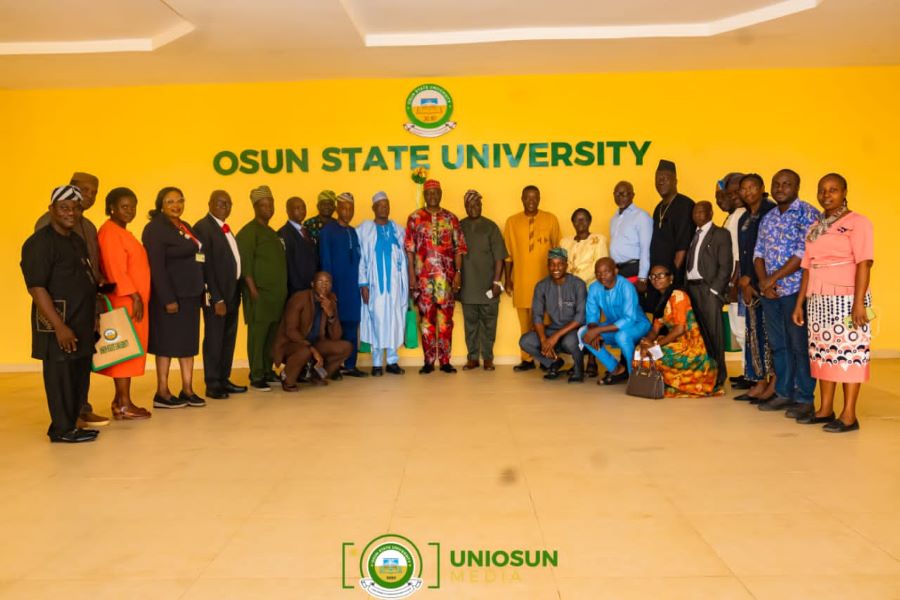
Among dignitaries at the opening ceremony were the Vice-Chancellor of Redeemer’s University, Professor Shadrach Akindele; Professor Abiodun Musa Aibinu; the Osun State Commissioner for Agriculture, Otunba Tola Faseru; the Commissioner for Education, Hon. Dipo Eluwole; members of the University’s management; senior academics; representatives of research institutes; development partners; and fisheries professionals from across the country.
Comments