



Why my Ifa lecture was cancelled at OAU — Okediji

 Quick Read
Clarifying the circumstances surrounding its cancellation, Okediji said, "I was informed that the cancellation was not due to the content of my lecture. Rather, it stemmed from unresolved contractual issues concerning the publication and launch of my book, Sixteen Sacred Stanzas of Ifa Tuntun, which had been scheduled alongside the lecture."
By Nehru Odeh
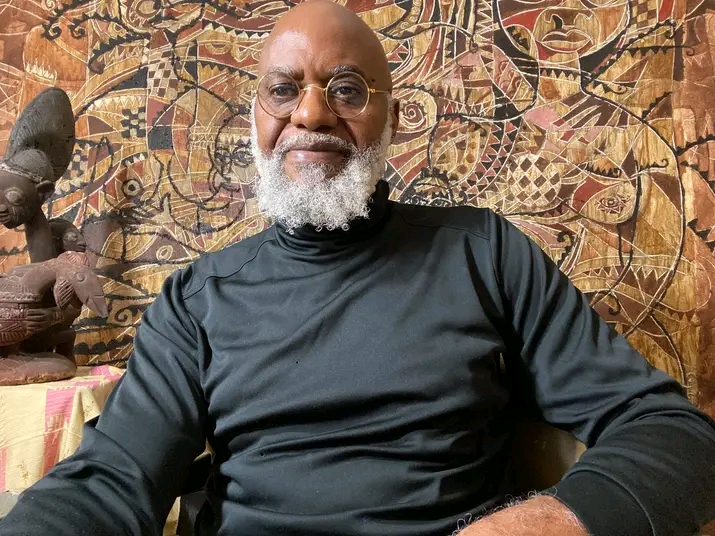
Moyo Okediji, Professor of Art and Art History at the University of Texas, Austin, has explained why his scheduled lecture on Ifa at Obafemi Awolowo University (OAU), Ile-Ife, was cancelled, dismissing suggestions that the university acted because of the content of his presentation.
Okediji said the cancellation was instead the result of unresolved contractual issues surrounding the publication and launch of his latest book, Sixteen Sacred Stanzas of Ifa Tuntun, which had been planned to coincide with the lecture.
In a statement released after a meeting with representatives of the university on Tuesday, the scholar reaffirmed his confidence in OAU’s commitment to academic excellence and intellectual freedom.
“Following my meeting this morning with representatives of Obafemi Awolowo University, I came away reassured that the university remains deeply committed to academic rigor, courageous scholarship, and creative inquiry,” he said.
The lecture, titled “IFA TUNTUN: Evolution, Revolution and Resolution in Yoruba Epistemology,” was expected to attract scholars, traditional religion practitioners and members of the university community. It was initially scheduled to hold at Obafemi Awolowo University, Ile-Ife, on Thursday 16 July, 2026.
Clarifying the circumstances surrounding its cancellation, Okediji said, “I was informed that the cancellation was not due to the content of my lecture. Rather, it stemmed from unresolved contractual issues concerning the publication and launch of my book, Sixteen Sacred Stanzas of Ifa Tuntun, which had been scheduled alongside the lecture.”
He stressed that universities have a responsibility to ensure the safety of members of their communities.
“Every university has a responsibility to protect the safety of its community. I fully respect that obligation,” he stated.
Okediji also disclosed that he had received what he described as credible threats before the event, a development that made him view the postponement with some relief.
“Ironically, I was relieved by the postponement. Before the event, I had received credible threats from individuals determined to prevent the lecture from taking place,” he said.
Despite the threats, he noted that many respected traditional religious leaders had indicated their willingness to attend the programme.
“At the same time, many respected Araba, Babalawo, Iyanifa, and other Ìṣẹ̀ṣe practitioners had expressed genuine interest in attending. Their openness reminds us that the Yoruba spiritual community is diverse, thoughtful, and should never be judged by the actions of a vocal minority,” he added.
Okediji further revealed that OAU remained willing to host the lecture despite reviewing the controversy that surrounded his virtual lecture in 2024.
“I was also encouraged to learn that, even after reviewing the disruptions surrounding my 2024 virtual lecture, the university remained willing to host this event. That speaks to OAU’s enduring commitment to academic freedom and intellectual engagement,” he said.
According to him, both parties have agreed that the first volume of Sixteen Sacred Stanzas of Ifa Tuntun will now be published under a different imprint while discussions continue on the remaining 15 volumes.
“We have agreed that the first volume of Sixteen Sacred Stanzas of Ifa Tuntun will appear under a different imprint while discussions continue regarding the remaining fifteen volumes of the series,” he explained.
The professor expressed appreciation to the university’s leadership for what he described as their professionalism and commitment to dialogue.
“I extend my sincere appreciation to the Vice-Chancellor, the Dean of the Faculty of Arts, the Director of the Institute of Cultural Studies, and Erelu Tunwase for their professionalism, wisdom, and commitment to dialogue. I remain confident that our collaboration will continue in the shared pursuit of learning, culture, and intellectual excellence.
“The conversation continues,” he concluded.
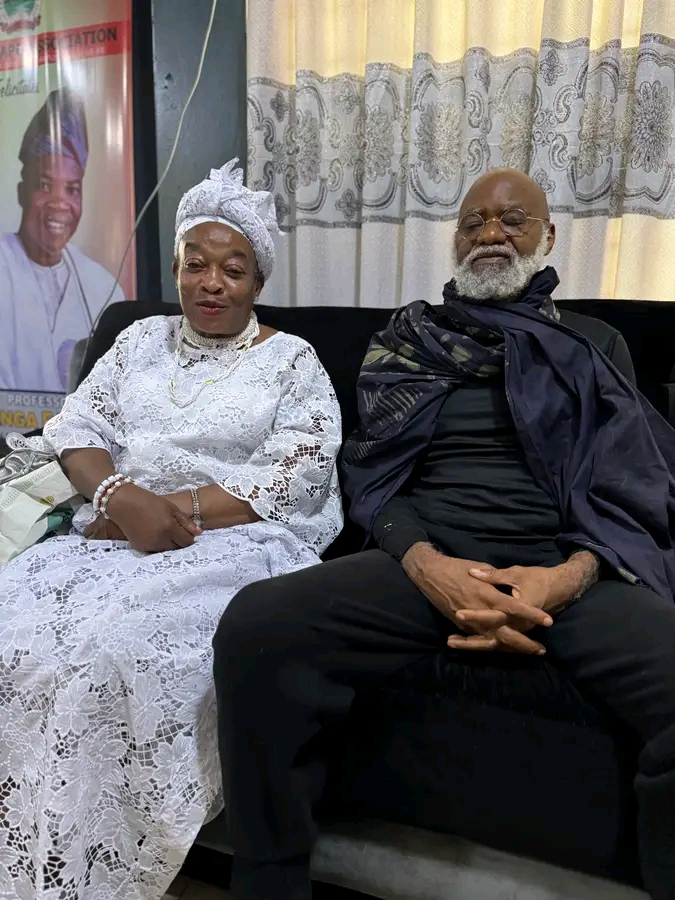
A photograph accompanying his statement showed Erelu Tunwase, representative of the host community, participating in a town-and-gown meeting held in the Dean’s office following discussions over the cancelled event.
Comments