



Siya Kolisi’s Leadership Arc and the New Shape of Springbok Influence


 Quick Read
Kolisi’s background has become part of South African sporting memory. Born in Zwide, Gqeberha, he moved through a childhood shaped by hardship before rugby opened a route into elite schools, provincial structures and eventually the national team. That journey is powerful because it connects directly with South Africa’s uneven sporting landscape.
Siya Kolisi’s story is often told as a rise from Zwide to the centre of world rugby, but that only explains part of his influence. The deeper point is how he changed the way South African fans understand leadership. He became a symbol, yes, but also a working captain who had to make tackles, carry into traffic, manage pressure and stay useful inside a brutally demanding Springbok system.
That balance is what makes Kolisi’s career more than a biography of inspiration. It is a study in how modern rugby leaders are judged across several spaces at once: performance data, team culture, media attention, public expectation and matchday conversation. Around big Test weeks, fans move through team news, analysis, live scores, betting markets and mobile tools such as betway za app download apk, but Kolisi’s real value still begins in the most direct place: what he gives South Africa between the white lines.
His leadership arc matters because it did not follow the old model of the distant captain. Kolisi has often led through visibility, emotional intelligence and physical commitment. For South African rugby, that combination helped turn one player’s life story into something bigger: a new language for what Springbok influence can look like.
From Zwide to the Springbok Standard
Kolisi’s background has become part of South African sporting memory. Born in Zwide, Gqeberha, he moved through a childhood shaped by hardship before rugby opened a route into elite schools, provincial structures and eventually the national team. That journey is powerful because it connects directly with South Africa’s uneven sporting landscape.
Yet the biography should not flatten the athlete. Kolisi did not become a Springbok because his story was moving. He became one because he could play Test rugby at the level required: defending hard, carrying through contact, linking phases and reading momentum from the flank.
His rise also showed how talent development can depend on opportunity as much as ability. In a country with deep rugby culture but unequal access, Kolisi’s path reminds readers that elite sport often begins long before the professional contract. It begins with who gets seen, who gets supported and who gets the conditions to keep going.
That is why his early story still matters. It is not a sentimental prologue. It is part of the evidence behind the broader conversation about rugby pathways in South Africa.
The Captaincy That Changed the Room
When Kolisi was appointed Springbok captain in 2018, the moment carried historical weight. He became the first Black player to captain South Africa’s men’s rugby team, a fact that could not be separated from the country’s past or from rugby’s place in national identity.
But the captaincy could not survive on symbolism alone. South Africa needed a leader who could hold authority in a squad full of strong personalities, experienced forwards, tactical leaders and players used to pressure. Kolisi’s success came from making that authority feel shared rather than imposed.
He did not appear to lead by constant speeches. His public image has often been calmer than that. The more telling pattern is how the Springboks around him seemed to trust the emotional tone he set: controlled, collective and clear about the jersey’s meaning.
That changed the room around South African rugby. The Springbok captain was no longer only a figure of command. He was also a connector between communities, generations and rugby identities.
Why His Playing Style Supports His Leadership
Kolisi’s leadership would be less convincing if his rugby did not fit the message. His game has always been built on effort areas that teammates notice: defensive work, support lines, cleanout presence, contact strength and willingness to stay involved when a match becomes ugly.
He is not a luxury player. He does not need the game to be open and pretty to matter. In tight Tests, where collisions pile up and small errors decide momentum, Kolisi’s value often appears in repeated contributions rather than one spectacular moment.
| Leadership trait | Rugby expression | Why it matters for South Africa |
| Composure | Calm decisions under scoreboard pressure | Keeps the team connected in tense finishes |
| Physical commitment | Tackles, carries and breakdown work | Gives authority to his words in the huddle |
| Emotional intelligence | Inclusive public and team language | Broadens the captain’s influence beyond tactics |
| Adaptability | Role clarity across different Springbok plans | Fits a squad built on tactical flexibility |
| Symbolic weight | Carries national meaning without avoiding performance demands | Links history with elite standards |
A captain who speaks about unity but disappears physically would lose credibility quickly in Test rugby. Kolisi’s strength is that his leadership has usually been tied to visible labour. That makes the story feel earned rather than staged.
The 2019 and 2023 World Cups Built a Different Legacy
The 2019 Rugby World Cup gave Kolisi’s captaincy its defining global image. South Africa beat England in the final, and Kolisi lifted the Webb Ellis Cup as the first Black captain of a World Cup-winning Springbok side. The image travelled far beyond rugby because it seemed to compress South African history into one sporting scene.
The 2023 title added something different. Winning once can be remembered as a peak. Winning again makes the story harder to dismiss as a single emotional wave. South Africa’s back-to-back titles placed Kolisi inside a rare leadership bracket, especially because the 2023 knockout run demanded nerve, squad depth and tactical control.
This matters for how fans read him now. Kolisi is no longer only the captain of a transformative moment. He is the captain associated with a sustained Springbok era.
That distinction is important. Inspiration can fade if it is not supported by achievement. Kolisi’s legacy has both: a story that resonates and a record that gives it weight.
Influence Beyond the Matchday
Kolisi’s public work away from the field has also shaped his profile. Through the Kolisi Foundation, he has used visibility to support community-focused initiatives in South Africa. That kind of platform work has become part of the modern athlete’s role, especially for players whose stories are tied to social mobility and representation.
Still, influence beyond sport is delicate. It can be overpraised when media outlets turn athletes into simple symbols. Kolisi’s public value is strongest when it is understood with balance: he is not a solution to South Africa’s inequalities, but he is a high-profile figure who can bring attention, credibility and energy to specific causes.
For readers, that distinction matters. Hero stories can become too clean. Real influence is usually messier, built through repeated action, partnerships, public trust and the willingness to keep showing up after the headline moment has passed.
Kolisi’s off-field presence works because it does not feel detached from the rest of his life. It connects back to where he came from and to the communities that see part of themselves in his rise.
What Young Athletes Can Learn From Kolisi
Kolisi’s career offers useful lessons for young South African athletes, especially those trying to understand what separates talent from long-term influence. His path suggests that leadership is not a personality type. It is a set of habits under pressure.
The clearest lessons are practical:
- Your background can shape you, but it cannot do the training for you. Kolisi’s story matters because it met elite preparation.
- Leadership needs performance credibility. Teammates follow more easily when effort is visible.
- Symbolism is powerful, but consistency protects it. A historic captain still has to earn selection.
- Adaptability keeps careers alive. Rugby changes, bodies change and roles change.
- Public influence works better when it has a real purpose. Attention alone is not the same as impact.
These lessons explain why Kolisi remains useful as a sporting case study. He is not only a famous Springbok. He is an example of how a player can carry pressure without letting it replace the work.
The New Shape of Springbok Influence
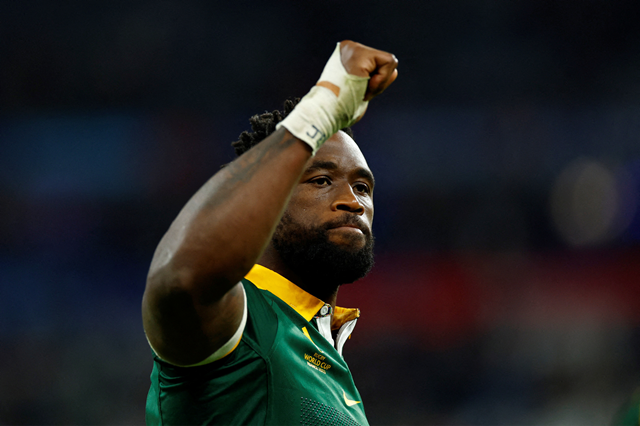
Kolisi’s leadership arc has widened the idea of what a Springbok captain can be. The old image was built mainly around authority, physical command and national expectation. Kolisi added another layer: emotional reach.
That does not make him soft. In rugby terms, his leadership has operated inside one of the most physically demanding teams in the world. The Springboks under his captaincy have often been defined by pressure, defence, set-piece strength and bench impact. There is no gentle route through that kind of rugby.
The change is that Kolisi made strength feel more open. He showed that a captain can be firm without being distant, symbolic without being ornamental, and emotionally aware without losing competitive edge.
South African rugby will eventually move into another era, as every team does. But Kolisi’s influence will be difficult to reduce to trophies alone. He helped shift the public meaning of the Springbok captaincy while still meeting the brutal standard of the role. That is the rare part: not the symbol by itself, and not the player by himself, but the way both have held together.
Comments