


Things Nnaji Ignored —Kanayo Esinulo

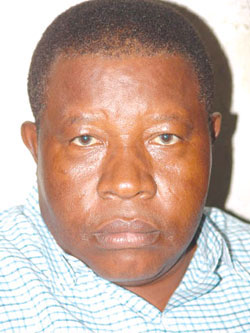
In appointing Professor Barth Nnaji as the Minister of Power, President Goodluck Jonathan may have felt, I suspect, that he had gotten the right man at the right place. He was largely right, going by the man’s record of achievements and professional engagements outside our shores. That was a good choice, a senior industry hand told me many months ago, in an interview. But there were many things, it now seems, that employer forgot to warn employee about – the slippery and dangerous nature of the electric power terrain, and how a mafia that exists at the place has refused to be dislodged over the years.
I am sure that if Nnaji knew how entrenched these agents of darkness are and how they have colonised the power ministry for decades, he would have been prepared for battle. Happily, Nigerians are beginning to appreciate that a mafia really exists within the Power Holding Company of Nigeria, PHCN, and that unless it is fought and defeated, the doors to Nigeria’s development would remain half-open or even shut.
Perhaps, no Minister of Power showed more devotion and dedication to tackle the challenges and confront the mafia at the power ministry than Chief Bola Ige did. On taking charge of the ministry, Ige hit the ground running. He wanted many things changed: he wanted the National Electric Power Authority, NEPA, to work like its counterpart in, say, Ghana; he wanted dedicated hands to be given a free hand to change things and he went about it with rare insight and commitment, clear about what could be achieved. During Ige’s short tenure as Minister of Power, optimism ruled the minds of most Nigerians. In his innocence and sincerity, Chief Ige promised Nigerians that within six months, power supply would improve substantially that would compel Nigerians to forget the traumatising past. To cut a long story short, the mafia defeated Ige in the epic battle that raged. And the Obasanjo administration never raised a finger in his defence. Never shy of conceding victory, Ige gracefully surrendered and was redeployed to another ministry.
That same mafia still exists within the PHCN system today. It has neither been dislodged nor dismantled; and so the darkness which many developing economies have since conquered is still here with us. Luckily, the faces of these agents of darkness are beginning to be known to most Nigerians. They are the cheap labour aristocrats within the Electricity Workers Unions who, because of morbid fear of job loss to their members and the interests they represent, blindly oppose the privatisation and reform agenda of government. Some elements within the Electricity Workers Unions, both in junior and senior levels, especially the fraction led by one Mr. Joe Ajaero, appear to be deriving immense joy and profit from the darkness that has now totally engulfed this country.
What really does Ajaero and his diminishing crowd of supporters want from us? Where else in the world would a country be constantly and continuously thrown into darkness for days and weeks without organised street protests or riots by the people? Is Ajaero, our diminutive trade unionist from Emekuku, not inviting curses on himself by holding this country prisoner, and for importers of gensets to continue smiling to the bank, just because he is the General Secretary of a workers’ union? And has the kid-gloves approach of the Minister of Power in his dealings with the mafia and its representatives yielded results? Or has the Minister run out of ideas about how to navigate the Power Road Map? There are, of course, visible hands of importers and foreign interests, especially Chinese, that derive huge profit from the incompetence and total confusion at the PHCN. Nnaji should, by now, know that he has to put on his battle gear and wage this war on behalf of the Nigerian people. Most Nigerians now solely depend on generators to get their work done. In fact, I am writing this piece at the mercy of my thoroughly overworked generator, and at the expense and total discomfort of my neighbours. In waging this battle, Nnaji should know, or should be told, that Nigerians are behind him, and would wish him victory against these evil forces, enemies of this country.
I recall that when Dr. Ernest Ndukwe was appointed by the Obasanjo administration to extract the people of Nigeria from the stranglehold of another inefficient and badly-run federal parastatal called NITEL, now resting in peace somewhere, he faced similar challenges that Nnaji is witnessing today. But with the backing of the federal government, the unions within NITEL soon gave up, and the smart ones among its work force began to apply to the emerging successor companies – Econet, MTN, Starcomms, Glo, etc. That was the wise thing to do. But Ajaero and the few unpatriotic trade union stalwarts are still putting up a fight in a battle that they cannot win, and should not win. If power supply becomes constant, as was the case during my younger days when the Electricity Corporation of Nigeria, ECN, was the power company, more jobs would be created by the successor companies, self-employment would receive greater boost, fuel consumption will drastically go down (right now, many Nigerians buy more fuel into jerry cans to power their generators than they buy into their cars), industries would produce more and at competitive prices, etc. But Ajaero and Co. would not allow the necessary reforms and privatisation in the sector to take place. They are bent on taking Nigeria prisoner and disturbing the power road map. Sadly and painfully, the postponement of the privatisation exercise by the Bureau of Public Enterprises to October, away from March 2012, was seen by many informed Nigerians as a victory for these same agents of darkness.
Professor Nnaji and his team probably underrated or ignored the powerful social forces that Mr. Ajaero and Co. shamelessly represent, and their capacity to sabotage the national effort. It is to be expected that those who have been enriching themselves from NEPA – or PHCN, as it is called today – for decades would not fold hands and watch an efficient and effective 17 successor companies emerge from the carcass and debris of a terminally ill power company whose requiem is about to be joyfully sung.
Yes, the Jonathan administration inherited the corruption, the complications and the many aborted pregnancies in the power sector. But it needs to show that his government is different and can bite, and deep, too. The mafia that compelled Uncle Bola to surrender should now be fought and defeated. So, Nnaji requires the type of solid backing that Dr. Ndukwe received from the Obasanjo administration when some misguided trade unionists within NITEL system tried to resist the forces of change at the place. Nigerians too must begin to show anger and deep resentment at the misbehaviour and calculated acts of sabotage which this unpatriotic clique within the PHCN system is visiting on all of us. Like my neighbour would say, in his usual wicked humour: “To stay in total darkness for days is no joke.” No, it is not! True, it has never been this bad before.
The privatisation and reform agenda of this government in the power sector will be the tree that defines its forest. It is the parameter on which most Nigerians will measure and evaluate the success or failure of this administration.
•Esinulo wrote this piece for TheNEWS magazine.
Comments