


Why Nigerians Patronise Quacks

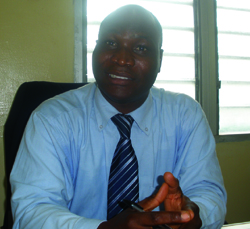
Dr. Oluwagbenga Ogunfowokan, a consultant family medicine physician at the National Hospital, explains why Nigerians will continue to patronise quack hospitals
Why do you think Nigerians prefer illegal hospitals to government and registered private hospitals?
You have to look at the problem from the aspect of the individuals to economic, the community and the health sector itself, the regulatory body and the government. The education level of Nigerians is very low. From UN statistics 60 per cent of Nigerians are not educated. When people are not educated and are poor, they will want to get the cheapest service that is also very convenient. It is based on these that people go to quacks. Remember that they (quacks) are very accessible and cheaper. They don’t have to pass through security, nurses, attendants, but rather they go straight to the quacks. Sometimes, they don’t even pay for this service. In most cases, the quacks render this service on credit, or there is trade by barter in which the patient will have to exchange a goat, eggs or hen for the service. That is to tell you the level of education and awareness.
Even though Nigeria is very rich as a country, an average Nigerian lives on below one dollar a day.
Secondly, you have to look at the community; our community is not structured. You will find out that the quacks are usually situated in the slums. These are the hiding places. In fact, most of them only operate in the night. Because of lack of structuring, you see these quacks advertising all kinds of drugs on the buses, at the bus stops and on the streets without being apprehended. In a structured society, this can’t happen. You can’t just come on the street and be advertising your drugs when you are not even licensed.
Thirdly, we have to look at our health care centres. There is a lot of bureaucracy in the health sector, so when people come at 6 a.m. specifically, they don’t leave until 4 p.m. These are poor people who left their daily earnings to access health. The fact is, they want to go back to the market and sell their wares. They can’t afford to spend so much time because that is where the money will come from. And you think these people will spend the whole day in the hospital. Because of this, they are discouraged. The worse part is that our health sector is not even helping matters.
Could it be that the government hospitals are understaffed?
Well, that is also a factor. The hospital system is not well structured so government hospital patients’ flow will continue to be high. You discover that in most government hospitals, patients come in the morning without specific appointments; everybody comes at the same time. But in a situation where there is an appointment and a doctor gives appointment to 100 people and they told 10 that are different from patients to come at a specific time, how many people will you see in the hospital? Between 9 a.m. and 10 a.m., the place will be flooded with people because there is no structured system. But where there is a structured system, when patients – I’m talking about patients who come for follow-up, not new patients – have been told a specific time to come, do you think they will come by 8 a.m? They won’t come by 8 a.m. because they would have gone to do other things and would later come around 12 noon and they won’t say they have been waiting and waiting. So there is no structure in our system. Those are some of the things that contribute to wasting of time.
And of course, at government hospitals that are standardised you can’t compare the cost to the quack. A quack can just collect N50. But in government hospital you are going to buy cards, you are going to do investigation, and pay for consultation. Now those that are poor don’t want to pay that, they would rather go to quacks where they will get cheaper service.
The regulatory agencies are also not doing their work. Because they are to make sure those providing health care are qualified. But because they are not doing their work, there will always be quacks. Nobody is doing anything to apprehend the quacks and also sanction them appropriately. The regulators are supposed to make sure those health care providers are trained and licensed. That is why you see somebody selling drugs on the streets without being arrested. Have we actually been able to legislate against quacks? So, because of these problems, people go to quacks and the business will continue to flourish.
-Published on TheNEWS magazine
Comments