



Oritsejafor: The Pastor and his Controversies

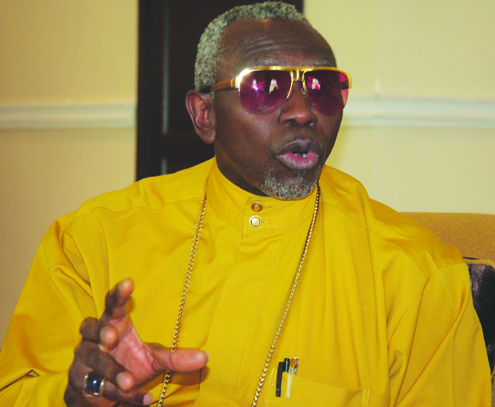
Leader of Nigeria’s Christian community and fiery preacher, Ayo Oritsejafor has made a career of ruffling feathers every step of the way
From his taking to ministry work in 1972, to rising to become the head of the Christian population in Nigeria today, Pastor Ayodele Joseph Oritsejafor has, by his actions and utterances, cast himself in the mould of a gadfly. After he severed ties with his mentor, the late Archbishop Benson Idahosa, Oritsejafor has maintained the steam of the radicalism that saw him leave Idahosa’s Church of God Mission, CGM. He went on to establish his own ministry, the Word of Life Bible Church, WLBC, in Warri, Delta State, having cut his evangelical teeth under Idahosa.
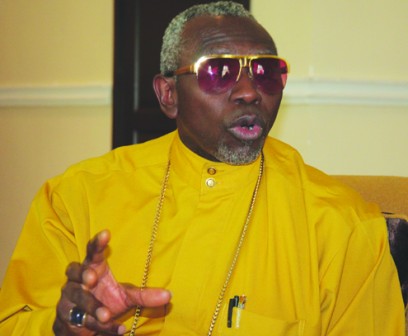
Despite the bad blood that his breaking away from Idahosa’s fold precipitated, Oritsejafor maintains he holds dear his relationship with his deceased mentor. “I will never forget Church of God Mission because that was where I became a Christian. I was in the Baptist Church but I knew nothing about God. I gave my life to Christ under the ministry of the late Archbishop Benson Idahosa and immediately became an active part of the church,” Oritsejafor recalled in an interview with the Vanguard newspaper.
The Christian Association of Nigeria, CAN president, following in Idahosa’s footsteps, further propagated the then fledgling Pentecostal movement by evangelising through a TV programme, Hour of Delivery, which he started in 1980. He continues to preach the gospel on several cable TV networks, via the internet, and through books he authored, reaching out to people the world over.
Oritsejafor retains his garb of a cleric, but has in recent years taken his gospel to a broader, different kind of platform. From emerging the National President, Pentecostal Fellowship of Nigeria, PFN (though under controversial circumstances), and the head of CAN – two roles he currently plays – the preacher has further thrust himself to national political limelight.
In championing the cause of his Christian brethren across the country, Oritsejafor has often confronted many battles, lending himself as the most outspoken head of the CAN ever.
On the ongoing bloodletting by the Boko Haram in parts of northern Nigeria and the toll of the carnage on Christians there, Oritsejafor has not minced words on the need for government to act or the people would resort to self help.
“I have made a suggestion in the past that raised dust and many people have said I should not say so again but I will reiterate it here again. If it is difficult to protect the citizens of the country, then the National Assembly should pass a legislation that would give Nigerians the right to legitimately own their arms. It is for personal defence, because I feel it is bad for a man to sit down in his house and for five mad people to invade his house, rape his wife, kill his wife, his children and him too. What is that nonsense for?” the preacher told this medium in an interview.
When challenged on his statement calling the people to take up arms, the pastor expressed no regrets, insisting it was the proper thing to in the face of government’s failure to adequately protect the citizens.
“What I have always said and will continue to say is that if you are attacked, you should defend yourself. As Christians, we don’t retaliate. But it will be suicidal for you to sit down there and allow somebody to kill you. Suicide is not allowed in our religion because if you commit suicide, you go to hell. As Christians, you should defend and protect yourselves.
“I don’t understand why some people protest when I say Christians should defend themselves. I wonder if people want me to say, as the leader of all Christians in Nigeria, that if they come to cut off your head, you should surrender. I will never say that because that would be suicidal and it is wrong to commit suicide in Christianity,” declared the preacher.
The Christian leader deplored the Islamic sect’s ambush tactics of killing innocent Christians. ‘‘The Boko Haram people are a bunch of cowards, who go to churches to shoot people that are not armed. If they think they are strong, they should go to places where the people they are going to attack are also armed. They should go and face people that are armed, not unarmed people,” he said.
On Boko Haram, Oritsejafor has been unrestrained in his condemnation of its violent strain of Islam, and has been vociferous in calling for the United States to classify it as a terrorist organisation.
On 10 July, the CAN president led a delegation from Nigeria to address the U.S. Congress on the thorny issue of Boko Haram. There, the pastor presented a paper titled: “U.S. Policy Toward Nigeria: West Africa’s Troubled Titan” before the House Subcommittee on Africa, Global Health, and Human Rights.
In his very impassioned speech, Oritsejafor urged the US lawmakers to act decisively against what he termed “the increase in terrorist attacks targeting Christians and Christian institutions”.
“Boko Haram is not only a northern problem, but a Nigerian problem with global implications. Nigeria is not a country divided by North and South, but a country divided between those who support freedom and equality in the eyes of the law, and those who promote persecution and violence as a means to an end,” lectured the cleric.
The U.S. had shown a reluctance to classify the Boko Haram sect, wholesale, as a terrorist group, opting only to tag the group’s leader Abu Shekau, as a terrorist. Despite mounting calls by notable Nigerians for Boko Haram to be designated a terrorist organisation, the various US government agencies and organs, particularly the State Department, rebuffed the request.
Though the U.S. continues to pledge its commitment to assist Nigeria in fighting the radical Islamic sect, Oritsejafor was not satisfied with mere pronouncements. While addressing the U.S. Congress, the cleric argued that the fact that Boko Haram has waged a systematic campaign of terror, was seeking an end to western influence, and is pursuing an annihilation of Nigerian Christians, was enough ground to earn it the “terrorist organisation” designation.
“This is outright terrorism, not legitimate political activity or the airing of grievances. By refusing to designate Boko Haram as a foreign terrorist organisation, the United States is sending a very clear message, not just to the Federal Government of Nigeria, but to the world – that the murder of innocent Christians, and Muslims who reject Islamism, and I make a clear distinction here between Islam and Islamism, are acceptable losses,” argued Oritsejafor.
He added that: “It is hypocritical for the United States and the international community to say that they believe in freedom and equality, when their actions do not support those who are being persecuted. A non-designation for the group only serves to hamper the cause of justice, and has emboldened Boko Haram to continue to strike out at those who are denied equal protection under the law.”
Oritsejafor also pointedly opposed the group’s offer of a ceasefire and dialogue with federal government, branding the suggestion unrealistic. “I do not understand what they would be talking about. What are they going to discuss? It is puzzling. I see a total religious fundamentalism in the whole episode. If there should be a dialogue, there should be a basis. If you are talking of dialogue and the same set of people are killing innocent souls, so what is the basis? To me, there is no basis for dialogue,” maintained Oritsejafor.
When the U.S. Secretary of State, Hillary Clinton visited Nigeria in August, while on an 11-nation tour of Africa, Oritsejafor seized the occasion to raise the Boko Haram issue, and also rejected spurious claims the Islamist sect had killed more Muslims than Christians in the bloodletting in Nigeria’s north. He dismissed the notion that Muslims in Nigeria were greater in number than the Christian population.
It was out of his Christian sentiments that Oritsejafor also vigorously supported the election of President Goodluck Jonathan, damning critics from other faiths. The CAN president was unapologetic about the fact that he preferred to relate with a Christian president in power.
While the cleric has consistently sided with his Christian constituency and spoken up against any form of oppression towards it, he nevertheless belongs in the group of church leaders reveling in wealth amidst largely impoverished followers.
On 10 November, Oritsejafor joined the exclusive class of church leaders who own private jets. While marking the 40th anniversary of his ministry work and birthday, the pastor’s church members reportedly presented him with the gift of a 10-seater Bombardier Challenger 601 plane, estimated to cost about $4.9mn.
Though the jet gift has been made to look like a generous gesture from a congregation to its pastor, the action has earned the CAN president flak from across the land. More so, Oritsejafor’s jet gift looks rather suspicious given that in 2009, the pastor had hinted he was craving a jet of his own. There is the notion that the cleric had then set plans in motion to procure the aircraft, which has now being presented as a gift from his congregation.
“I don’t own a jet, but if you give me one, I will collect it,” said Oritsejafor back then, while responding to reporters’ queries on whether it was morally right for pastors to be acquiring private jets, while some of their flocks live in penury.
Oritsejafor rose in stout defence of his colleagues like Bishop David Oyedepo of Winners’ Chapel and Pastor Enoch Adeboye of the Redeemed Christian Church of God, RCCG, who also own jets, arguing that the aircraft would better aid their evangelism work around the world.
“The schedules of these men of God are too much. I can’t sit here and criticise someone who has a jet. I need a jet but I don’t have the money yet,” declared Oritsejafor back then.
He also rejected the charge that pastors were too self-centred and greedy, and so care less about their followers’ welfare. Citing himself, Oritsejafor claimed he planned to distribute 4,000 wrappers to women and a separate portion to men in his Warri, Delta, base. He added that his ministry had in the past given out tricycles and cars to people.
Criticisms have been pouring in torrents since Oritsejafor’s unveiling of his jet. Pastor of the Latter Rain Assembly, Tunde Bakare, was merciless in his denunciation of his jet-crazy colleagues feeding fat at the expense of their hapless congregation. “Ask them where they are getting the money they are spending lavishly,” he challenged, while speaking at a gathering in Lagos last Monday.
Bakare summarily asked that all such pastors leading luxurious lifestyles, even if it includes him, be jailed so they can feel the pains of the ordinary man. The chieftain of the Save Nigeria Group, SNG, maintained that Nigeria will never experience change except the purge starts from the church.
“All general overseers and religious leaders must go to prison, so they can feel he Nigerian situation. Lock Pastors Adeboye, Kumuyi, myself and others up in a Nigerian prison, may be if we come out, we will change and put the interest of our people first.
“Preaching greed is sin, we have the confidence of millions of people and continue to fail them, that must change,” Bakare said.
Shortly after Oritsejafor received his gift of a jet, a picture of his wife stepping out of a limousine surfaced on social media sites.
Though it is most likely that the vehicle does not belong to her, it drew the anger of critics who wonder why Nigerian pastors and their wives like to flaunt the fact that they enjoy a life of luxury and pleasure.
“This is ridiculous and distasteful. What is the point she is trying to make? How does she drive this kind of vehicle through the chaotic streets of Warri?” a critic said in Lagos last week, stressing that Oritsejafor is just like other monied Nigerian clerics.
Just as he sees nothing wrong with pastors acquiring their own jets when some of their followers can’t afford basic supplies, Oritsejafor also sees nothing awkward in the high fees being paid at schools built with donations and labour by church members. Only very few members can afford the high fees paid at Covenant University and the Redeemer’s University – owned by Winners’ Chapel and RCCG respectively – even though the institutions were built largely with donations by the same members.
“ The schools and hospitals being built by clergy today, as you rightly observed, are by the local offerings of the local people. In the first instance, why does a church wants to start a university? The purpose is to inculcate good morals and God’s fear in the youth. The churches are setting up schools and universities because the standard of education has fallen. So the churches are determined to bring back the standards and if you must do that, then you should be ready to pay standard money to the teachers who will teach the students.
“If you don’t charge standard fees, how then do you pay the teachers, run the generators and other logistics that will make the school run as a standard school? The money must come from somewhere and the tithes and offerings alone can not do that. The tithes and offering may have been used to start the school, but they cannot maintain the standards,” Oritsejafor told TheNEWS. Many Nigerians also despised Oritsejafor for his “insensitivity” when he reportedly sided with the federal government on the unpopular policy of the removal of fuel subsidy. Rationalising the policy, Oritsejafor had persuaded Nigerian masses to view the subsidy removal policy as “an inevitable painful pill to swallow”, though he charged the government to assure citizens that the policy will be carried through in a way that ultimately benefits all.
Oritsejafor’s position instantly attracted reproach from a section of the public, particularly the Christian population in the North. As the backlash grew, the cleric quickly backtracked and denied he ever supported the government policy. “There was never a time he (Oritsejafor) issued such a statement on such a sensitive issue that affects the very soul of our society at the moment. We spoke…and he vehemently condemned such a purported statement. It was mischievous and largely unfounded,” read a statement issued by Oritsejafor’s aide, Rev. Ladi Thompson.
Thompson’s claim were not exactly accurate. Oritsejafor expressed support for the much-hated policy, but qualified his support. “Let me begin by saying that removing fuel subsidy is not a bad idea because it will be a fantastic thing for a nation to allow market forces to allocate prices. But certain things are necessary before that could be done, based on the peculiar situation of Nigeria. First, there must be proper dialogue between government and all the stakeholders involved. I believe that government should sit with the right people to discuss the way forward and come to an agreement. So dialogue is essential.
“Second, before government can remove fuel subsidy it must have put in place certain things to cushion its effects, essentially in the area of transportation of people and goods. Vehicles don’t run on water, rather one will have to buy fuel with money and it will be difficult for people to move from one place to another,” the preacher told this magazine in an interview published the edition of 31 October 2012..
Oritsejafor is seen as a staunch supporter of the President, who was with him during his birthday celebration and unveiling of his private jet. “There’s no doubt he’s extremely close to Jonathan. That’s why he is always out to defend him and his policies. But to defend policies that impoverish the masses is unbecoming of a cleric of Oritsejafor’s standing,” reasoned a commentator on religious matters.
—Tokunbo Olajide/TheNEWS magazine
Comments