


Wielding The Big Stick

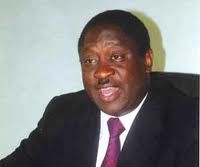
Federal Government wields the big stick against Bi-Courtney Highway Services.
To many Nigerians, last week’s decision of the federal government to revoke the concessioning granted Bi-Courtney Highway Services, BCHS, to rebuild the Lagos-Ibadan Expressway was belated. Minister of Works, Mike Onolemenmen, told journalists at the Presidential Villa last Monday that government was effectively terminating the concessioning agreement, citing BCHS’ manifest inability to execute the N89.53 billion project three years after it was awarded. Onolemenmen would later accuse the company of breaching some of the terms of agreement it reached with the government. The terms, he said, were failure to submit a duly completed performance bond and copies of financial agreements, construction contract and Operations and Maintenance contract. The minister stressed that while government would continue to uphold the sanctity of contracts it entered into, “it would not shy away from implementing provisions of the contract agreement dealing with non-performance”.
Onolemenmen immediately named Messrs Julius Berger plc and RCC Nigeria Limited as replacements, and said they would handle the work in phases, obviously for quicker delivery. Unlike the previous agreement which granted rehabilitation of the entire 105 kilometres stretch to BCHS, Messrs Julius Berger plc and RCC Nigeria Limited would handle Lagos to Sagamu, in Ogun State, and Sagamu to Ibadan, in Oyo State respectively.
The hint that something was in the offing concerning the contract was first given by President Goodluck Jonathan who, during the Presidential media chat on 18 November, averred that the government would intervene on the road. According to him, “Bi-Courtney lacks the capacity to carry out the job. We cannot continue that way.” In what also seemed to suggest that government wasn’t quite satisfied with the deal in the first place, Jonathan said that the “country is held to ransom because of a transaction that was probably not handled properly”.
BCHS owner, Wale Babalakin, a senior advocate, last Tuesday claimed the company had not been formally notified of the cancellation, a claim that was sharply rebutted by the government. Babalakin, who is the Pro-Chancellor, University of Maiduguri, later stated in a press release that the matter would be “resolved in a manner that would rekindle the Nigerian spirit of enterprise, scholarship and persistence”.
BCHS had faced vehement opposition from the South-west governors of Ogun and Oyo states, whose domains the road passes through. Some commentators are, however, hinging the inability of the concessionaire to do any meaningful work on the road to extraneous factors other than its operational capability. Major among these factors is funding, as the company’s efforts to secure loans from Nigerian banks proved abortive. The banks were constrained by a Central Bank of Nigeria policy which restrains banks from granting long-term loans. Despite the setback, BCHS announced early this year that it had reached an agreement with a consortium of construction firms and the Rand Bank of South Africa for the financing. Just as many thought the company had made a breakthrough, bureaucratic bottlenecks and powerful influence peddlers in the Presidency were alleged to have clogged its efforts.
Government’s failure to secure for BCHS the Right of Way and also in ensuring State Support Agreement from the states that the road passes through equally contributed to the encumbrances BCHS encountered. Using the road has also become horrendous anytime the various religious bodies, including the Redeemed Christian Church of God, Mountain of Fire and Miracles, Nasrul-Lahi-Il-Fathi Society, NASFAT, whose camps are located along the road, hold their services. Many road users are always trapped in traffic gridlock for endless hours at the mercy of these religious bodies.
The rehabilitation of the road was awarded to the BCHS in 2009 during the administration of the late President Umaru Yar’Adua to design, build, operate and transfer scheme under a public-private partnership agreement that would last 25 years.
—FOLA ADEMOSU
Comments