


The Injustice In Church-Owned Schools

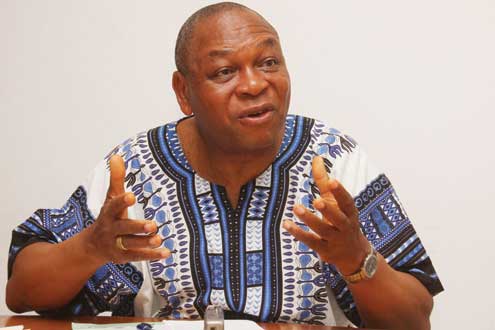
Cardinal John Olufemi Onaiyekan, Catholic Archbishop of Nigeria’s capital city of Abuja, tells OLUOKUN AYORINDE and SOLA FOLORUNSO-ADEOLA about his recent appointment as a cardinal, requirements of inter-faith harmony and why church-owned educational institutions are expensive
Congratulations on your appointment as a cardinal. Did you in any way expect the appointment to come at the time it did?
First, you don’t expect such things, but also if you are working for God, you should expect anything. So, whatever comes, you thank God for it. I received it with thanksgiving to God, with the deep confidence that God will not send us to where he will not accompany us to and of course, with gratitude to the Holy Father, the Pope who chooses those he wants to be cardinal.
But did it ever cross your mind that you would be made a cardinal?
Our work is not the kind of work you enter with ambition for high post. If you talk of ambition, all I wanted to be was to be a priest and you can say that ambition was realised in 1969, when I was ordained a priest in Kabba. Every other thing after that is God’s own grace; it is not what you worked for. You are not on a career ladder. If you think our career is to go from reverend father to bishop and from bishop to cardinal, how many priests will be able to do that? In a diocese with over 2000 priests, only one will be a bishop. So, it’s clearly an issue of God’s own choice. The important thing is that wherever one is, whatever you are, do your best to serve God.
As a cardinal, will there be any change in your role from when you were an Archbishop?
Basically, I am still the Archbishop of Abuja. So from that point of view, my basic duties remain the same. But with the new title, the people now call me His Eminence instead of His Grace. There is a little change to the colour of my regalia, but more importantly, one of the major roles of the cardinal is to be available as a close adviser to the Pope and that will add more to my responsibilities. It means I am not only just responsible for the Archdiocese of Abuja, I also will be expected to make my own little contributions, along with the other cardinals worldwide, to His Holiness who is the pastor of the Catholic Church all over the world. No single person, except Jesus, can see the whole world from heaven. So, the Pope has to rely on certain people close to him. Apart from the cardinals all over the world, of course, he has important offices around the world that deal with various aspects of the church and the people there are the ones who do the work of coordination for him. But the Pope also wants different people from different parts of the world he can call on at any time. A cardinal is also assigned to one of the congregations in Rome, which means I may be having meetings three times or so with the other cardinals who may be so assigned. For the moment, I have not been assigned any special role.
You’ve played a significant role in ensuring harmonious relationship between the various faiths, especially Christianity and Islam in Nigeria. What is your motivation and how far would you say Nigeria has gone in achieving this in view of the activities of Boko Haram?
Whatever role I have played in the effort to foster harmonious relationship between various faiths in Nigeria, I have only followed the way I understand the position of our church in these matters. I am guided by the documents of the Catholic Church on inter-faith relations, which are available to everybody who cares to read the Vatican Council documents. This is a document which is not recent or hidden, it has been published since 1965. And as a young theologian, I did my study on those documents, not only on the church and other religions, but also between the church and other Christian bodies, which we call ecumenism, as well as what the role of the church should be in relation to the world, to the nation, politics and so on. All these things are well articulated in our official documents. All I tried to do was to read them, understand them and apply them to the situation in my country.
Now, how do I see the relationship between the different religious groups in Nigeria? Despite the things that we see around us, despite Boko Haram, unguarded utterances here and there, I still believe firmly that on the average, a Nigerian relates well with his neighbour of another faith. I will say 90 per cent of Nigerian Christians have no problem with their Muslim neighbours. Ninety per cent of Nigerian Muslims are the same way, too. I am saying this because that is the reality I see on ground. Go to Wuse market and let anybody tell you who is a Christian or who is a Muslim there. Go to the Armed Forces, you don’t know who is a Christian or who is a Muslim. Very often, civil servants tell me that in their offices, if they don’t bear names like Ibrahim or Christopher, they can be in office for years without knowing each other’s religious inclinations. It means that on the normal level, we relate well, not to mention cases where we are in the same family, especially in Yorubaland and much of the Middle Belt where Muslims and Christians are found in the same family. For me, it is on that that we should build and not to continue to emphasise the troublemakers, who are less than 10 per cent. But this 10 per cent, unfortunately, is very important because they create a lot of problems. It is not how many they are, but the havoc they can commit. So, when you have a group like Boko Haram, which has a way of getting young people to arrive at a decision to kill innocent people and themselves, we have to say these are not the Muslims I see around me. They do not represent the Islam I am familiar with, although they claim to be Muslims. That then means that we need to tackle those who refuse to respect other faiths, try to let them know that this is not the best way to honour God. Now, this also means that Nigerians, as a whole, should accept the reality that no matter how much I preach in my church and no matter how much the Muslims shout about Islam being the best religion, the reality is that for the foreseeable future we are all together in this country. And my own understanding is that the only wise approach to this is to do our best to facilitate and promote a situation where, despite our differences in religion, we can still work together for the things that we have in common. We can even reach a situation in which we work together and cooperate because of our religion. A lot of people say we should forget our religion if we want to live together in peace. But that is not possible. I cannot forget that I am a Catholic, a Christian. But it is possible to be Christians and Muslims and still live together in peace. In fact, I will go further and say if you are a good Christian or a good Muslim, you must make the effort to live at peace with your neighbour because God does not want his children to be killing each other. Any God that wants me to kill somebody for him is not worthy of my worship. This needs to be said over and over because there is the danger too that a small group of troublemakers can actually begin to sow doubts in our hearts and poison the good relationship that already exists between us.
I have always told them abroad, during interviews like this, that the biggest problem is not with Boko Haram, even though they have created a lot of havoc. My greatest fear is that the kind of thing they are doing is gradually spoiling the good relationship among our people in our country and we must never let that happen. I still believe it is not too late; all of us who believe in peace must not give up. We must identify and isolate the small group on both sides, who do not want peace. I say on both sides because it is not only Muslim fanatics that are causing trouble, there are also Christian fanatics that are causing trouble. Christians who do not see anything good in any Muslim; Christians who make terrible statements that all Muslims are going to hell; Christians who make statements that every Muslim is bad.
Are they also fanatics?
Yes, of course. They forget that not every Christian is good. Have they not seen bad Christians? There are Christian armed robbers, Christian kidnappers and Christian cheats. They are all over the place. So, this world is not divided so neatly the way they are thinking. In Nigeria, the only advantage that we have is that we have Muslims and Christians almost in the same number, which is a perfect condition to work for good relationship between the people of the two faiths. If we succeed in doing that, then religion will no longer be a problem. It will be one of our greatest assets because with people living faithfully, according to their religions, they will be good citizens. Anyone who is stealing billions from our common purse, billions that we should use to feed the hungry and heal the sick in our hospitals, cannot tell me that he is a good Christian or a good Muslim. If he is a good Christian, he wouldn’t steal.
Do you share the view that with the way we are going, the country may in a few years time cease to exist as an entity?
Who are “we”? What are the “we” that we are talking about? Is it the way we are going or you are going? Nigerians are not one bloc. It is exactly what we have been discussing in religion–the vast majority of Nigerians are just nice, simple people, who just want to live their lives. But there are some people, who are causing trouble. And there are, unfortunately, some people in power and in sensitive positions, who are not doing what they should do. Now, if we allow them to continue, yes they can ruin the nation. They can ruin any nation. But my belief is that they will not ruin this nation because there is enough goodwill in our country to stop that from happening. I am very optimistic that in my lifetime, political leaders will realise that it is in their own interest to use political office in the service of the people and not for self-enrichment. When we reach the level in which people go into politics in order to see how best they can serve the nation, then what you are seeing will not happen. I also know that bad government has its term; it cannot continue forever. Indeed, it cannot continue for too long. Why? Because a bad government creates a very unstable environment and before you know it, it will crumble on its own. It cannot continue like this. My only problem is, will it change when the whole thing collapses and you have a kind of violent revolution and we kill one another and start again to put the pieces together? Or will it change when we begin to reason and realise that it is much better to run a nation with honesty, with concern for the common good? And how do you judge the common good? When you take care of the weakest, the poorest and those in need. When the government does that, it is only then that you will know that it is taking care of the common good. Otherwise, you can take care of the common good of the big people, which is what is happening now.
We’ve got to a situation in which whether you are in the ruling or the opposition party, practically speaking, the big people up there are only taking care of themselves. We want a situation in which they will think of what is best for Nigeria. If the common good was their main objective, you wouldn’t see the kind of do or die contests that we are having on the political scene. And if someone is in the opposition, his job is to point out anything that the government is doing which is not helping Nigeria. And when it is time for election, he should be able to tell us that the government that is ruling now has been doing XYZ, which is not helpful to Nigeria, and if you put us there, we shall repair it and do ABC. Then, we will have the opportunity to choose and when we go to vote, it will be a vote that has a meaning. But when all you want are people who just want to capture power without knowing what they want to do with it, they just want to occupy government house, they want to be able to ride around with sirens blaring and putting their friends and relations wherever they like whether they are qualified or not, then we have not started.
Some people blame the church and other religious leaders for failing to speak to the political leaders on the need to work for the common good.
You know that in Nigeria, there are many religious leaders. When you write in your newspapers, you will say a clergyman said this. And if you ask who this clergyman is, it will be one unknown person. Anybody can be a clergyman in Nigeria and it is a good thing in our country that we have freedom of religion. However, the consequence of that is that anybody can say what they like and you journalists can then turn around and say, look at what religious leaders are saying. We don’t agree among ourselves, we don’t even have the same objectives. People have reasons for going into religion. For many, it is an investment. For others, it is a job, while for some others, we hope it is the service of God. And that is why your question is very difficult to answer. But let me answer for myself. I think I try to tell not only the politician, but everybody, what I understand the Lord Jesus wants me to say. I preach the importance of justice, of honesty, of concern for the poor. But that I do not go to the pulpit and begin to say Minister X, Senator Y is a thief is simply because I do not think that is my duty. Before I call somebody a thief, I must have the evidence and it is not my job to start investigating. That is the job of government. I am sure every ministry has its control and regulatory department. The government itself has the auditor-general, so they know exactly who is taking our money. And sometimes, they actually mention their names, so it is not my job. I think people think that if I simply say don’t steal anymore, it will stop. No, it won’t stop. We have said it many times that they should not be stealing and that when they steal, they are taking money that belongs to the poor people and by stealing too much, they eventually become murderers because people are dying because of poverty. I am praying for them that when they reach the gates of heaven, they may not find their ways blocked by those people who have died through their greed.
But should we wait till they get to heaven to be punished?
That is precisely what I am saying. We should have a situation here where we can deal with dishonest people. It is not the work of religious people to deal with thieves. The government should deal with thieves. We have the Police to do that, we also have all other sorts of agencies. So, if anybody is waiting for religious leaders to do that job, the person is simply being mischievous. The people know that they should not be doing all these things.
Where do you stand on the push by some people to get churches to start paying taxes since they now make so much money?
The question then that we must ask is, what exactly is a church? If you have a church that is not a profit-making association and all over the world, there is provision for tax exemption for non-profit making institutions like the churches. If you are talking of a country that can be described as the apex of taxation, it is the United States of America. If you buy toothpicks from a shop, you will pay tax. But they have provision for tax exemption for all churches that are truly churches. They have rules that any church so called must obey. Once they go beyond that and they are no longer what you will call non-profit, they have to pay tax. So, the outcry that churches should pay tax in Nigeria is based on the wrong premise that all churches are the same.
But some religious leaders own jets and live in opulence.
Yes, the government can say that if you buy a jet, you should pay tax on your jet. There are so many institutions and agencies that go by the name church. And any such institution which is clearly profit-making should pay tax. The way the Catholic Church is run, we are clearly not there to make profit. Somebody was saying to me that I must be very rich now that I have become a cardinal. I told him that in my church, your title does not carry with it financial gains. My being a cardinal has not increased my financial position. I had made arrangements for the refurbishment of the house before I became a cardinal and I don’t intend to leave this place.
What is your response to the complaints that the schools being run by religious bodies are so expensive that most of their members, from whose offerings and contributions they are built, cannot afford to send their children there? The argument is that, what is happening now is contrary to what happened when the missionaries were running schools.
That is a case that has thoroughly disturbed me. Let’s put it this way: the Catholic schools or the missionary schools that those people are talking about was the same school I attended. My father was a poor farmer, but a rich Christian, very rich in faith. If it was today, he wouldn’t be able to send me to a private school. The Catholic school in Kabba was not a private school. It was a purely Catholic school, but all the teachers were paid by government and apart from this, government was giving grant and aids for the running of the schools. I left St. Mary and went to St. Michael Secondary School, Aliade. All the teachers were also being paid by the government. And there was per capita grant for each child; fees were also minimal. Despite the fact that the fees were minimal in the schools I attended, brilliant children from indigent homes were given scholarships. So, more than half of us didn’t pay a kobo for our secondary education. And you know it was precisely because the government was largely paying for the running of those schools that they were able to push the churches out of running of those schools, which we now call takeover of schools. When people hear of takeover of schools, they don’t understand what we are talking about. The schools actually still belong to us legally.
But they paid the churches some compensation?
We don’t want any compensation.
Didn’t they pay you at that time?
They didn’t pay any compensation to us and we didn’t ask for any and we didn’t need any. If you have your house and somebody pushed you out, you don’t just say ‘please give me money’ because you are not putting your house for sale. It’s just because government feels it is strong and secondly, because government was already spending a lot of money on those schools. Unfortunately at that time, those leading the Catholics and most of the other churches were foreigners; they couldn’t stand up and fight. Secondly, it took place during military regime, when there was no rule of law. What surprises me is that we are in a democracy and our churches are under the control of Nigerians, yet we have not reversed the trend. We are not saying that every school in the country should be given to churches to run. Let the churches run certain schools paid for by the government. Now, what has happened is that because we were pushed out of our former schools, we have to start building schools totally from the scratch from our resources. And the only way you can run a school is either you have money somewhere or you tell the children to pay fees. Now, we have gotten used to it in Nigeria that those who can pay are happy to pay and they’ve abandoned the public schools. And this is one aspect of the Nigerian society that is thoroughly unjust. It is unjust in two ways–unjust to the children, who deserve to be given their own share of the educational budget, and unjust to the poor children in government schools who, unless God helps them, may never emerge from the system successful. Is that not why you will have the headmaster or the headmistress of a public school sending his or her own children to a private school, not to the school he or she is heading. And if you carry it higher, our ministers, those of them who still have children of university age, don’t send them to Nigerian universities. Other rich people also do the same. So, those who are saying that our schools in the olden days were available to the poor and now they are for the rich don’t really understand what has happened. They don’t know that the schools that were cheap were not really government schools, the fees that the children were paying was not meant to run the schools, pay salaries and all that. Government was already paying all that. Today’s schools have to be expensive because you need to have good teachers and pay them well, instead of having one half-baked teaching 70 or 80 children. In our schools, we split those children into classes of no more than 20 and you put highly qualified, well motivated teachers in charge of each of them. So, how will they not perform?
The result of my boys in CKC this year was 100 per cent all through. I didn’t pick gifted children; they were ordinary Nigerian children. But they got good education. Unfortunately, many of my members cannot afford to send their children to CKC, but many of them do because the majority of students in our schools are Catholics. But they are the Catholics who can afford it. I have asked the FCT Department of Education to begin to find ways of encouraging what we are trying to do in education. We said we are not only interested in establishing private schools. And back again to the profit-making and non-profit making church. People who set up schools to make money are doing legitimate business. It is a legitimate business to set up schools to make money. I don’t think I can say the same of people who set up churches to make money. But the intention of our church is not to run schools to make money. We want to run schools to give good education. I have challenged government: give me half of the money you are spending in your public schools and you will see the result. I have done my research and I see the billions FCT is spending on public schools where the children never passed school certificate examinations every year. Half of the money is stolen, half of the money is paid to teachers who are not interested in teaching. Some don’t even come to class and nobody is asking questions. Jonathan’s government has been talking of transformation and this is an area where we need transformation. You can’t have transformation in a country where you are doing things the same way you’ve always done them. Transformation means change. Where is the change?
But there are other groups who are not Christians…
It doesn’t matter. It is not everybody that will go to the government and say, give me N4 billion to build a school. You must have shown that you are running a school and you are running it well and you will receive grants because it is a performance-based subsidy. Even in the olden days, missionary schools started without grants and sometimes with a few children. And it was only when the population of the children had increased to a certain number that government would come in.
.This article originally appeared in TheNEWS magazine of 28 January 2013
Comments