



Nike overtake Adidas in World Cup teams battle

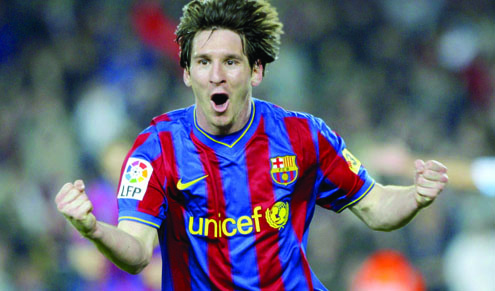
Nike will supply the kit for more teams than Adidas for the first time ever at this year’s World Cup finals.
The two sports giants will throw Lionel Messi against Cristiano Ronaldo and Spain against Brazil to see who can claim a bigger chunk of the multi-billion dollar market for football boots, shirts and shorts.
Both say they are the leaders, but analysts say Nike is making an aggressive push in key football markets. The company says it could soon earn more from soccer than basketball — the sport that launched Nike as a global force.
Adidas of Germany has traditionally dominated soccer pitches and is an official World Cup sponsor. Adidas will have a “dominant role” at the finals in Brazil, chief executive Herbert Hainer said this week.
Nike, which leads in sales of all sports goods, only entered the football market in the 1990s but has since made stunning progress.
It will be providing kit for 10 teams at this year’s World Cup finals — Australia, Brazil, Croatia, England, France, Greece, Netherlands, Portugal, South Korea and United States.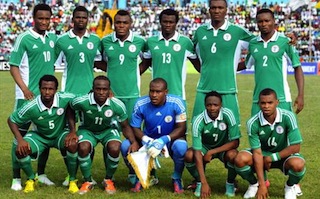
Adidas has dropped to eight teams from 10 in 2010. It still has a formidable line-up however, with reigning champions Spain, Argentina, Colombia, Germany, Japan, Mexico, Nigeria and Russia.
Nike is “the world’s leading football brand,” Trevor Edwards, president of Nike Brands, told AFP in an interview at the launch of the company’s latest soccer boot, the Magista, in Barcelona on Thursday.
Visibility means everything in this battle and players and their boots will be a key weapon.

Nike sponsors Portugal star Ronaldo and Barcelona player Andres Iniesta who will showcase the company’s new boots at the World Cup.
Adidas have Argentina’s Messi at Barcelona and Uruguayan goalscorer Luis Suarez will be shooting with Adidas’s new Primeknit boots in Brazil.
With record sales of football gear expected this year, every market will be fought for during the four-week tournament.
– One billion dollars a year in Brazil –
“The World Cup is an opportunity to really capture the energy of football and leverage that energy to connect with our consumers,” said Edwards.
Magdalena Kondej, head of apparel research for Euromonitor, a research firm, said the World Cup will have “longer term implications in terms of brand image and consumer brand loyalty across the globe.”
Few countries will be fought over as much as Brazil, favoured to win the cup on home territory and one of the rising ecomomic powers.
By the time World Cup starts on June 12, Nike expects to making one billion dollars a year in Brazil, said the executive.
Comments