



Nigeria sets up more centres to diagnose TB

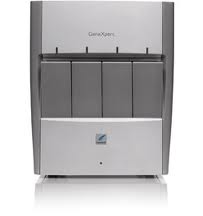
Nigeria’s Federal Government said it has scaled up the number of sites with GeneXpert technology from nine to 52, to enhance diagnosis of drug susceptible and drug resistant TB. Dr. Khaliru Alhassan, Minister of State for Health, said this in Abuja on Monday during a news briefing to mark the 2014 World TB Day.
The theme of this year’s World TB Day is “Tuberculosis-free Nigeria: Find. Treat. Cure TB.’’
Alhassan said at the 62nd World Health Assembly in May 2009, member states committed to achieve universal access to diagnosis and treatment of Drug Resistant TB (DR-TB) by 2015.
He said in line with this, the FG had established 10 reference laboratories across the country.
“We scaled up access of DR-TB patients to quality assured treatment with the number of facilities providing specialised care for DR-TB patients increasing from one in 2010 to 10 in 2013. We have also commenced community based programmatic management of DR-TB to further increase access to DR-TB treatment in a patient centred manner.
“A total of 533 DR-TB patients have been enrolled on treatment from 2010 to 2013. Ambulatory management of DR-TB will provide further access to all those requiring treatment in the coming months and years.’’
Alhassan noted that children also bore the brunt of the disease, adding that TB was a major threat to the rights of the child, adolescents and their families.
The minister added that childhood TB was most neglected, under diagnosed and poorly managed.
He said to address it, the ministry established a task team on childhood TB that supported the development of the roadmap that was being implemented by the programme.
Alhassan lamented that in spite of government efforts, most of the TB patients were still not being detected, thereby enlarging the pool of infectious individuals.
“The TB Knowledge Attitude and Practice (KAP) survey conducted in 2013 also shows that the knowledge about TB in community is low.
“This could be one of the reasons why our case detection rate is still very low.’’
He said the new draft National TB strategic plan focused more on case finding, prompt treatment and other thematic areas.
Alhassan said Nigeria ranked 11th among the 22 high burden countries that account for 80 per cent of the global TB burden.
He added that WHO 2013 Global TB Report estimated that a total of 180,000 TB cases occurred annually in the country.
“However, the recently concluded National TB in the country is about three times higher than the current WHO estimated and five times more than what is being notified by the programme.’’
Dr Patrick Dakum, Chief Executive Officer, Institute of Human Virology, Nigeria, said TB multi- drugs resistance could be treated.
Dakum then urged the government to intensify interventions to control the diseases in the country.
He said the institute had provided technical support for more than 10 TB centres across the federation.
The WHO and USAID also pledged to give technical support to government to facilitate the control of TB in the country
Comments