



Lagos needs N60 Billion to construct Adiyan Phase II Water Project

 Quick Read
The Lagos State Government says it will need N60 billion to construct the phase two of the Adiyan Water Project in order to provide portable water for residents of the state.
Kazeem Ugbodaga
The Lagos State Government says it will need N60 billion to construct the phase two of the Adiyan Water Project in order to provide portable water for residents of the state.
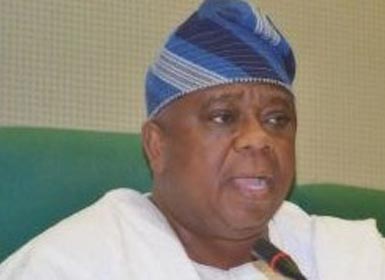
Commissioner for the Environment, Dr. Babatunde Adejare said this at a press briefing held to commemorate the second year in office of the Governor of Lagos State, Mr. Akinwunmi Ambode on Tuesday.
“Water production is not cheap. No one believe that our population will be over 20 million. We have so many people in Lagos. The state government is working hard daily to meet resident’s water need. We have a deficit of 500 million gallon daily. To construct the 70 million gallon water Adiyan 11 will cost the state N60 billion.
“It is almost 70 percent completed. But don’t forget that this facility does not meet the state water need. Igbo-nla water plant is still there and the projects will cost the state huge sums of money,” he said.
Adejare further said that the ongoing reform in solid waste management, tagged the ‘Cleaner Lagos initiative,’ would soon be rolled out in few weeks some weeks from now, saying it would contribute to improving the socio-economic conditions of the residents of Lagos State by tackling the problems of poverty and unemployment.
He pointed out that the Solid Waste Management (SWM) sector had been identified as critical to the realization of the vision of Mr. Akinwunmi Ambode led administration to position Lagos as a clean, healthy and livable state.
The commissioner stated that the sector therefore required urgent attention to bring it to the required level of international standard as its current situation, which had necessitated the reform of the entire solid waste management sector, clearly did not align with the Lagos State Government’s vision for the Lagos of the future.
“Current realities in this sector reveal deficiencies across the entire process chain, from insufficient collection services, to inefficient transportation methods, and abysmal disposal practices that are not only wasteful in terms of resource utilization but also injurious to environmental and public health” he said.
The Commissioner recalled that Lagos State, in its 50 years of existence, had grown exponentially in population thereby impacting on solid waste management and sanitation as a whole, adding that at present the daily waste generation in the state officially stood at 13,000 metric tonne.
He said faced with the challenge of urbanization, the state government had to think unconventionally and come up with a model that would not only prioritise sanitation but create the enabling environment for private participation.
According to Adejare, by devolving the provision of Solid Waste Management services to the private sector, the CLI would birth a new financially viable and technology-driven sub-sector to the Lagos economy, creating new businesses and job opportunities that can be emulated by other States in the Country.
His words: “These reforms are all encapsulated under the ‘Cleaner Lagos Initiative’ (CLI) with a broad strategy of creating an environment for the private sector to harness international best practice in this vital area of infrastructure.
“The CLI aims to protect the environment, human health and social living standards of Lagos residents by addressing the lacunae in the existing legislation and refocusing the scope of LAWMA to enable the agency enforce, regulate and generate revenue from the waste management process.”
Comments