


Before the Buhari Revolution Was the Atiku Revolt

 Quick Read
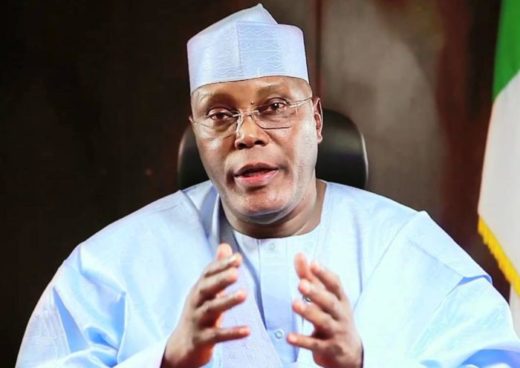
His wealth, affluence and rise to prominence as vice president obscures the reality of Atiku Abubakar as one of the biggest victims of Nigeria’s retrogressive political culture. In a country where politics is firmly hinged on ethno-geographic and religious sentiments, a man like Atiku who possess impeccable nationalist credentials and has refused to fall into the temptation of clannish narcissism will most certainly be a loser.
By Majeed Dahiru
His wealth, affluence and rise to prominence as vice president obscures the reality of Atiku Abubakar as one of the biggest victims of Nigeria’s retrogressive political culture. In a country where politics is firmly hinged on ethno-geographic and religious sentiments, a man like Atiku who possess impeccable nationalist credentials and has refused to fall into the temptation of clannish narcissism will most certainly be a loser. A political process that is hinged on a unsustainable patronage system at the expense of public funds, and a Atiku whose indelible footprints in the sands of Nigeria’s fledging business community and who has consistently hinged his vision for Nigeria on an issue based pragmatic economic blueprint for sustainable growth and development, are unlikely to have an enduring relationship. Atiku is unlikely to be the darling of professional politicians, who thrive mainly on state patronage.
In his political odyssey, Atiku Abubakar has maintained a strong political will to remain resolutely independent-minded, while exercising his democratic rights to vote and be voted for freely. Again, this resolve will come in direct conflict with undemocratic forces in the highest office in the land, which lack the will to allow for the freedom of individual democratic participation on a level playing ground, without anointing from above, or for the separation of powers and supremacy of the party, in line with democratic tenets. In order to neutralise Atiku’s persuasive power of cultivating loyalty among political associates, brute force of coercion was deployed to emasculate the legislature, judiciary and party structure by the executive and in the process stifled the progressive growth of Nigeria’s fledging democratic exercise. By remaining uncompromising, even in the face of strong anti-democratic forces, Atiku’s resoluteness was not without consequences. He is perhaps Nigeria’s most vilified and negatively characterised politician.
He has been accused of massive corrupt practices, unbridled ambition and political prostitution – allegations that have been sustained not by facts but by the combined forces of sectional champions, who are irritated by Atiku’s Pan-Nigerianism and professional politicians whose parasitic sustenance on public treasury is threatened by his politics of pragmatic economics. The stranglehold on power by these forces, have sustained the negative characterisation of Atiku Abubakar, and with the active collaboration in the public space, so many Nigerians have simply been turned into choristers in a choir of ignorance, whenever they chorus “Atiku is corrupt”. This negative characterisation of Atiku has greatly eroded public trust in him and has led to his serial loses in several attempts to fulfil his lifelong ambition of being president of Nigeria. Unfortunately, Atiku’s loss each time is a triumph of sectionalism over nationalism, a triumph of the unsustainable politics of opportunism to achieve personal enrichment over a pragmatic economics of sustainable inclusive growth and development for the citizens. Ultimately, Atiku’s personal losses were Nigeria’s collective losses.
The negative characterisation of Atiku Abubakar by entrenched forces of retrogression has become heightened by his recent defection back to his former party, the Peoples Democratic Party (PDP). The recent volley of lethal missiles unleashed against the person and political style of Atiku has reached a cruising height, with the ultimate aim of demarketing the Atiku brand and rendering his new born presidential aspiration as stillbirth. The current drivers of the onslaught against Atiku appear to be the unrepentant supporters of President Muhammadu Buhari, whose second term bid is not very disguised. For Buharideens, anybody who stands in the way of their patron saint must be levelled to make way for an unopposed coronation as life president, as according to their gospel, “there is no alternative to Buhari”, for as long as he is alive.
Unfortunately, the sustained negative characterization of Atiku has greatly obscured the fundamental contributions his political astuteness made to the overall transition of Nigeria’s nascent democracy from an experiment to a certified value proposition in the last eighteen years. Between 1999 and 2007, the PDP led by former president Olusegun Obasanjo, did so much to emasculate opposition parties in the country by a skilful application of carrot and stick. Influential opposition party chieftains were lured into political lull with juicy government jobs, triggering a mass exodus from the ranks of the opposition to then ruling party by opportunistic elements. Despite the strong attempt at the presidency by the then opposition candidate, Muhammadu Buhari, his impressive recorded numbers were strictly restricted to the Muslim North.
What some have described as Atiku’s political prostitution is, on the contrary, fidelity to the cherished democratic tenets of freedom from unhindered political participation by anti-democratic forces. Political prostitution is when a politician moves from a party in opposition to one in power for the purpose of pecuniary gains. In the case of Atiku, he displays the rare courage of moving from a ruling party to an opposing one, in clear demonstration of his fidelity to his convictions of democratic freedom. By refusing to be a conformist to a political culture of impunity and the undermining of the freedom of democratic participation, Atiku often revolts against the power of incumbency at the risk of all, thereby enriching the vibrancy associated with a healthy democracy. For a man who rose to the pinnacle of his career in public service as deputy comptroller of customs, combined with a practical economic knowledge associated with ba successful private business owner and capped with being elected to the second highest office in the land of vice president, it is only natural for him to seek the highest office in the land of the president. This is the propelling force behind his serial revolts against the status quo.
This began in 2007, when he openly revolted against his own ruling party that by this time had become a garrison command, rather than a political party, where its affairs were centrally commanded and controlled from the presidential villa. In a historic display of courage in the face of persecution and humiliation, Atiku refused to be cowed but instead led some members of the ruling PDP to join forces with Ahmed Tinubu’s Alliance for Democracy to form the Action Congress, a political party that would later form the nucleus of the future mega opposition All Progressives Congress, which eventually wrestled power from the PDP. Fully aware that Tinubu’s ACN had no immediate ambition for making a strong attempt at the presidency but was only contented with regional expansion in the South West of Nigeria, Atiku returned to the PDP to realise his presidential ambition. This time he had an incumbent Goodluck Jonathan, who insisted on running for the presidency against his party’s zoning agreement, to contend with.
The Atiku challenge of 2011 was undoubtedly his greatest effort yet to get elected as president. By running against the zoning agreement that rotates the presidency between North and South every eight years, Goodluck Jonathan expectedly met a strong opposition from Northern elements within the PDP. Atiku, who himself was a respecter of the zoning agreement even when he had the golden opportunity to truncate it in 2003, was morally justified to lead the charge against Jonathan’s attempt to dishonour this gentlemen’s agreement. Riding on the crest of the strong message of change and substantial support from some Northern elements, Atiku was to make an unprecedented showing against an incumbent in the history of PDP presidential primaries. Despite the entire process being systematically rigged to favour then incumbent President Jonathan, Atiku managed, under very difficult circumstances, to garner 805 out of 3542 votes, leaving Jonathan with 2736. Most interesting about Atiku’s strong outing was the fact that his votes came from the five important northern states of Kano, Sokoto, Kebbi, Niger and Zamfara. He lost the critical State of Bauchi by just two votes. The immediate effect of Atiku’s revolt once more against an incumbent was that it led to a merger of forces between liberal Northern elements within the PDP, who were frustrated by Jonathan’s dishonouring of the zoning agreements, with the Northern conservative base of Muhammadu Buhari. This merger was reflected in the impressive number of votes garnered by Buhari at the presidential polls. His over 12 million votes was a 50 percent improvement on his less than 7 million votes in the 2007 presidential elections. More significantly, the Atiku challenge left a major crack in the PDP, which gradually degenerated into a faultline and whose later effect eventually lead to the split of the party. Out of the five States won by Atiku in 2011, governors of two, Kano and Sokoto, would along with three other States, later lead the revolt against Jonathan’s second attempt to violate PDP’s zoning arrangements. With Atiku in tow, these governors under the banner of “new PDP” joined forces with the three other parties of ACN, CPC and ANPP to form a mega opposition party, APC that eventually torpedoed the PDP out of power. Without the implosion of PDP as a result of the revolt of Atiku in 2011, the Buhari change revolution of 2015 would not have been actualised.
Majeed Dahiru, a public affairs analyst, writes from Abuja and can be reached through [email protected].
Comments