


UN deputy chief praises South-South cooperation for sustainable development

 Quick Read
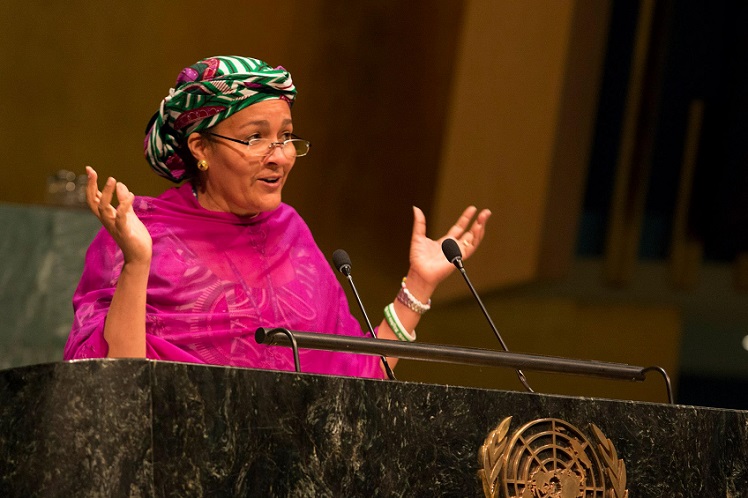
UN Deputy Secretary-General Amina Mohammed on Wednesday praised developing countries as key actors to implement the 2030 Agenda for Sustainable Development, a 2015 envisionment of the UN.
UN Deputy Secretary-General Amina Mohammed on Wednesday praised developing countries as key actors to implement the 2030 Agenda for Sustainable Development, a 2015 envisionment of the UN.
At a meeting commemorating the UN Day for South-South Cooperation, Mohammed said “Developing countries have become key actors to implement the Sustainable Development Agenda and that their leadership, practices and experiences have played a major part in global transformation.”
She said “the diversity and richness of the developing countries’ practices and experiences, the lessons they offer for building common agendas at the global and regional levels, and the leadership they promote, particularly at the local level, have played a major part in global transformation.”
Particularly, she noted that the increase in world trade during the last decade was largely driven by the rise of trade between developing countries.
Moreover, new multilateral institutions have been established and they have devoted to South-South cooperation – and especially the financing of these activities, she said, giving the Asian Infrastructure Investment Bank and the New Development Bank as examples.
To further promote South-South cooperation, the UN deputy chief stressed “We must identify and encourage the areas where South-South cooperation can be most effective and have lasting impact.”
The UN Office for South-South Cooperation (UNOSSC), in collaboration with member states and other partners, launched a compilation of Good Practices in South-South and Triangular Cooperation for Sustainable Development, which features more than 100 Southern best practices that are relevant to the implementation of the Sustainable Development Goals.
While South-South cooperation is a framework of collaboration among countries of the South, triangular cooperation is collaboration in which donor countries and multilateral organizations facilitate South-South initiatives through the provision of funding and other means.
At a news conference for the launch, Jorge Chediek, director of the UNOSSC and envoy of the secretary-general on South-South cooperation, said this century has seen significant changes in such cooperation, which “has taken off and really become a very important element of the global architecture.”
Chediek said , as the second of its series, the document highlights how South-South cooperation and triangular cooperation can accelerate progress toward the implementation and achievement of the Sustainable Development Goals set in the 2030 Agenda.
On Sept. 12 1978, countries of the Global South, gathering in Argentina, envisioned a world where the knowledge and expertise that they held could be used to promote technical cooperation with each other.
They also agreed to ask the UN System to collaborate in this endeavour.
On that day, they distilled this vision into the Buenos Aires Plan of Action for Promoting and Implementing Technical Cooperation among Developing Countries, marking the beginning of a new phase of cooperation.
Chediek said, in March 2019, a major UN conference will be held in Buenos Aires to ensure more and better South-South cooperation by recognizing the impact it has already had and exploring new ways to get more countries and more actors engaged in the way of cooperating.
Comments