



Ukraine update: U.S. defence chief warns Russia can still avoid full-blown, tragic war

 Quick Read
Austin gave the warning at the start of talks at the Pentagon with Ukraine's Foreign Minister Dmytro Kuleba.
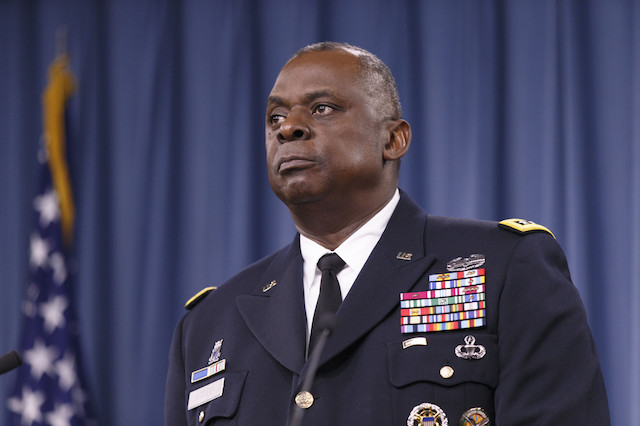
Russian President Vladimir Putin can still avoid a full-blown war of choice, U.S. Defense Secretary Lloyd Austin warned on Tuesday.
He gave the warning at the start of talks at the Pentagon with Ukraine’s Foreign Minister Dmytro Kuleba.
“Mr. Putin can still avoid a full-blown, tragic war of choice,” Austin told Kuleba, adding: “We will continue to work closely with you.”
Before reporters were escorted from the room, Kuleba said: “My message is simple: “a strong Ukraine is the best deterrence of Russia.”
NATO Secretary-General Jens Stoltenberg said on Tuesday that the alliance believed that Russia was still planning a big assault on Ukraine following Moscow’s recognition of two separatist regions in the former Soviet republic’s east.
He spoke as the West took more measures to try to discourage Russian from going on the offensive in Ukraine, with Germany putting the brakes on a new gas pipeline and Britain hitting Russian banks with sanctions.
“Every indication is that Russia is continuing to plan for a full-scale attack of Ukraine,” Stoltenberg told a news conference in Brussels.
“We continue to call on Russia to step back … it’s never too late not to attack.
Russia’s parliament approved treaties with the two regions a day after Russian President Vladimir Putin said he was recognising the independence of the two enclaves in eastern Ukraine, which adjoin Russia and have been controlled by Russian-backed fighters since 2014.
Putin said the territory covered the entire Donetsk and Luhansk regions of eastern Ukraine, not merely the parts currently controlled by separatists. The move appeared to increase the likelihood of conflict.
He also signed a decree on deploying Russian forces there, and on Tuesday Russia’s upper house of parliament formally granted his request to use troops abroad with immediate effect.
A deputy defence minister asked the chamber to deploy troops in Donbass – an umbrella term for the two regions.
The prospect of a disruption to energy supplies and fears of war – stoked by reports of shelling in some areas and movements of unmarked tanks overnight in the rebel-controlled city of Donetsk – rattled international financial markets and sent oil prices surging to their highest level since 2014.
In Donetsk, some residents celebrated, with cars flying Russian flags and sounding their horns. But several blasts were heard in the city on Tuesday, and some people questioned whether Putin’s moves would bring peace.
Germany is Russia’s biggest customer for natural gas, and the decision by Chancellor Olaf Scholz to freeze the Nord Stream 2 pipeline – built but awaiting approval – was widely seen as one of the strongest measures Europe could take.
Scholz said he had asked his economy ministry to take steps to ensure that certification could not take place for now.
“This is a morally, politically and practically correct step in the current circumstances,” Ukrainian Foreign Minister Dmytro Kuleba tweeted.
“True leadership means tough decisions in difficult times. Germany’s move proves just that.”
The Kremlin regretted Germany’s move and said it hoped the delay was temporary.
Putin said Russia “aims to continue uninterrupted supplies” of energy to the world.
British Prime Minister Boris Johnson and French President Emmanuel Macron meanwhile agreed on Tuesday to continue to work together to target those who supported what Johnson called Putin’s “aggressive approach”.
“Russia’s actions don’t just threaten Ukraine’s sovereignty, but are a blatant attack on freedom and democracy, the leaders agreed,” a joint statement said.
Comments