



Nigerian writer, Chioma Okereke launches new book ‘Water Baby’

 Quick Read
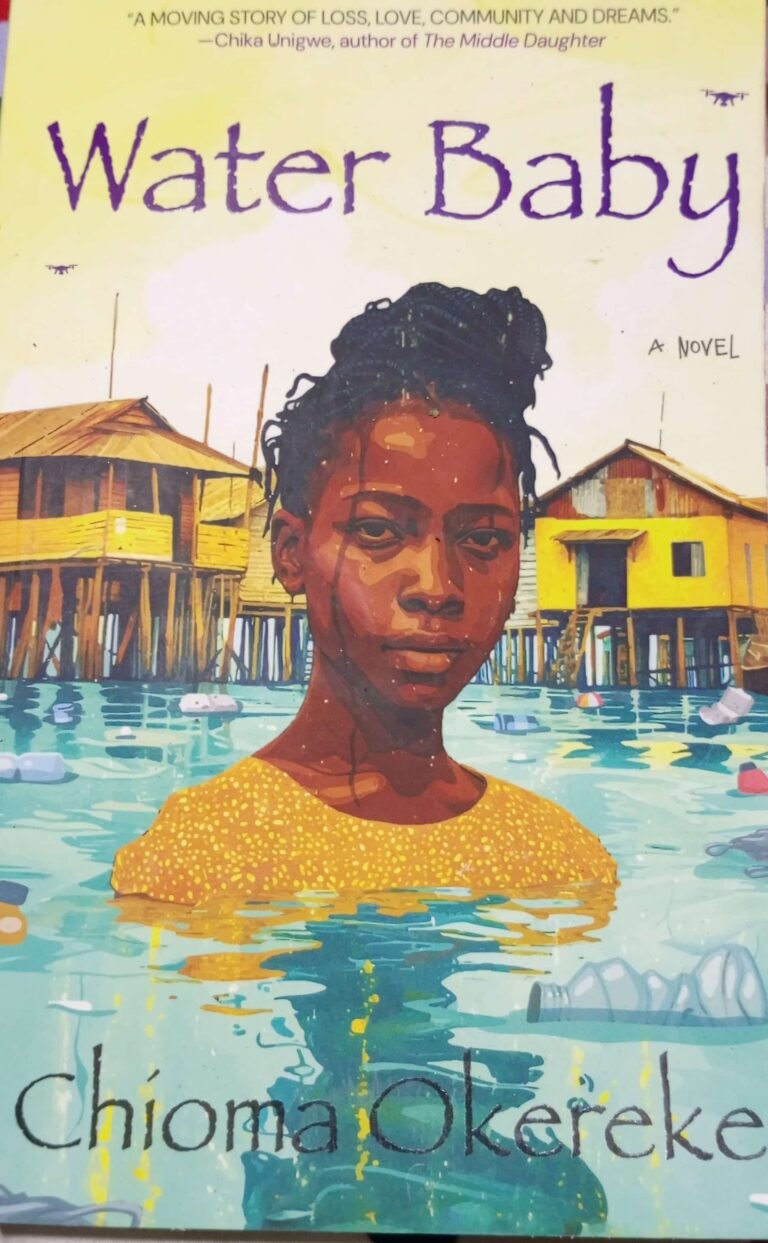
‘Water Baby’ novel is a captivating collection of stories that delve into the intricacies of the Makoko people in relation to their environment.
By Taiwo Okanlawon
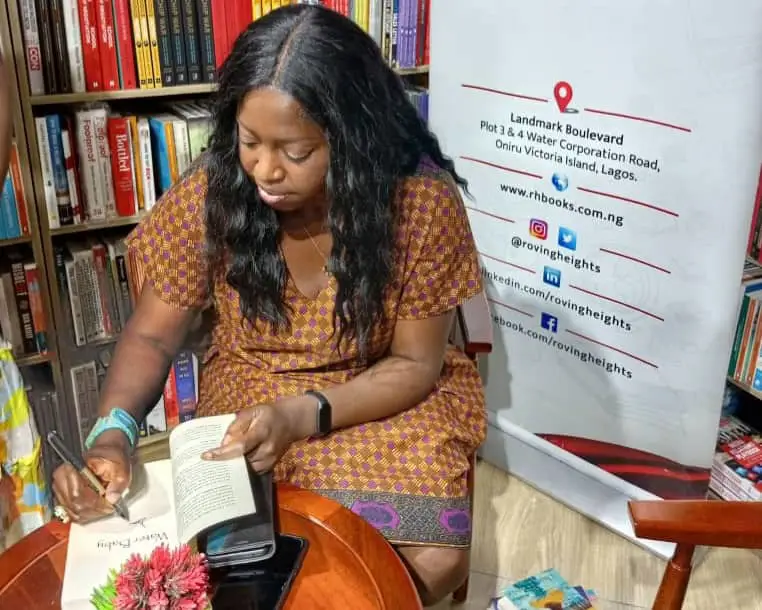
A United Kingdom/Nigerian writer and author of ‘Bitter Leaf’s novel’, Chioma Okereke, has unveiled her second novel, titled, ‘Water Baby’.
Water baby novel is a captivating coming of age tale, set in Makoko, portraying the societal pressures on a young woman trying to escape the confines of her community and explores wider issues including climate change and resettlement.
Speaking on the sidelines of the preview book reading session recently in Lagos, the author explained that the novel is centred around 19-year-old Baby who yearns for a different existence in Makoko (the floating slum off mainland Lagos, Nigeria), where she can escape the future her father has planned for her.
“I was watching an episode of The Best Ever Food Review Show which took place within the community and I was fascinated by the setting, which is just so atmospheric. Watching this American chef navigate Makoko in a way that I had never thought to do as a Nigerian myself, confronted with my ignorance, I went and researched the community.
“Again, while watching that programme, I had this snapshot of my protagonist, Baby. And so I knew I had to write her story, whatever that was going to be. So that is what inspired the book.
With opportunities scarce, Baby jumps at the chance to join a newly launched drone-mapping project, aimed at broadening the visibility of the informal settlement and her community against her father’s wishes.
When a video of her at work goes viral, Baby finds herself with options she could never have imagined – including the possibility of leaving her birthplace to represent Makoko on the world stage. With the new opportunities presented, she must now determine her true place in the world and where her future lies.
The author identified climate change, urbanization, and digitisation as other major themes in the book confronting those at the Makoko waterfront.
Okereke said, “The process of researching ‘Water Baby’ opened my eyes to the myriad issues faced by the people of Makoko.
“These challenges are not just local; they are reflective of broader global issues. Through the novel, I aimed to highlight the resilience and ingenuity of the human spirit in the face of adversity.
“I hope that readers will be moved to consider the lives of those in underrepresented communities and the systemic issues that perpetuate their struggles.”
Okereke also said she hopes the book benefits people in Makoko in that it humanises their experience.
“I think sometimes we don’t think about people that live in that community. So I hope that by humanising Baby’s story and the other stories in that, you see them as real people navigating the world just much like yourself. I hope that it inspires the government to see that there are real changes that can be made to allow people to live more comfortably and also that improve Nigeria as a whole because Makoko is part of Lagos whether you like it or not.”
Speaking about her writing, Okereke said it was a reflection of her belief to adopt the power of literature to effect significant changes in the society. She added that through the novel she aimed to inspire a sense of empathy about the Makoko settlement for Nigerians to rise up to make meaningful solutions to societal issues.
She revealed: “My writing is a reflection of my belief in the power of literature to effect change. It’s an invitation to readers to join me in envisioning a world where social responsibility and compassion guide our actions.
“And I hope that the book encourages readers to look beyond their immediate surroundings and recognise the interconnectedness of our global community.
“By bringing attention to Makoko and similar under-resourced and often overlooked communities, I hope to inspire a sense of empathy and a desire for social justice. My goal is to use storytelling as a vehicle for change, to spark conversations, and to motivate individuals to contribute to meaningful solutions.”
Emphasising on the significance of the novel, the author said, “By telling Baby’s story, I aim to humanise issues and bring them to the forefront of readers’ minds, and to foster a sense of global citizenship and social responsibility, thereby inspiring readers to become advocates in their own right, working towards a more just and equitable world for all.”
The novel, which is predominantly set in Makoko, a floating slum off mainland Lagos, Nigeria, is written in a descriptive and engaging writing style and has a theme of aspiration and identity in which protagonist Baby is a strong and determined young woman who dreams of a life beyond her community.
The author has also established a charitable organisation, Makoko Pearls, to help benefit the lives of the inhabitants of Makoko. For more information, visit www.makokopearls.org.
Comments