



Lagos Health Stakeholders demand diagnostic accuracy as key to Patient Safety

 Quick Read
In addition, Abayomi highlighted the increasing use of rapid diagnostic tests and telemedicine, which are revolutionizing healthcare delivery.
By Kazeem Ugbodaga
The Lagos State Government and other stakeholders have demanded improved diagnosis for patient safety from healthcare professionals in the State.
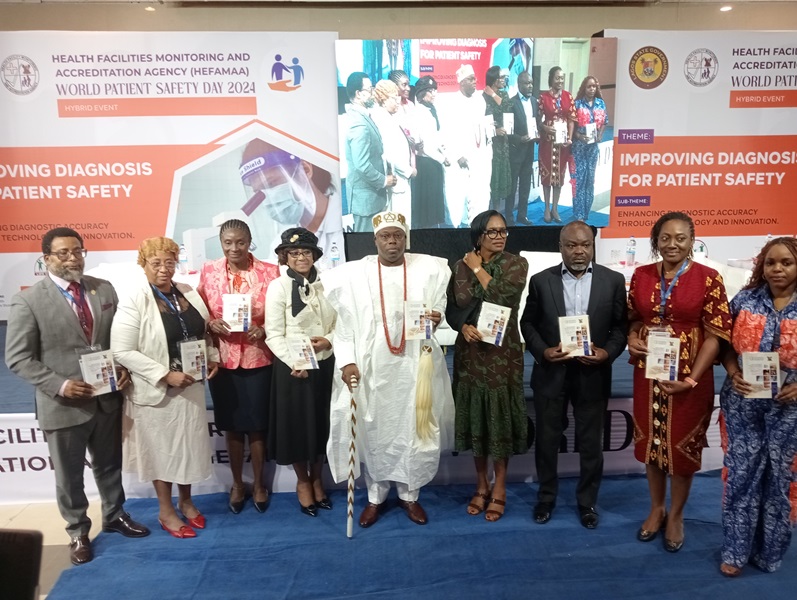
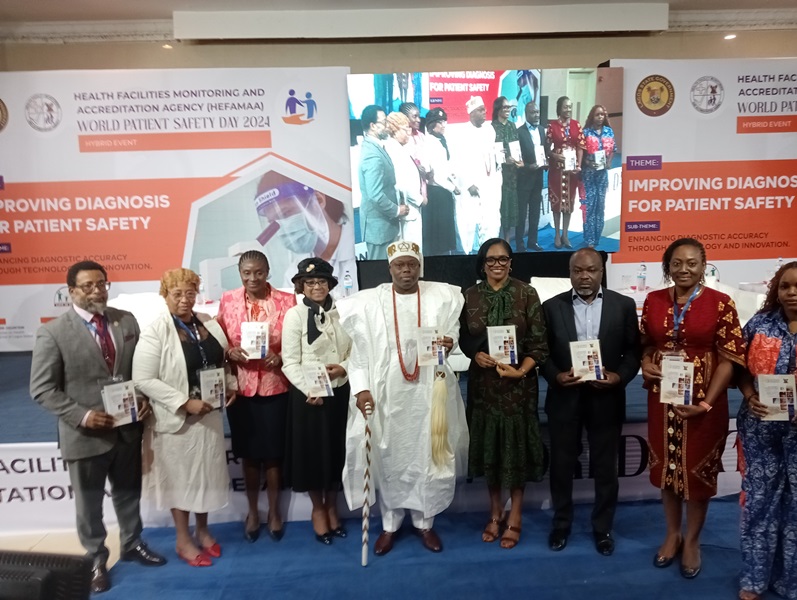
Hundreds of key stakeholders in the health sector had gathered at the the Civic Centre, Victoria Island to mark the World Patient Safety Day 2024, with the theme: “Improving Diagnosis for Patient Safety.”
At the event were the Lagos State Commissioner for Health, Prof. Akin Abayomi; Dr. Olukemi Ogunyemi, Special Adviser to the Lagos State Governor on Health; Dr. Yemi Solanke-Koya, Chairman of the Board of the Health Facilities Monitoring and Accreditation Agency (HEFAMAA) and Executive Secretary of HEFAMAA, Dr. Abiola Idowu.
There were also the Oniru of Iru Land, Oba Gbolahan Lawal; Dr. Olamide Okulaja, Senior Director, Scale Program Maisha Med; Dr. Rita Oladele, Associate Professor/Consultant College of Medicine, University of Lagos, among others.
Speaking at the event, Prof. Abayomi reaffirmed government’s commitment to ensuring patient safety and improving healthcare standards through accurate diagnosis and proper treatment protocols.
He highlighted the critical role of empathy, thorough patient history, and adherence to diagnostic processes in safeguarding patient care.
Abayomi emphasised that globally, the benchmark for quality healthcare begins with accurate diagnosis.
“The first step in diagnosis is empathy,” he stated, explaining that this approach encouraged patients to share vital information with their healthcare providers.
He also stressed the importance of taking a thorough medical history, noting that healthcare professionals often skipped this essential step, which is crucial in identifying the patient’s condition.
“By the time a doctor takes a detailed history, they should have at least 90% of the diagnosis before even proceeding to the lab for confirmation,” Abayomi explained, adding that this is where the relationship between primary healthcare providers and allied professionals begins.
He warned against healthcare professionals deviating from this standard procedure, calling it a “detriment to the patient.”
Abayomi also addressed the issue of quackery in the healthcare system, emphasising government’s zero tolerance for unqualified practitioners.
He stated, “As a government, our job is to establish proper processes and eliminate quackery. Professionals who operate outside their areas of specialization are engaging in internal quackery, and we have severe penalties for this.”
He highlighted that strict protocols have been put in place to ensure no healthcare professional deviates from established norms.
The Commissioner also discussed the advancement of molecular diagnostics, which he said is crucial in understanding the relationship between the genetics of diseases and the environment.
He pointed to the Health Facilities Monitoring and Accreditation Agency (HEFAMAA) as playing a pivotal role in regulating this evolving field.
In addition, Abayomi highlighted the increasing use of rapid diagnostic tests and telemedicine, which are revolutionizing healthcare delivery.
However, he cautioned that healthcare professionals must know how to use these technologies accurately to avoid misdiagnosis.
“Medical practice is changing, and as regulators, we need to adapt to these changes. We have established a program to ensure rapid diagnostic tests are used correctly,” he said.
The Commissioner also expressed concerns about the casual use of injections in treatments, stressing that injections should only be administered when necessary, as they come with risks.
He advocated for the principle of “no treatment without a test,” urging healthcare professionals to avoid making assumptions about a patient’s condition without proper testing.
“As a government, it is our responsibility to ensure that drugs are not abused and that proper protocols are followed in diagnosis and treatment,” Abayomi stated.
He noted that Lagos State is working toward establishing clinical governance frameworks to ensure that healthcare providers adhere to international best practices, thereby ensuring patients receive nothing less than the best care.
In her welcome address, the Executive Secretary of HEFAMAA, Dr. Idowu reaffirmed the agency’s commitment to patient safety and reducing harm in healthcare delivery.
Idowu underscored the central role that accurate and timely diagnoses play in effective patient care, emphasising the theme of this year’s celebration, “Improving Diagnosis for Patient Safety.”
She noted that every misdiagnosis represented a failure in clinical practice and eroded the trust that patients place in healthcare providers.
“Ensuring the protection of our patients is the very foundation upon which the healthcare system stands. Our fundamental principle as healthcare workers is to ‘do no harm.’ Accurate diagnosis is critical in safeguarding that principle,” Idowu said.
She called for greater transparency and accountability among healthcare professionals in recognising and reporting diagnostic errors, stressing the need for a culture of continuous learning and improvement in clinical practice.
Idowu also emphasised the importance of patient involvement in the diagnostic process, encouraging them to ask questions and seek second opinions when necessary.
The HEFAMAA’s Executive Secretary reiterated the agency’s dedication to ensuring that healthcare facilities meet the highest standards of diagnostic accuracy and patient safety.
She highlighted the agency’s efforts in setting minimum required standards for healthcare infrastructure, equipment, staffing, and processes to ensure compliance across public and private facilities.
Comments