


Why I turned down Super Eagles coach position – Herve Renard

 Quick Read
Renard, known for his successful tenures with Ivory Coast and Zambia, revealed that he was approached by the Nigeria Football Federation (NFF) to discuss the coaching position.
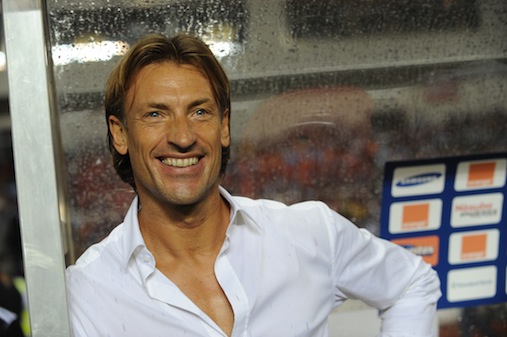
French tactician Hervé Renard has disclosed that he was on the verge of becoming the head coach of Nigeria’s Super Eagles following the unexpected exit of Finidi George in May.
Renard, known for his successful tenures with Ivory Coast and Zambia, revealed that he was approached by the Nigeria Football Federation (NFF) to discuss the coaching position.
In an interview with French outlet L’Équipe, reported by Brilla FM, Renard stated that his name was a popular choice to replace George.
However, after negotiations with German coach Bruno Labbadia fell through, the Super Eagles found themselves in a state of uncertainty.
Renard explained that the NFF’s offer was the most lucrative he had ever received, but after careful consideration over several weeks, he ultimately decided to turn it down.
“I almost went to Nigeria. I weighed the pros and cons for a few days, even weeks, before eventually turning it down. It was the best offer I’ve had so far, but it didn’t suit me in the end,” he said.
Meanwhile, interim coach Augustine Eguavoen is currently tasked with leading the Super Eagles in the upcoming 2025 Africa Cup of Nations (AFCON) qualifiers against Libya.
Eguavoen hinted at what conditions might prompt him to take on the role permanently. He emphasized that a long-term contract, patience, and ongoing support from the NFF would be essential for him to consider a full-time position.
“The Super Eagles job isn’t one you take lightly. If I were to take it permanently, I’d need to sit down, reflect, and think deeply because it’s not a small task,” Eguavoen stated. “It’s going to be tough. I’d need a long-term contract, patience, and clauses in the deal because you don’t win every day. It takes time to build a team.”
Having had three previous stints as head coach, Eguavoen expressed his frustrations regarding the lack of time afforded to him to implement his vision.
“In 2006, I was in charge for six months. Every other time, it was just two months or two to three games. Clemens Westerhof had five years. Gernot Rohr had six years. They got time, but I never had two straight years,” he lamented.
Comments