



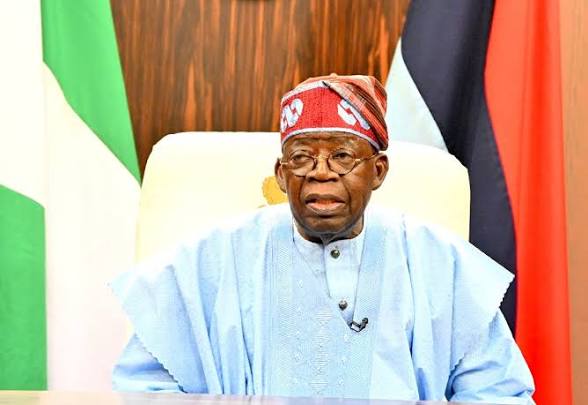
Bola Tinubu: The man who took the bullet for Nigeria to survive

 Quick Read
With politicking intensifying ahead of the January 2027 election, opposition politicians have escalated their campaign of misinformation and calumny to diminish the impact and achievements of this administration over the last three years.
By Bayo Onanuga
With politicking intensifying ahead of the January 2027 election, opposition politicians have escalated their campaign of misinformation and calumny to diminish the impact and achievements of this administration over the last three years.
Two years ago, when the administration was struggling to deal with the unintended consequences of its historic reforms, the campaign would have made sense. But not anymore, as the administration can rightly claim bragging rights for what it has achieved against all odds and why the international community is applauding it for putting Nigeria irrevocably on the path of growth and development.
The impact of the three-year-old government is best felt at the subnational level – state and local levels. States that hitherto were unable to pay salaries by May 2023, with months of unpaid obligations to their workers and pensioners, are now doing so with ease and dreaming big about infrastructure. In every state I have visited, I have seen this development. Ogun, my state, Oyo, Nasarawa, Enugu, Ebonyi, Kaduna, Kano, Kebbi, Katsina, and others have witnessed development projects spring up, thanks to President Tinubu’s re-engineering of the federation’s finances and increased allocation to the states. When local councils begin to receive their allocations directly from the Federation Account, the Tinubu effect will ensure that more governance cascades down to the 774 local councils.
State governors who have benefited from this policy have openly admitted that increased allocations have enabled them to bring social and infrastructural development to their states. Many opposition PDP governors who joined the APC did so for this reason—not for the baseless claim that President Tinubu bribed them. Governor Abdulrazak said in December 2024 that his administration embarked on more projects in the first 18 months of Tinubu’s presidency than in his first four years. The Governor of Ebonyi, Nwifuru, who is building iconic underpasses and overpasses in Abakaliki, credited his ambition to President Tinubu. Governor Peter Mbah similarly attested to this, crediting the Naira rain from the centre for his programmes. And Nasarawa State Governor Abdullahi Sule, who understands how Tinubu’s financial re-engineering and the end of the subsidy regime have increased the states’ fortunes, said President Tinubu “has taken the bullets for all of them.”
In May 2023, President Tinubu inherited acute petrol scarcity, an unsustainable petrol subsidy regime due to expire in June 2023, multiple exchange rates, arbitrage, and low revenue, with at least 30 states unable to pay workers, let alone fund infrastructure and social projects. Debt servicing consumed 97 per cent of Federal revenue. Additionally, food scarcity and inflation plagued the country as farmers abandoned their fields, recording massive losses amid the currency squeeze introduced by former CBN Governor Godwin Emefiele.
President Tinubu, guided by the Renewed Hope Agenda, wasted no time. He threw the ruinous subsidy out of the window from Day One. Days later, he floated the Naira and ended the artificial fixing of the Naira-to-dollar exchange rate, a system that had enabled well-connected individuals to profit effortlessly. Tinubu declared a food emergency and announced the Presidential Committee on Fiscal Policy and Tax Reforms to examine our outdated tax laws, some of which date back to the colonial era. Immediate gains included encouraging dry-season farming, with subsidies and inputs provided for farmlands abutting dams and irrigation sites in at least 14 states.
Even by President Tinubu’s admission, the early months and the first year were tough as the government implemented its programme. The cost of living went up, and businesses claimed the harmonised exchange rate had put them in the red. A few companies even closed shop and left our shores. On the streets, some Nigerians claimed that the policies have left them hungry, a sentiment the opposition still parrots to this day, without any empirical proof. If not sure of the salience of his reforms, President Tinubu would have taken a reverse gear in fright and abandoned all the new reform policies amid the avalanche of attacks from critics and opposition elements in the media. Instead, he persisted.
Two years after the first challenging year, the story has changed for good. However, some opposition elements are stuck in the sentiment of 2023/24, unyielding and adamant about acknowledging the many gains and milestones achieved by the Tinubu administration. But only the blind will fail to admit that this government has taken the country miles away from the state it inherited in 2023.
The stock market is clear proof of the administration’s economic success. In May 2023, Tinubu met the All-Share Index at 53,000 points and the market capitalisation at N30 Trillion. Today, the ASI has risen five times, to a record 250,000 and a market capitalisation of N160 Trillion. Blue-chip companies, including those initially negatively impacted by government policies, are declaring record profits and dividends. Equally, foreign portfolio investors are flocking in to partake in the Nigerian boom. This is not a bubble. It shows that a fundamental paradigm shift has occurred in the economy, all thanks to the Tinubu administration’s policy direction.
In recent weeks, I revisited the manifesto and policy ambitions that won us the election. The Tinubu administration has faithfully implemented its Renewed Hope Agenda, striving to resolve in three years the cumulative problems of decades.
Roads that will outlast this generation are being built nationwide. I recently went home to Ijebu-Ode, Ogun State, and was amazed that the highway to my town from the Shagamu intersection now has a concrete pavement, thick enough to withstand the traffic of trailers from the West to the East. The most audacious road projects ever undertaken by any administration since independence are the Illela-Sokoto-Badagry and the Lagos-Calabar coastal superhighways. President Shehu Shagari conceived the Sokoto-Badagry highway in the early 80s. Succeeding administrations, afraid of the huge cost, abandoned the road. The Lagos-Calabar has also been on the map for decades, but no leader has ever dared to turn the idea into reality. President Tinubu has proven to be a transformative leader who has decided to turn the roads into reality, adding new roads to our road network for the first time, beyond those we inherited from the colonialists. Myopic critics of the two roads have assailed the Tinubu administration for taking loans to accomplish them. How else could the roads have been built if we rely only on FG’s share from FAAC? Relying solely on federal allocations would mean waiting 50 years or more, with costs ballooning out of reach, as in the metro-rail to nowhere started by presidential aspirant Rotimi Chibuke Amaechi in Port Harcourt, Rivers State. In the states, governors are building roads of similar standards. I saw some of these in Ogun, Kaduna, Ebonyi and Enugu.
As with roads, the Tinubu administration is also investing heavily in rail transportation, with the Kaduna-Kano-Gusau-Maraadi rail network scheduled for completion next year. City rail networks in Kaduna, Lagos, Kano and Enugu have been approved for construction, along with the Lekki-Ibadan rail.
When historians write about the Tinubu administration in 2031, they will not remember it only for audacious road and rail networks, but also for historic reforms. The oil and gas sector is one area in which the administration has impacted the country. Apart from ending the regime of wasteful subsidies, the government has instituted reforms that have made the sector attractive to fresh investment. International Oil Companies(IOCs) that once shunned our country are returning with billions of dollars in investment. Domestic refining and the innovative Naira-for-crude policy are ensuring energy security, thereby avoiding acute scarcity arising from the disruptive war against Iran and the closure of the Strait of Hormuz. More recently, the administration enacted a policy requiring the NNPC to remit oil sales proceeds to the Federation account.
Confronted by the administration’s stellar performance, the opposition and media propagandists dredged up a campaign video of the President promising a 24/7 power supply. They distorted his words. What he actually said was: “Whichever way, by all means necessary, you will have electricity, and you will not pay for an estimated bill anymore. A promise made will be a promise kept. If I don’t keep the promise and I come for a second term, don’t vote for me, unless I give you adequate reasons why I couldn’t deliver.”
What the distorters failed to admit was that the Discos, privatised since 2013 by President Goodluck Jonathan, are responsible for delivering power to the end consumers, not the Federal Government. What this government has done in the last three years has been to address the problems hindering the capacity of Discos to deliver, such as bringing Siemens to strengthen the grid, activating idle GENCOs, and planning to clear the N4 trillion legacy debts owed to GENCOs and GASCos, which will encourage new investments in the sector. The government has also massively implemented its metering policy, providing over 2.5 million meters to homes. Recently, the Tinubu administration announced the establishment of GAMCO, the Grid Asset Management Company, which will optimise power supply and activate idle facilities.
One of the administration’s impactful programmes, apart from issuing passports in less than a week, is the introduction of NELFUND and CREDICORP in 2024. While Credicorp is making loans available to civil servants to buy Made-In-Nigeria products, NELFUND, with N282 billion committed so far, has made tertiary education more accessible for our children. About 1.6 million Nigerian students have benefited. Payment of school fees and stipends is assured for the children, and the government has also renegotiated the 2009 ASUU-FG agreement, such that in the last three years, our universities, along with the Polytechnics and Colleges of Education, have been spared the disruptive academic strikes. Let’s give the Tinubu government some slack: a four-year programme is now a four-year programme. He promised it during the campaign and has delivered. The government has also invested in technical schools, offering students pursuing vocational education allowances. In the universities, TETFUND is once again funding research grants for dons willing to pursue ideas that will be useful to our society.
Among impactful programmes, apart from issuing passports in less than a week, are NELFUND and CREDICORP, introduced in 2024. Credicorp makes loans available to civil servants for Made-In-Nigeria products, while NELFUND, with N282 billion committed, has made tertiary education more accessible. About 1.6 million students have benefited. School fees and stipends are assured, and the government has renegotiated the 2009 ASUU-FG agreement, sparing universities from disruptive strikes. Today, a four-year programme in the universities, polytechnics and colleges of education is completed in four years. Technical schools offer allowances to vocational students, and TETFUND is funding research grants to academics.
It has not been all rosy the past three years, especially in the area of making our people safe from the band of bandits and terrorists. While the armed forces have been locked in an asymmetrical war against these heartless elements, neutralising their leaders and foot soldiers in several theatres of conflict, the displaced terrorists are attacking vulnerable areas in some of the states, killing and kidnapping. The government is unrelenting in providing the armed forces, intelligence agencies, and police with the tools they need to wage the war. With support from friendly governments like the US, France, and the UK, there is hope that the menace of kidnappers and their political sponsors will become history. The man who has taken the bullets to make Nigeria survive a fiscal disaster is even more willing to take additional bullets to make all Nigerians safe.
-Onanuga is Special Adviser to President Tinubu on Information and Strategy
Comments