



From Land to Sea: Developers set to build mobile city on water, target 80,000 residents

 Quick Read
While critics question the practicality and enormous cost of the project, developers insist that the Freedom Ship represents a bold step toward creating sustainable communities on the world's oceans.
Oluwafemi Fabunmi
A futuristic city built entirely on water could soon become a reality if an ambitious multi-billion-pound project by international developers gets off the ground.
Dubbed the Freedom Ship, the proposed floating city is designed to accommodate up to 80,000 people and continuously sail across the world’s oceans, offering residents a unique lifestyle that combines urban living with global travel.
Unlike traditional cruise ships, the Freedom Ship is being conceived as a permanent community at sea.
The massive structure would feature residential apartments, schools, a university, hospitals, shopping malls, hotels, restaurants, banks, offices, parks and entertainment centres essentially functioning as a fully operational city floating on water.
The project envisions a city nearly one mile long and 30 storeys high, making it larger than any passenger vessel ever built. Residents would have access to everything they need without setting foot on land for extended periods.
Developers say the floating city would be home to about 50,000 permanent residents, while another 30,000 people, including workers, tourists and visitors, could be accommodated onboard at any given time.
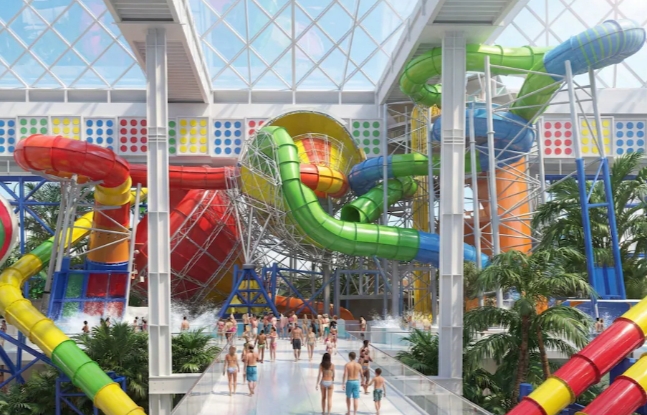
Among the planned facilities are a 15,000-capacity sports stadium, museums, a convention centre, a water park, research centres and extensive green spaces.
A tram network would transport residents between different districts within the city, while kilometres of walkways would encourage pedestrian movement.
One of the most striking features of the proposal is its mobility. Rather than remaining anchored in one location, the floating city would slowly travel around the world, completing a global journey approximately every two years while remaining largely in international waters.
The concept was first introduced in the 1990s but failed to progress beyond the planning stage. However, a new team of developers and marine engineers has revived the vision, expressing confidence that the project can attract the billions of dollars required for construction.
If funding is secured, construction is expected to begin in Indonesia, where sections of the enormous structure would be built and assembled offshore.
Project leaders also hope to power the floating city using nuclear energy, arguing that it could significantly reduce carbon emissions while supporting the city’s long-term energy needs.
Supporters of the project believe floating cities could offer a glimpse into the future of urban development, particularly as growing populations, climate change and rising sea levels place increasing pressure on land-based communities.
While critics question the practicality and enormous cost of the project, developers insist that the Freedom Ship represents a bold step toward creating sustainable communities on the world’s oceans.
For now, the floating city remains a vision on paper, but if realised, it could redefine how people live, work and travel in the decades ahead.
Source The Telegraph
Comments