


Inside Nigeria’s Cement Industry: How market power keeps prices high

 Quick Read
long-term solution, Agora Policy recommended strengthening domestic competition through stricter antitrust enforcement, removal of exclusive mining rights, separation of production from distribution
A policy research organisation, Agora Policy, has blamed the persistent rise in cement prices in Nigeria on weak competition and market concentration in the industry.
In a new report, the think tank said cement prices remain high despite Nigeria achieving self-sufficiency in cement production since 2012. According to the report, the situation has increased construction costs, reduced access to affordable housing, and slowed infrastructure development across the country.
Agora Policy noted that cement prices in Nigeria are higher than those in many sub-Saharan African countries, even as cement producers record unusually high profits. In September 2025, major producers posted an average operating profit margin of about 49 per cent, up from roughly 34 per cent in 2024.
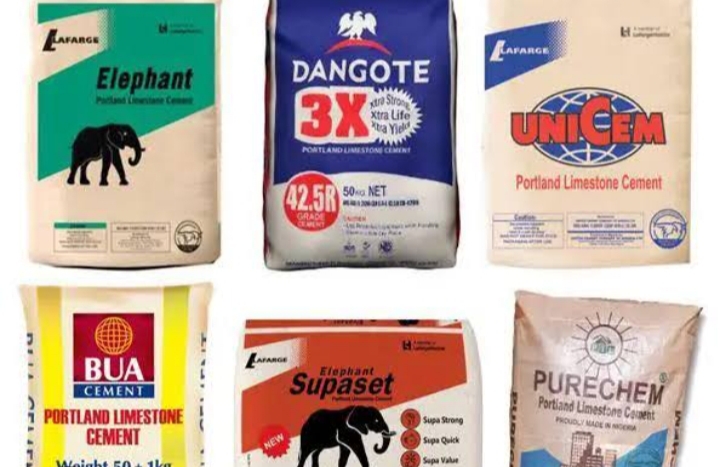
The report stated that increased production capacity by leading manufacturers, including Dangote Cement, BUA Cement, and Lafarge WAPCO, has not resulted in lower prices for consumers, builders, or government projects.
While cement manufacturers blame high domestic prices on taxes, energy costs, transport challenges, and financing constraints, the report questioned the claims. It pointed out that Nigerian cement producers sell cement at lower prices in some foreign markets and still make profits.
According to Agora Policy, this price difference suggests that market structure and pricing power, rather than production costs, are major factors behind the high prices.
The report traced the problem to government policies introduced in the late 1990s and early 2000s to reduce cement imports and encourage local production. These policies included import restrictions, tax incentives, access to foreign exchange, and exclusive mining rights.
Although the policies helped Nigeria achieve cement self-sufficiency, the report said they also led to the emergence of a highly concentrated market dominated by a few firms controlling production, distribution, and pricing.
Agora Policy warned that cement is a critical input for housing and infrastructure and that persistently high prices threaten employment, productivity, and long-term economic growth.
The report also assessed government plans to reopen cement imports, cautioning that importation would provide only temporary relief due to high transport costs and limited global supply.
As a long-term solution, Agora Policy recommended strengthening domestic competition through stricter antitrust enforcement, removal of exclusive mining rights, separation of production from distribution, and greater market transparency.
It also urged the Federal Competition and Consumer Protection Commission to set up a dedicated unit to monitor cement pricing, market dominance, and barriers to entry.
Comments