


The Institute of African Studies UI mourns renowned scholar Jeyifo

 Quick Read
Born in Ibadan, Nigeria, Jeyifo earned a first-class bachelor’s in English from the University of Ibadan in 1970, followed by a master’s from the same institution in 1973, and a doctorate from New York University in 1975.
By Nehru Odeh
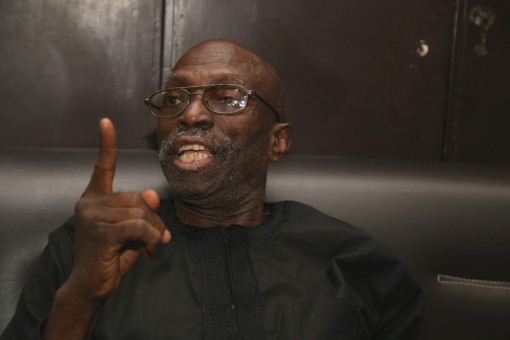
The Institute of African Studies, IAS, University of Ibadan, has expressed grief over the death of Prof. Biodun Jeyifo, renowned scholar, literary critic, public intellectual, Marxist and committed unionist who passed away on February 11, aged 80.
In a statement released Thursday, the Director of the institute, Prof. Sola Olorunyomi, said the IAS was saddened to hear of the passing of the erudite scholar whom he described as a towering figure in African and global intellectual life, and a revolutionary twin of the mathematician, Prof. Edwin Madunagu.
“As the pioneer President of ASUU, he (Jeyifo) stood at the forefront of struggles for academic freedom, institutional integrity and the dignity of intellectual labour.
“At the Institute of African Studies, we honour his extraordinary contributions to African letters, radical thought and the university as a space of democratic possibility. His courage and intellectual clarity will be greatly missed.
“We extend our heartfelt condolences to his family, colleagues, comrades, students and all who were shaped by his life and work.
“May his memory remain a blessing and a charge to continue the work.
“Professor Jeyifo was an alumnus of the University of Ibadan, and a Distinguished Senior Fellow of the Institute of African Studies, UI, Ibadan, along other senior colleagues like Dan Izevbaiye, Femi Osofisan, Adesanoye and Niyi Osundare. At IAS, we recall him as a friend and teacher of some of our colleagues including Professors Dele Layiwola and Pogoson,” the statement read.
Olorunyomi also said a condolence register which will run from 12 noon on Thursday till date of interment, had been opened in the honour of the late scholar.
An exhibition sponsored by the Centre for Democracy and Development (CDD) and the French Institute for Research in Africa (IFRA), will also be hosted by the Institute of African Studies (IAS). The exhibition will be curated by distinguished Honorary Curator, Professor O.I. Pogoson in honour of the departed revolutionary scholar.
“To his global family we say, Ẹ kú ara fẹ́ra kù,” the statement concluded.
Born in Ibadan, Nigeria, Jeyifo earned a first-class bachelor’s in English from the University of Ibadan in 1970, followed by a master’s from the same institution in 1973, and a doctorate from New York University in 1975.
He also holds a DLitt (honoris causa) from Obafemi Awolowo University —formerly the University of Ife — where he taught for many years. Reflecting on that period, Jeyifo noted that it was at Ife he became “the kind of teacher and person I had always tried to become.”
His distinguished career further includes senior professorships at Cornell University and Harvard University, where he was Professor Emeritus of African and African American Studies and of Comparative Literature until his passage.
The range of his scholarly and professional interests demonstrates his purposeful pursuit of knowledge that can bring about social change: African and Caribbean ‘Anglophone’ literatures; theatrical theory and dramatic literature, Western and non-Western; comparative African and Afro-American critical thought; Marxist literary and cultural theory; colonial and postcolonial studies; and twentieth-century revolutionary social philosophy and literature.
Jeyifo is generally regarded as the world’s pre-eminent scholarly authority on the works and career of Wole Soyinka. His award-winning book on the 1986 Nobel laureate, “Wole Soyinka: Politics, Poetics and Postcolonialism” (Cambridge University Press, 2004), is regarded as the most comprehensive study of the author’s work, and the most sophisticated single author study of any writer in African postcolonial studies.
Aside numerous critical essays, his scholarly works include: The Truthful Lie: Essays in the Sociology of African Drama (1985); Wole Soyinka: Politics, Poetics and Post colonialism (2004); Things Fall Apart, Things Fall Together (2010); Against the Predators’ Republic (2016); Apostrophes: To Friendship, Socialism and Democracy (2021).
He served as the first National President of the Academic Staff Union of Universities (ASUU) in Nigeria and has been a notable voice in public discourse through his journalism and critical essays.
Comments