


Five times Nigeria crackdown on homosexuality

 Quick Read
The Nigerian government’s crackdown on homosexuality—most notably solidified by the 2014 Same Sex Marriage (Prohibition) Act (SSMPA) shows a pattern shaped by law, culture, religion, and politics.
By Ruth Chinonye
Nigeria is one of the countries in Africa where homosexuality has been strongly opposed by both law and society. Many Nigerians believe that same-sex relationships go against their religious beliefs, cultural traditions, and moral values. Because of this, the Nigerian government has created strict laws to punish homosexual acts and activities connected with LGBTQ+ groups.
The most important law is the Same-Sex Marriage Prohibition Act signed in 2014 by former President Goodluck Jonathan. This law makes same-sex marriage illegal and also punishes people who belong to gay organizations or show same-sex affection in public. Offenders can face up to 14 years in prison, while supporting gay groups can bring up to 10 years jail term.
Since this law came into force, many police raids, arrests, and court cases have happened across different states in Nigeria. Some of these incidents attracted international attention and criticism from human rights groups, while others reflected strong public support for anti-gay enforcement in the country.
This article discusses five times Nigeria cracked down on homosexuality, explaining what happened, where it happened, and why it mattered.
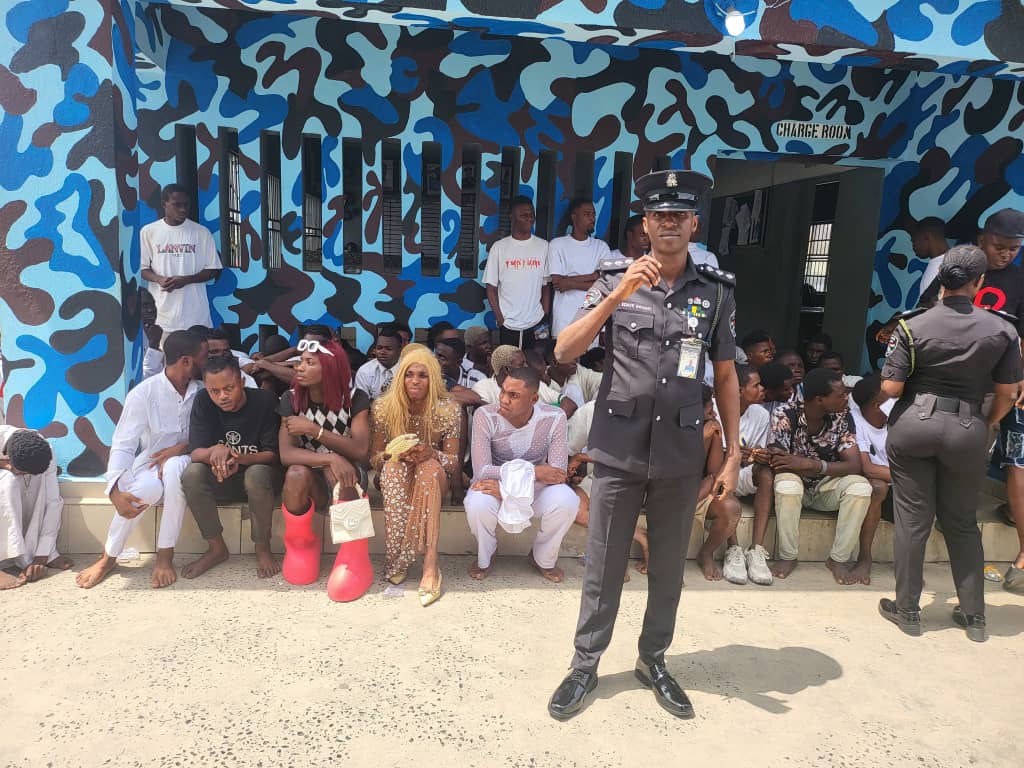
August 28th, 2023: Gay Party Arrest in Warri, Delta State
On August 28, 2023, Nigerian police in Delta State conducted a major raid on an alleged gay wedding ceremony, leading to the arrest of over 60 people. The incident took place at a hotel located off Refinery Road in Ekpan, a town near Warri.
Key Details of the Event and Arrests are as follows:
The raid was part of a larger crackdown on LGBTQ+ individuals in the region, drawing criticism from human rights groups like Amnesty International Nigeria, which called for an end to the persecution. Following the incident, the police arraigned 60 people while other who are heavily connected to organizing the gay wedding or involved in a way are declared wanted, the suspect were reminded in prison by Delta State High Court while only few were able to meet the stringent bail condition set by the court.

October 2023, Same – Sex Wedding and Party Arrest in Gombe State.
In October 2023, the Nigeria Security and Civil Defence Corps (NSCDC) arrested 76 people in Gombe State, Northeast Nigeria, on allegations of participating in a same-sex wedding and party. The raid, which occurred on October 21, 2023, is part of a series of crackdowns on the LGBTQ+ community in Nigeria.
Key Details of the Incident are as follows:
December 2022, same-sex Wedding Ceremony Arrest in Kano State.
In December 2022, the Kano State Hisbah Board (Islamic police) raided an alleged same-sex wedding ceremony in Kano city, resulting in the arrest of 19 individuals. The incident took place around December 19-20, 2022, in a popular event center in the city.
Key Details of the Incident are as follows:
April 2017, same-sex wedding arrest in Kaduna State
In April 2017, Nigerian police in Kaduna State arrested 53 people for allegedly attending a same-sex wedding ceremony at the Zaria Motel in the city of Zaria. The event was alleged by police to be a marriage ceremony for two men, identified as Faruk and Sanusi, who were not among those initially detained.
Key Details of the Incident are as follows:
Under Nigeria’s 2014 Same Sex Marriage Prohibition Act, conducting or attending a same-sex wedding can lead to up to 14 years in prison.
December 2019, Trial of 47 Men Arrested for Homosexuality in Egbeda, Lagos State.
In December 2019, a Federal High Court in Lagos began the trial of 47 men arrested for alleged homosexuality, marking a significant, attempt by Nigerian authorities to prosecute individuals under the Same Sex Marriage (Prohibition) Act of 2013. The case stemmed from a 2018 police raid on a hotel in the Egbeda area of Lagos.
Key Details of the Case are as follows:
Although the case was struck out, it highlighted the ongoing, severe legal challenges facing the LGBTQ+ community in Nigeria, where same-sex relationships are punishable by up to 14 years in prison.
CONCLUSION
The Nigerian government’s crackdown on homosexuality—most notably solidified by the 2014 Same Sex Marriage (Prohibition) Act (SSMPA) shows a pattern shaped by law, culture, religion, and politics.
The five episodes highlighted in this article demonstrate how enforcement has evolved while maintaining the same underlying legal framework.
These crackdowns reveal not only the functioning of Nigeria’s criminal justice system but also the powerful role of social norms in shaping law enforcement priorities. Whether viewed as protection of cultural values or as violation of civil liberties, Nigeria’s approach remains one of the most stringent in the world, ensuring that the debate over homosexuality in the country will continue for years to come.
Comments