


UK defies Trump: We won’t join offensive against Iran regime – Starmer

 Quick Read
The prime minister highlighted Iran's growing recklessness, noting that over the past year alone, the regime has backed more than 20 potentially lethal attacks on UK soil, all of which British authorities have successfully foiled.
By Kazeem Ugbodaga
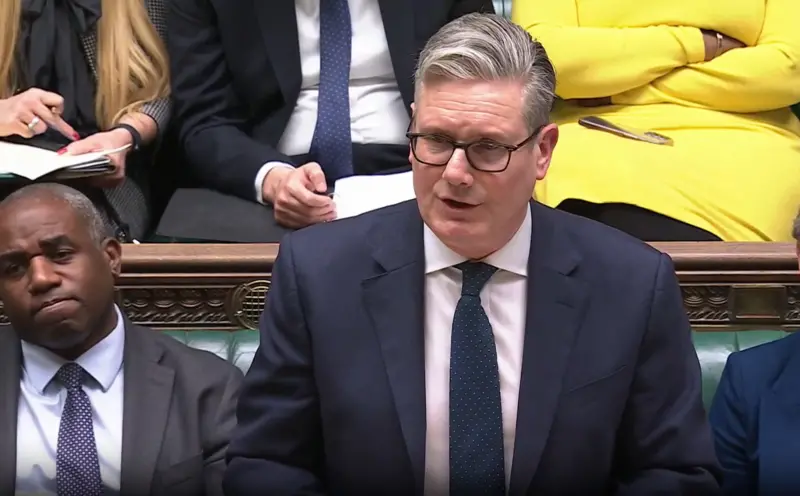
In a measured address to Parliament amid escalating tensions in the Middle East, British Prime Minister Keir Starmer firmly reiterated that the United Kingdom will not participate in the offensive military strikes launched by the United States and Israel against Iran.
Emphasizing a commitment to international law and hard-learned historical lessons, Starmer declared that “we all remember the mistakes of Iraq and we have learned from those lessons.”
The prime minister’s statement came as he faced questions from MPs on Britain’s evolving role in the conflict, which has seen Iran retaliate with hundreds of missiles and thousands of drones targeting regional countries.
Starmer stressed that the UK’s initial decision not to join the strikes was “deliberate,” and he maintained that position for offensive operations.
“We were not involved in the initial strikes on Iran and we will not join offensive action now,” Starmer told the House of Commons.
He underscored that any UK actions must have “a lawful basis and a viable thought-through plan,” framing the government’s approach as cautious and principled rather than isolationist.
The prime minister highlighted Iran’s growing recklessness, noting that over the past year alone, the regime has backed more than 20 potentially lethal attacks on UK soil, all of which British authorities have successfully foiled.
“It is clear the Iranian regime must never be allowed to get its hands on nuclear weapons,” he said, adding that the best path forward remains a negotiated settlement in which Iran renounces any aspiration to develop nuclear capabilities and ends its destabilizing regional activities.
While refusing direct offensive involvement, Starmer detailed limited defensive measures Britain has taken to protect lives.
He said British jets have been deployed as part of coordinated operations, successfully intercepting threats, including a drone targeting a base housing UK personnel.
He also confirmed accepting a US request to use British military bases for “specific and limited defensive purposes”: destroying Iranian missiles “at source” in storage depots or launchers to prevent further launches across the region.
This permission, Starmer explained, aligns with “collective self-defense” under international rules and has been extended similarly by France and Germany.
However, he was at pains to clarify that UK bases in Cyprus, such as RAF Akrotiri, recently struck by an Iranian drone, are not being used by US bombers for broader operations.
The drone strike on RAF Akrotiri, which Starmer described as unrelated to Britain’s decisions, underscored the risks to the estimated 300,000 British citizens in the region, including residents, holidaymakers, and those in transit.
Iran has targeted airports and hotels where Britons are present, prompting the government to urge citizens to register their presence and monitor updated Home Office travel advice.
Starmer‘s stance has drawn mixed reactions. US President Donald Trump expressed disappointment in an interview, criticizing the initial delay in granting base access as taking “far too long.”
Some UK Conservative MPs and others argued Britain should have participated more fully from the outset, while certain Labour backbenchers voiced concerns about any facilitation of US actions.
Despite transatlantic friction, Starmer asserted his duty to judge Britain’s national interests independently. “It is my duty to judge what is in Britain’s national interests,” he said, standing by the choices made.
Comments