


How Enobong Etuk is driving the literary and arts revolution in Uyo

 Quick Read
However, one of the most significant achievements of the Boldoz Book and Arts Festival is its success in creating a sense of literary community in a city where many writers previously felt isolated.
By Nehru Odeh
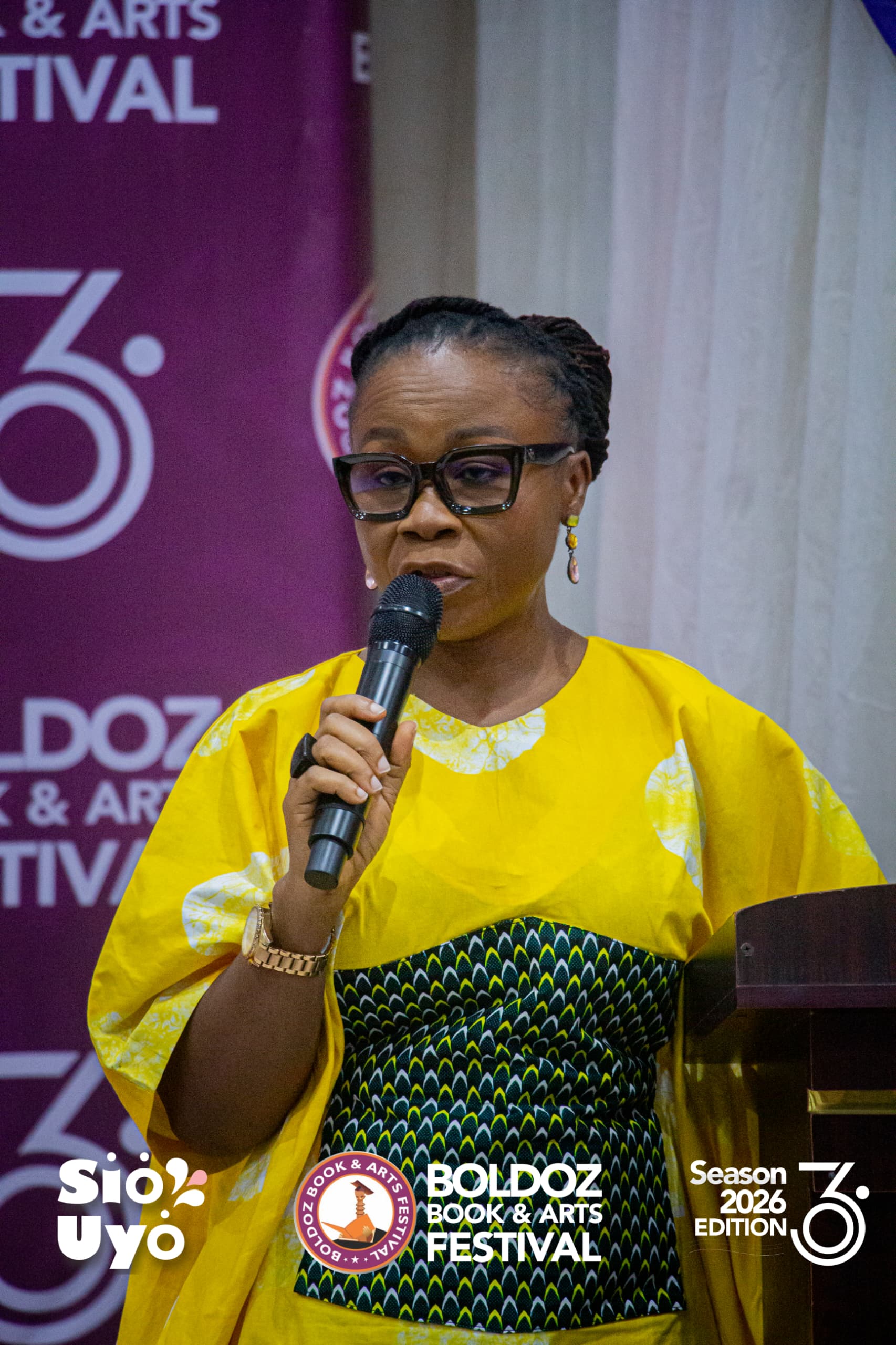
Ms Enobong Etuk wears many hats with effortless ease. She is a bookseller, literary advocate, community builder, cultural entrepreneur, and above all, a believer in the transformative power of stories. As the founder of Boldoz Bookstores and the Creative Director of the Boldoz Book and Arts Festival (BBAF), Etuk has become one of the most influential figures in the effort to build a vibrant literary culture in Akwa Ibom State.
Over the past three years, she has organized three editions of the Boldoz Book and Arts Festival. The third and most recent edition was held on 19 and 20 June 2026, in Uyo, Akwa Ibom State.
Warm, energetic, and deeply passionate about books, Etuk has spent years nurturing a community of readers and writers in Uyo, a city more readily associated with its serenity than with literary festivals. Yet through determination and vision, she has succeeded in turning it into a destination for writers, artists, publishers, and book lovers.
Today, the Boldoz Book and Arts Festival stands as one of the most exciting literary gatherings in Nigeria’s South-South region, drawing acclaimed authors, poets, artists, and creative thinkers from across the country.
For Etuk, however, the festival has always been about something larger than books. “Boldoz Book and Arts Festival was set up as a platform to help writers, thinkers, dreamers, publishers, and book lovers connect so we can tell our story,” she said.
That simple but profound vision has become the driving force behind a festival that has grown remarkably since its inception.
However, the story of the Boldoz Book and Arts Festival is inseparable from the story of Boldoz Bookstores and the Boldoz Book Club, institutions Etuk established to cultivate reading culture and literary engagement in Akwa Ibom State.
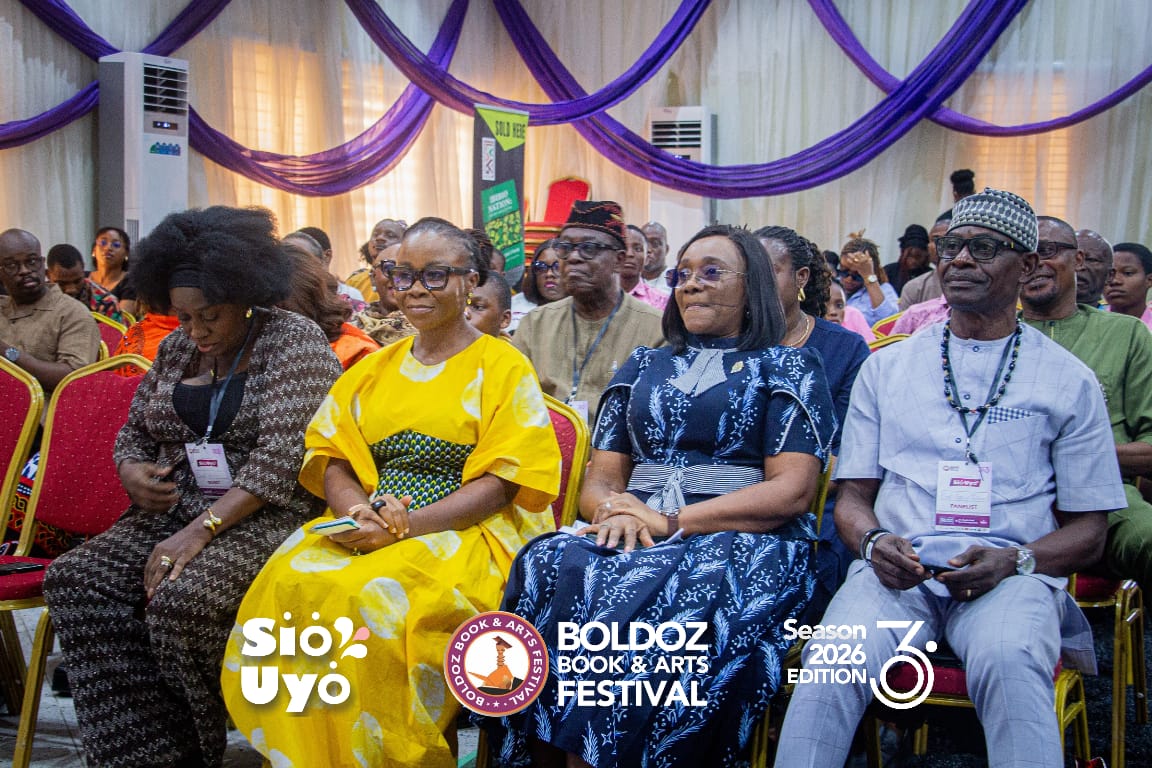
For years, Etuk observed the challenges facing writers and readers in the region. Talented writers often worked in isolation, lacking opportunities to meet publishers, engage established authors, or participate in meaningful literary conversations. Readers, meanwhile, had few opportunities to interact directly with the creators of the books they loved.
Rather than complain about the absence of literary platforms, Etuk decided to create one. The result was the inaugural Boldoz Book and Arts Festival in June 2024, held at the historic Ibibio Union Museum in Uyo. The festival immediately distinguished itself as a gathering that celebrated not only literature but also culture, art, music, performance, and community. It brought together authors, students, artists, and literary enthusiasts in a city that had rarely witnessed such a large-scale literary event.
From the beginning, the festival sought to create a space where stories could be told freely and where emerging voices could interact with established figures in the literary world.
“This year, Boldoz Book and Arts Festival is not just another item on your calendar,” she said. “It is a meeting for authors, for writers, for storytellers, and everyone who loves to be in spaces where we’re having powerful conversations and meaningful expressions.”
Still, the recently concluded third edition of the festival continued that tradition while expanding its reach and ambition. Held on 19 and 20 June in Uyo, the festival adopted the theme “Sio Uyo: Speak Out,” a call for people to express themselves boldly through literature, art, performance, and creative engagement. The theme reflected Etuk’s belief that storytelling remains one of the most powerful tools for self-expression and social transformation.
“We’re having powerful conversations and meaningful expressions,” she noted. “Bring your friend and come with an open mind because you are about to see energy, fun, and conversations at another level.”
The festival programme featured an impressive lineup of writers representing diverse genres and generations. Among them were Nkereuwem Albert, author of The Bone River; Oreva Ode-Irri, author of This Thing Called Love; Tomilola Coco Adeyemo, known for A Very Gidi Christmas and A Nollywood Christmas; Rosemary Okafor, author of Akwaugo and the Time and Ash series; Emediong Edem, Nestor Udoh, Aidi Basi, Utibe Hanson, and several others.
The event also extended beyond literature to include discussions involving film, photography, cuisine, and other creative disciplines, reflecting Etuk’s belief that artistic expression cannot be confined to a single category.
Attendees participated in book chats, storytelling sessions, poetry performances, panel discussions, writing masterclasses, book swaps, networking opportunities, and author interactions.
“There’ll be book swaps, storytelling, poetry, book chats, panel sessions, and, of course, interesting writing masterclasses that you don’t want to miss,” Etuk enthused before the festival. “And besides that, how about you meet your favourite author? The minds behind the books that you read.”
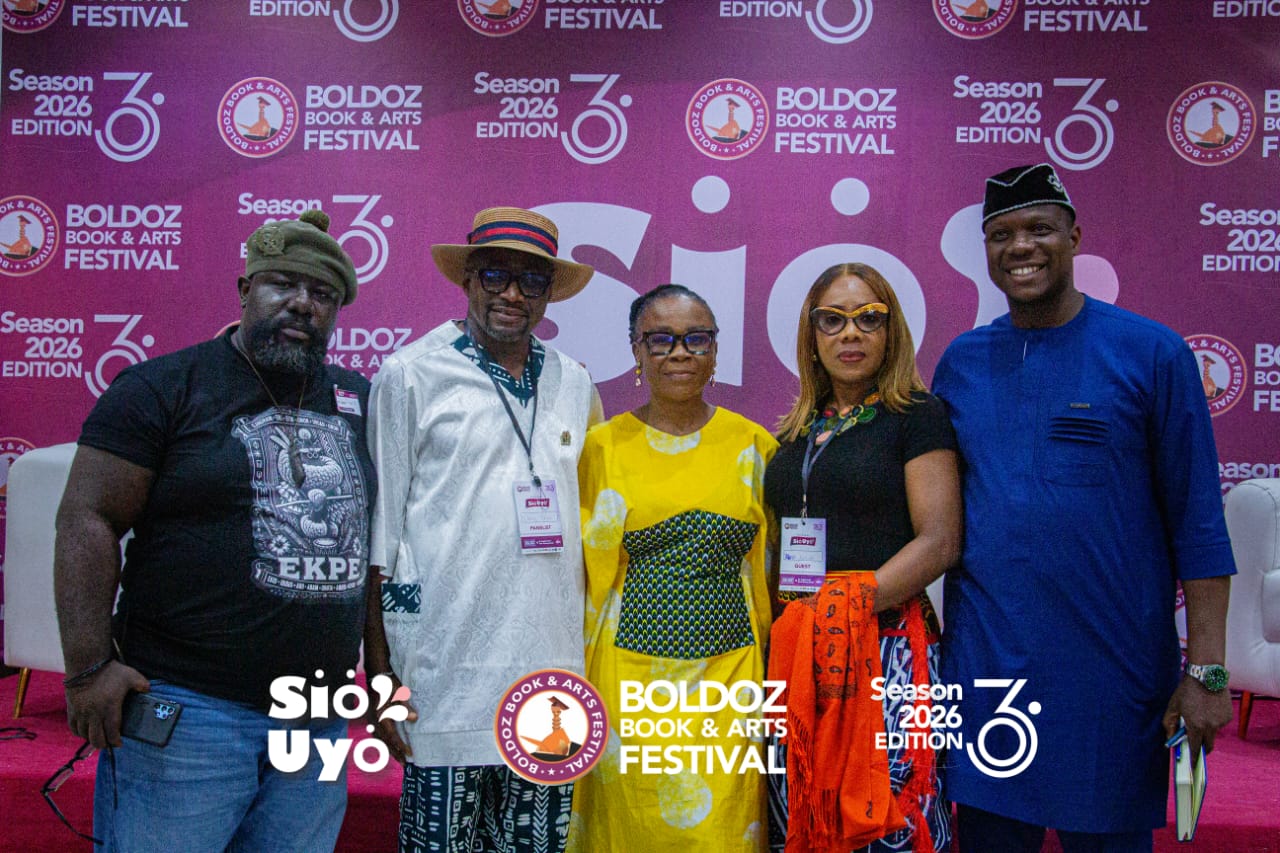
However, one of the most significant achievements of the Boldoz Book and Arts Festival is its success in creating a sense of literary community in a city where many writers previously felt isolated. Few testimonies illustrate this better than that of writer Betini Udo, who attended the festival and later wrote movingly about its impact on her life.
Describing herself as a “struggling writer,” Udo recounted how writing in Uyo often felt lonely and disconnected. Yet the festival transformed that experience by creating a space where writers could find community, inspiration, and validation.
“The festival is one of the rare times when Uyo feels like a literary city,” she wrote. “Suddenly, books, art, and conversations about culture and identity become the focus.”
For her, and many others, the festival offered more than professional development. It offered belonging. “Even though the festival lasts only two days, it leaves behind connections that will last much longer,” she observed. “It’s comforting to know there are others in this city who believe in the power of stories.” Such testimonials represent perhaps the strongest evidence of the festival’s growing significance.
Etuk has consistently emphasized that the festival exists not merely to celebrate established authors but to nurture the next generation of storytellers. Through writing workshops and outreach programmes, the festival has inspired more than 200 students in public schools and universities to pursue writing seriously.
Its masterclasses provide aspiring writers with practical guidance on storytelling, publishing, and career development. Young writers who might never have had access to industry professionals are given opportunities to learn directly from accomplished authors, publishers, and literary entrepreneurs.
The festival’s impact is especially important in a region where access to literary infrastructure remains limited compared to larger cities such as Lagos and Abuja. By bringing literary opportunities closer to home, the festival is helping democratise access to knowledge and creative development.
Over the years, the festival has hosted an impressive array of literary and cultural figures. Previous editions have featured celebrated personalities such as Betty Irabor, Ibukun Awosika, Arese Ugwu, Victor Ekpuk, Michael Afenfia, Anietie Usen, and numerous award-winning writers, poets, and artists.
The 2025 edition also welcomed notable authors, including Adesuwa Nwokedi, Rosemary Okafor, Nestor Udoh, Eyoh Etim, Hymar Idibie, and Mmadiuto James, among others. The calibre of guests reflects the growing reputation of the festival within Nigeria’s literary ecosystem.
What began as a local initiative has evolved into a platform attracting national attention and participation. Yet perhaps the most remarkable aspect of the Boldoz Book and Arts Festival is its refusal to limit itself to books. The festival celebrates literature alongside visual arts, music, performance, fashion, culture, and public conversation. In doing so, it reflects the interconnected nature of creative expression itself.
Etuk believes that storytelling can happen through many media, and that every creative voice deserves a platform. “In Akwa Ibom, we don’t just read books; we create and build culture,” she has said. That philosophy explains why the festival continues to attract diverse participants and audiences.
As the Boldoz Book and Arts Festival concludes its third edition, its influence on the literary landscape of Akwa Ibom and the wider South-South region is becoming increasingly evident.
What began as a dream has evolved into a movement. A generation of young writers is finding confidence. Readers are discovering new voices. Authors are finding new audiences. Creative professionals are building networks.
And Uyo is steadily carving out a place on Nigeria’s literary map. At the centre of it all remains Enobong Etuk—a woman whose faith in stories has inspired countless others to tell their own. For her, the festival’s mission remains unchanged.
It is about creating a space where writers, dreamers, thinkers, artists, and readers can gather, connect, and speak out. And judging by the growing enthusiasm surrounding the festival, many more voices are ready to answer that call.
Comments