


‘I have no regrets’: Abacha’s most feared officer Frank Omenka speaks after 30 years of silence

 Quick Read
Unlike many other prominent figures from the era whose legal and political battles played out publicly, Omenka gradually withdrew from national attention. Claims that he relocated abroad circulated for years.
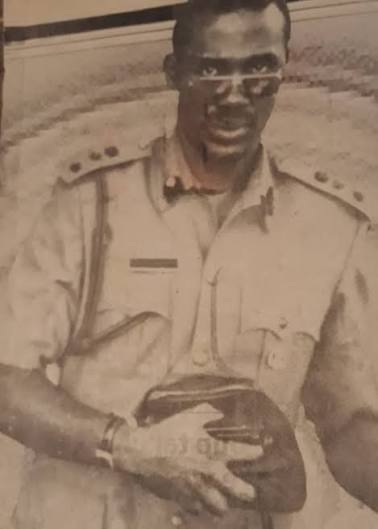
More than three decades after Nigeria’s most controversial military era, retired Colonel Frank Omenka, former Commander of the Directorate of Military Intelligence (DMI) Security Group under General Sani Abacha, has publicly broken his silence, offering a vigorous defence of his role in government, denying allegations of torture and abuse, and insisting that the controversial 1995 coup plot was genuine and not a fabrication.
Speaking during a virtual conversation organised by The Experiential Leadership in Africa (TEL-Africa) in partnership with PREMIUM TIMES, Omenka addressed longstanding questions about his years in military intelligence, his relationship with Abacha, his absence from the Oputa Panel, allegations made by former detainees, and his life after the collapse of military rule.
The discussion, themed “The Abacha Years: Obeying the Last Order and the Untold Accounts,” was moderated by PREMIUM TIMES publisher Dapo Olorunyomi, Managing Editor Idris Akinbajo, The NEWS Executive Editor Kunle Ajibade, and TEL-Africa catalyst Adeolu Adewumi.
For decades, Omenka remained one of the most enigmatic and controversial figures of the Abacha years, with much of his public image shaped by testimonies from former political detainees, journalists, military officers, and human rights activists rather than his own account.
His name featured prominently during the sittings of the Human Rights Violations Investigation Commission, popularly known as the Oputa Panel, where former detainees, labour activists, students, journalists, and military officers recounted experiences of detention, interrogation and alleged mistreatment under military rule. Several witnesses specifically mentioned Omenka and the DMI Security Group.
Omenka himself, however, never appeared before the commission and subsequently disappeared from public life, fuelling years of speculation about his whereabouts and role during one of Nigeria’s most turbulent political periods.
He was also a member of the military tribunal that secretly tried The NEWS Editor, Kunle Ajibade, and other journalists in July 1995, sentencing them to life imprisonment over their alleged involvement in what critics later described as the “phantom coup” against the Abacha government.
Over the years, prominent media figures and former detainees have publicly recounted their encounters with military intelligence officers under his command.
Media executive Nduka Obaigbena, chairman of THISDAY Newspapers, recalled in 2024 that he was interrogated by “five generals with guns on the table” after publishing reports critical of the Abacha government. He identified the DMI Security Group, headed by Omenka, as being responsible for the interrogation before he eventually went into exile.
Human rights organisations also documented allegations of arbitrary detention, torture, and abuse involving security agencies during the period, while some former detainees accused military intelligence officers of intimidation, coercion, and physical violence during interrogations.
Among the most serious allegations associated with Omenka were claims of severe mistreatment of detainees and allegations of sexual misconduct by security personnel, claims that became deeply embedded in public memory and civil society discussions about the Abacha era.
Former Sunday Concord editor and detainee, Olusegun Ademiyi, once recalled Omenka allegedly threatening sexual violence against a detainee’s wife, quoting him as saying: “I will detain you here tonight and organise some boys to go and rape your wife at home.”
At a 2000 sitting of the Oputa Panel, witnesses also alleged that Omenka raped and impregnated an 18-year-old detainee identified as Bunmi Samuel, who was later reported to have died following complications after her release.
However, while these allegations entered the public domain through testimonies, petitions, and media reports, they were never conclusively tested in criminal proceedings, and no court delivered a definitive judgment on Omenka’s personal responsibility for the abuses alleged by former detainees, a distinction that has remained central to debates about his legacy.
Following Abacha’s death in June 1998 and Nigeria’s transition under General Abdulsalami Abubakar, Omenka came under renewed scrutiny. Contemporary media reports indicated that he was arrested and questioned by military authorities in October 1998 as part of wider investigations into the activities of security officials associated with the previous regime.
Unlike many other prominent figures from the era whose legal and political battles played out publicly, Omenka gradually withdrew from national attention. Claims that he relocated abroad circulated for years.
Now, after decades away from public scrutiny, the former intelligence chief says the time has come to tell his own side of one of the most contested chapters in Nigeria’s history.
“People had been disturbing me, saying, ‘Do something, do something, do something,'” Omenka said during the conversation.
“I kept saying there was no need because the country was not ready to listen. But I believe the time is right now. Let people hear my side of the story and make their own judgment.”
One of the first issues Omenka addressed was the widespread belief that he fled Nigeria after the fall of the Abacha government.
“I did not go into exile,” he insisted.
“I travelled abroad because my children were already outside the country, and I no longer had anything to do in Nigeria at that time. Everybody knew where I was. I remained in contact with people back home.”
He described the aftermath of military rule as one of the most painful periods of his life.
“My name was damaged. My family’s name was damaged. The entire system around me collapsed. I thank God that my parents had already passed on before all these things happened.”
Why He Missed the Oputa Panel
Responding to questions about his failure to appear before the Human Rights Violations Investigation Commission, popularly known as the Oputa Panel, Omenka maintained that he was completely unaware of its proceedings.
“I did not know that the Oputa Panel was sitting,” he said.
“I switched off completely from Nigeria because what happened to me was painful. If the panel contacted me and I refused to appear, that should be on record. Journalists should investigate it.”
According to him, he only became aware of the panel years later.
“I only learned about the Oputa Panel many years afterwards when a friend sent me some video clips. That was more than a decade later.”
How Abacha Appointed Him
Omenka rejected suggestions that he established or transformed the DMI Security Group into a special unit.
“I did not create the Security Group. It existed before I came, and others served after me. I was simply posted there as an officer, and once you are posted somewhere, you serve.”
He recalled that General Abacha personally asked if he would accept the assignment.
“He told me that people had spoken well about my discipline and professionalism, and asked whether I would take the position if I were posted there. I told him, ‘Sir, if the posting comes tonight, I will take it. I am an army officer.”
The Promise He Made to Abacha
One of the most striking revelations from the discussion was Omenka’s claim that he established clear boundaries with Abacha from the outset.
“I told him, ‘Sir, there is only one person in Nigeria I cannot carry, and that is you. But from your wife downward, if there is a problem, I will carry anybody. I will tie them up if necessary.'”
He insisted that Abacha respected that arrangement throughout his tenure.
“He never interfered with my work. There was a situation involving somebody connected to the First Lady, and Abacha simply said, ‘Let him return the money, and Frank will release him.’ He never asked me to abandon an investigation.”
‘There Was No Phantom Coup’
Perhaps the most contentious aspect of the interview was Omenka’s insistence that the alleged 1995 coup plot involving former Head of State Olusegun Obasanjo, General Shehu Musa Yar’Adua, and others was genuine.
“There was a coup,” he declared.
“There was a coup, and there will always remain a coup. People keep saying there was no coup, but I investigated it. I know what I saw.”
According to him, there were two separate movements at the time.
“General Kazir knew certain things. Col. Bello Fadile was recruiting people. Senior officers had information about what was going on. People may choose not to believe it because they heard the story from another side, but that does not change what happened.”
The NEWS Executive Editor Kunle Ajibade challenged Omenka during the session, arguing that many people who were convicted had their lives destroyed.
Omenka maintained his position.
“I live by the truth. That is the only prayer God hears. I carried out my responsibilities according to my training and my conscience.”
Defending His Methods
On allegations of torture and brutality, Omenka repeatedly denied ever authorising or participating in physical abuse.
“There was no physical contact,” he said.
“There was always a table between the person being questioned and us. We talked to people, interviewed them, and used different methods to get information, but we never touched anybody.”
Asked whether emotional intimidation could also amount to torture, Omenka said investigative methods should not automatically be equated with abuse.
“If I used harsh words, it was part of the interrogation process. The purpose was to get people to speak. I never intended to destroy anybody emotionally.”
He also rejected suggestions that he escaped responsibility by merely following orders.
“I never received instructions to torture anybody, and I never gave such instructions. The officers and men who served under me are still alive. People should ask them.”
‘Everything Became Frank, Frank, Frank’
Omenka argued that he became a convenient symbol for grievances against the Abacha era because of his role in exposing the coup plot.
“My people in the Security Group are still alive. People should ask them what happened. I believe my name became what it became because I exposed the coup. Everything eventually became Frank, Frank, Frank.”
He insisted that many accusations attributed to him related to activities beyond his direct control.
‘There Is Nothing to Regret’
One of the most emotional moments came when participants asked whether he felt remorse over the deaths and suffering associated with the military trials.
Kunle Ajibade questioned whether Omenka regretted the imprisonment and deaths of military officers and civilians convicted after the investigations.
Omenka remained defiant.
“There is nothing to regret if what people are saying is not true,” he said.
“Professionally, I did my job very, very well. I know myself. I know what I did and what I did not do.”
He added that people who suffer often look for someone to blame.
“People suffered, and when people suffer, they look for somewhere to place the blame. But blame should not be deposited in the wrong place.”
Retirement After Abacha’s Death
Omenka revealed that he and another officer were immediately affected by the transition that followed Abacha’s death in 1998.
“We were only two officers in the entire Nigerian Armed Forces who were retired because Abacha died—Sabo and I.”
He said subsequent investigations accused them of plotting another coup.
“They came to Lagos and picked me up. I was taken to Abuja. They investigated everything and discovered there was nothing to it. Everything was false.”
According to him, intelligence reports even suggested that some individuals wanted them dead.
“There were concerns about our safety. Eventually, we were released because there was nothing against us.”
Life After Power
Contrary to assumptions that former military officials accumulated wealth, Omenka said he struggled financially after leaving office.
“I had no house. I had no money. I had to do odd jobs to survive. Friends helped me. I lectured and did whatever honest work I could do.”
He said money and politics were never his primary ambitions.
“My dream was always to remain a professional soldier. I turned down opportunities because military service was my calling.”
Responding to Corruption Allegations
Asked about allegations of corruption against the Abacha administration, Omenka said his focus remained strictly professional.
“I was not looking at whether people stole money or not. That was not my assignment. My assignment was security and intelligence work.”
He maintained that Abacha never interfered in investigations under his supervision.
“My agreement with him was simple: allow me to do my work professionally and do not interfere.”
Rejecting Allegations Surrounding Bunmi Samuel
Addressing one of the most serious accusations linked to the era, involving claims that a young female detainee was raped and impregnated while in custody, Omenka rejected the allegations outright.
“I do not know how the Security Group suddenly became a laboratory for making love and a maternity home at the same time,” he said.
He recounted that the boy involved in the case was released after intervention from the British High Commission and military authorities.
“The records exist. The British High Commission was involved. People can verify them.”
He argued that some allegations emerged from the pain suffered by victims during that period.
“People make up stories because they have suffered pain and want somebody else to carry that pain. I understand that, but I cannot accept stories that are not true.”
Criticism of Nigerian Journalism
Throughout the conversation, Omenka repeatedly challenged journalists to investigate claims thoroughly.
“Journalists should be more investigative,” he said.
“They should not simply repeat what they hear. They should verify facts and ask questions.”
He acknowledged improvements brought by technology but insisted that inquisitiveness remains essential.
“The truth requires investigation. It requires patience and difficult questions.”
His Final Reflection
Despite decades of criticism, Omenka maintained that his conscience remains clear.
“It is strange to me that only two years of my service generated all these controversies when many people served before me and after me,” he said.
“We were all operating under command structures. There were things I could do and things I could not do.”
He concluded with what he described as the guiding principle of his life.
“Truth is the only prayer that God hears.
“For decades, others have spoken about me while I remained silent. Now I have spoken. People can listen, investigate, and make their own judgments.”
The conversation, which organisers described as only the first of several planned sessions, is expected to continue as other actors from the Abacha era respond to Omenka’s claims and present their own accounts of one of the most consequential periods in Nigeria’s modern history.
Comments