



How we built house, trained graduates through akara, kuli-kuli business – Traders

 Quick Read
Although profits are often small and challenges remain, many traders say these businesses have enabled them to educate their children, build homes, create jobs, and survive difficult economic conditions.
The discussion started by Nigeria’s First Lady, Senator Oluremi Tinubu, encouraging Nigerians to embrace small businesses such as akara (bean cake), roasted corn, and kuli-kuli (groundnut cake), has continued across the country.
Many Nigerians have debated her comments, especially because of the country’s economic challenges.
However, traders say these businesses are more than just small side jobs. For many families, they are the main source of income and survival.
Across states including Benue, Katsina, Zamfara, Plateau, Niger, Nasarawa, Kano, Lagos, and Ogun, traders said akara and kuli-kuli businesses have helped them educate their children, build houses, feed their families, and employ workers.
Kuli-Kuli Paid for Children’s Education
Amina Sani, a kuli-kuli trader in Benue State, said she has been in the business for 10 years.
The income helped her train her two sons through secondary school.
According to her, she earns between ₦2,000 and ₦3,000 on a normal day and sometimes as much as ₦5,000. She combines kuli-kuli sales with the sale of groundnut oil and vegetables to support her family.
Another trader, Mary Onoja, described the business as slow but reliable.
“You may not become rich quickly, but it helps us meet our daily needs,” she said.
I Employ 15 Workers Through Kuli-Kuli
In Katsina State, Alhaji Bishir Rahamawa said he inherited the kuli-kuli business from his father more than 40 years ago.
He said the business enabled him to marry, raise a family, and educate his children. Today, his processing centre employs over 15 workers.
However, he complained about the high cost of production, especially electricity and gas.
Rising Costs and Insecurity Affect Business
In Zamfara State, traders said insecurity and inflation have made business more difficult.
Fatima Mohammed said the cost of groundnuts has increased significantly, forcing many traders to buy supplies on credit.
She said her monthly profit ranges between ₦10,000 and ₦13,000.
Another trader, Hadiza Dosara, said she earns between ₦28,000 and ₦35,000 monthly but often depends on her husband’s farming income to support the family.
Men and Women Depend on the Business
In Plateau State, traders said both men and women now engage in kuli-kuli production.
Usman Bello, who lost his provision store in a fire, said kuli-kuli business helped him recover financially and continue paying his children’s school fees.
Many traders called on the government to provide interest-free loans and support for small businesses.
Sustaining Families Across Nigeria
In Niger State, traders described kuli-kuli as a dependable source of income.
Some said they earn between ₦3,000 and ₦5,000 daily, while others supply products to major cities such as Abuja and Lagos.
In Nasarawa State, veteran trader Zainab Musa said the business has helped her pay rent, school fees, and household expenses for many years.
Kano Traders Benefit From Kuli-Kuli
At Yan-Kura Market in Kano, traders said kuli-kuli has become an important source of livelihood.
Khadijat Ibrahim said she earns around ₦5,000 profit daily.
Maryam Yusufa, who started learning the business from her mother, said it has enabled her to continue both formal and Islamic education while supporting her family.
Aisha Dan-Jummai, who has spent 25 years in the trade, said proceeds from kuli-kuli helped her educate her children and support her extended family.
Akara Business Built Houses and Produced Graduates
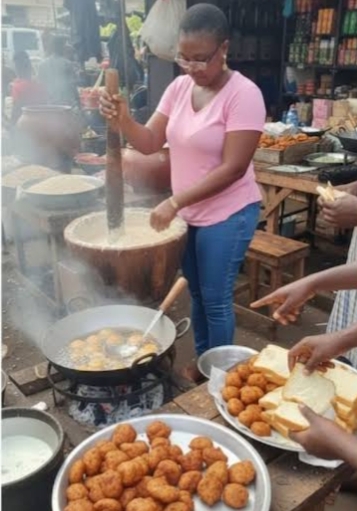
In Lagos, akara sellers shared similar success stories.
Mrs Ashe Ojomo, who has been selling akara for 22 years, said the business helped her train three graduates.
Another trader, Madam Chibuzor, who has sold akara for over 24 years, said she used the proceeds to educate her children and build a house in Ikorodu.
She explained that although daily sales may reach between ₦60,000 and ₦80,000, much of the money goes back into buying ingredients and running the business.
She stressed that akara selling requires hard work, discipline, and determination
Challenges Facing Akara Sellers
Some traders said the business is becoming increasingly difficult.
An akara seller in Ogun State complained about harassment from officials who sometimes seize traders’ goods.
Others pointed to rising costs of beans, cooking oil, gas, and grinding services.
Single mother Shakirat said the price of beans has more than doubled in recent years, making it harder to earn profits.
A Source of Hope for Young Nigerians
David, a 30-year-old akara seller from Adamawa State, said the business has helped him survive in Lagos and support his family back home.
He currently supervises four workers at an akara stand in Berger, Lagos.
According to him, the income has enabled him to save money and prepare for marriage.
He said the business has taught him patience, discipline, and responsibility.
Conclusion
Across Nigeria, akara and kuli-kuli businesses continue to play a major role in supporting families and communities.
Although profits are often small and challenges remain, many traders say these businesses have enabled them to educate their children, build homes, create jobs, and survive difficult economic conditions.
As one trader put it: “It may not make us rich overnight, but it keeps us alive.”
Comments